
You're sitting on capital, a brand idea, and a launch plan. What you don't have is time to spend a year building core gaming infrastructure, and you probably don't want your first serious market entry blocked by payment friction, compliance gaps, or a licence application that drags on longer than your runway can tolerate.
That's why most operators land on a white label crypto casino first. The problem is that vendor decks make it sound like a software choice, when it's really a legal and operational contract, who holds the licence, who owns AML exposure, and what you still own when the platform is branded in your name.
Table of Contents
- The Operator's Dilemma Behind a Crypto Casino Launch
- What a White Label Crypto Casino Is
- Crypto-Native Versus Fiat-Hybrid Operating Models
- The Real Cost Stack of a White Label Crypto Casino
- How to Choose a White Label Casino Vendor
- The Launch Roadmap From Contract to First Deposit
- Who Is Actually Liable When the Licence Is Not Yours
- Deciding Whether a White Label Crypto Casino Is the Right Move
The Operator's Dilemma Behind a Crypto Casino Launch
A common brief sounds like this. A brand owner has media buyers, affiliates, and a clean acquisition plan. The team has capital too. What it doesn't have is an in-house gambling stack, a compliance department, or twelve months to wait for a custom build to crawl over the line.
That operator is usually forced into the same fork in the road. Build from scratch and own everything, or license a pre-built platform and move fast. The white label route exists because it gives that operator a credible launch path without forcing them to assemble every subsystem themselves, but the trade-off is never just “faster launch.” It's also shared infrastructure, ongoing provider economics, and a contract that decides where the liability sits.
A white label crypto casino is best viewed as a launch vehicle, not an end state. The operator still has to decide whether the business is meant to test a market, enter a regulated niche, or build a long-term brand that can later justify a deeper tech investment. Those are different decisions, and the wrong one gets expensive fast.
Practical rule: If you're asking whether white label is “cheap,” you're asking the wrong question. The right question is whether it gets you live fast enough, with enough compliance discipline, to make the first market test credible.
The rest of the operator's job is to answer two questions clearly. Who is legally responsible when something goes wrong, and what does the platform contain versus what still needs to be purchased, staffed, and defended? That's where the key decision lives.
What a White Label Crypto Casino Is
A white label crypto casino is a pre-built gambling platform that an operator licenses, rebrands, and launches without building the core software from scratch. In practice, it arrives as one integrated stack, with the game engine, crypto payment gateways, back-office admin, and KYC/AML controls already connected Start Online Casino.
The cleanest way to judge it is as a fitted commercial unit, not an empty shell. You still choose the brand, the player-facing offer, and the operating team, but the platform provider has already handled the plumbing, wiring, and security controls. That changes the work from engineering a gambling stack to configuring modules, applying the brand, and fitting the product to the licence terms that govern the market.
The platform usually breaks into four layers:
The operating layers that matter
- Game layer. The platform aggregates casino content, so the operator is not negotiating every individual game connection from day one.
- Cashier and wallet layer. Crypto deposits, withdrawals, bonus balances, and round settlement sit inside one wallet system, which keeps the ledger consistent.
- Back-office layer. Admins manage players, balances, risk flags, and support workflows from a single control panel.
- Compliance layer. KYC, AML, geofencing, audit logs, and reporting are built into the environment rather than added later.
That structure is what lets a white label setup support BTC, ETH, USDT, and other coins while keeping account history and wallet reconciliation in one place OMI Soft. It also puts the wallet and settlement layer at the centre of control. If that layer is weak, reconciliation gets messy, audits get harder, and confidence in the platform drops Jadex Consulting.
The mistake operators make is assuming the package includes everything. It does not. You still need the licence structure, the banking or crypto treasury setup, the support team, the acquisition engine, and the contract terms that define who carries what risk. White label cuts build time. It does not remove launch complexity.
For a broader platform view, NexGrate's white label gaming solution shows how these bundles are usually packaged for operators that want casino and sportsbook under one operational roof.
Crypto-Native Versus Fiat-Hybrid Operating Models
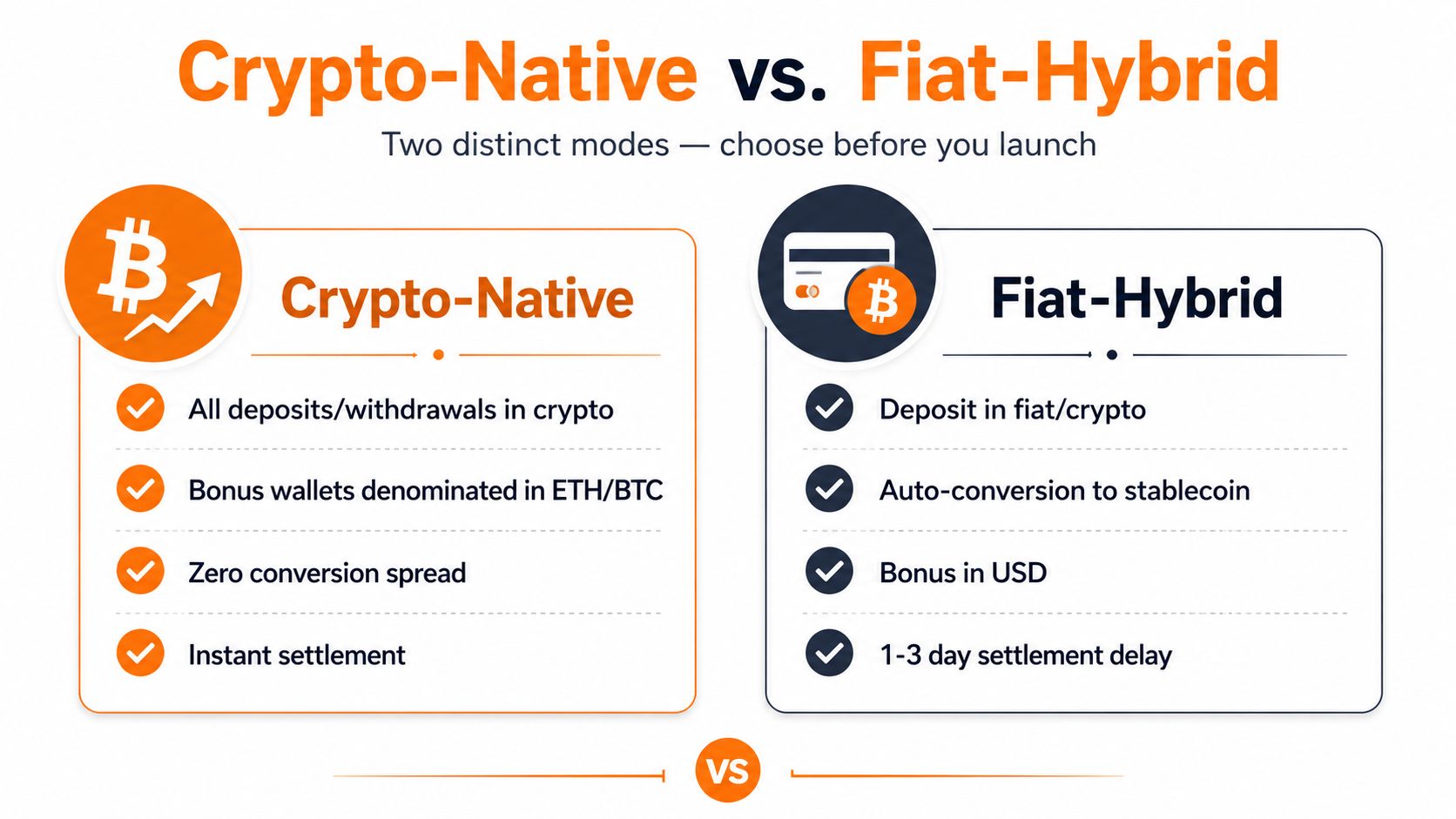
A crypto casino launch forces a hard choice early. Build around crypto-native operations, where wallets and coin settlement define the account economy, or run a fiat-hybrid model, where crypto sits beside cards and bank methods while the main balance stays in EUR or USD.
That choice changes the control point of the business. In a crypto-native setup, deposits, withdrawals, bonus accounting, and settlement stay inside the same asset logic, so the platform can keep wallet movement and reconciliation tighter. A fiat-hybrid setup widens the audience, but every conversion between payment rails, currencies, and treasury rules adds another place for errors, delays, and disputes.
A useful way to judge the two models is by where the operational pain lands.
A crypto-native stack usually suits operators who want the cashier, wallet, and settlement layer to move together. That makes treasury handling cleaner, but it also means your team needs stronger KYT screening, cleaner withdrawal controls, and a stricter audit trail, because wallet activity moves faster and leaves less room for manual correction. Fiat-hybrid models are easier to sell to mainstream traffic, yet they demand more reconciliation work because the operator is managing more than one monetary path at once.
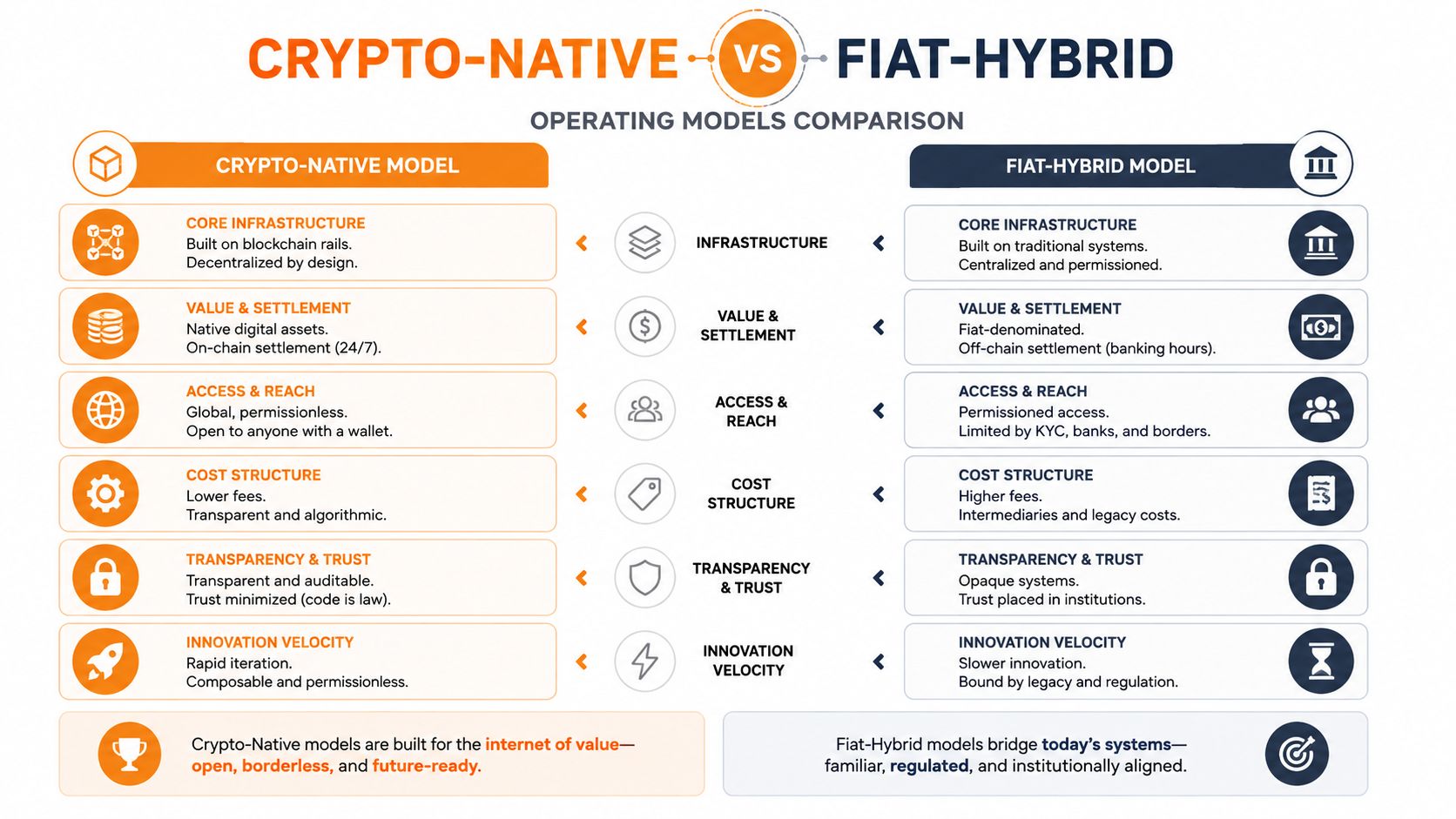
The operator profile should decide the model. A brand built for crypto-first players should not force a fiat-first cashier just to look broader on a sales deck. A brand targeting users who expect cards, bank rails, and a familiar cashier should not start with a crypto-native stack if that choice shrinks acquisition before the first campaign even runs.
Choose the operating model before you choose the vendor. If you reverse that order, the demo starts shaping the business model, and the result is usually a cashier rebuild after launch.
Provider onboarding, cashier configuration, and compliance testing do not move at the same pace, so the launch sequence has to match the model you picked. A clean operating model makes those steps easier to coordinate, while the wrong one turns basic setup into repeated rework.
The Real Cost Stack of a White Label Crypto Casino
Vendor quotes are built to look tidy. They are not. The first-year spend for a white label crypto casino depends on more than platform access. Licence scope, compliance tooling, treasury setup, and launch marketing all pull the budget in different directions. One 2026 benchmark places first-year spend at roughly $80,000 to $250,000 Start Online Casino. Another 2026 guide puts a competitive white label casino around $35,000 to $200,000+, with entry-level Curaçao launches possible from $15,000 and premium MGA or UKGC launches often exceeding $200,000 Best White Label Casinos.
Those ranges are not a contradiction. They show where the business model changes. White label cuts development time, but it does not remove serious launch capital. The licence you use, the jurisdiction you sell into, and how much of the compliance load you keep in-house drive the bill more than any vendor brochure.
What changes in daily operations
A crypto-first operation spends differently from a fiat-hybrid one because the money path is different from the start. Crypto-native setups put more pressure on wallet controls, transaction monitoring, and treasury discipline. Fiat-hybrid models add card rails, bank settlement, and more reconciliation work, so the operator carries more operational complexity even if the front end looks familiar.
That difference shows up in cost. A crypto-native launch can keep the cashier simpler, but it needs stricter wallet controls and cleaner settlement logic. A fiat-hybrid launch gives you broader payment appeal, but it also introduces more manual review, more exceptions, and more staff time tied up in checks that a crypto-only stack avoids.
Provider economics sit on top of that operating choice. One 2026 guide says provider revenue share typically sits between 15% and 50% of gross gaming revenue (GGR), with 25% to 35% described as the usual range, while another guide places typical provider take rates at 10% to 30% of net gaming revenue (NGR) Best White Label Casinos. The exact label changes by vendor, but the point stays the same, you are not buying software outright. You are signing up for an ongoing commercial split.
The hidden costs are the ones operators underestimate first. KYC vendor fees, payment reserves, bonus liability, and compliance staffing do not sit neatly in the opening proposal. They show up when withdrawals start moving through the queue and the finance team realises the stack needs more than a glossy cashier. If you want to pressure-test that part of the stack, a multi-currency wallet guide is a practical place to start because wallet design is one of the easiest places to underbudget on a crypto-first launch.
How to Choose a White Label Casino Vendor
Start with the failure points that hurt an operator first. Wallet reliability comes before theme customization. KYC and AML maturity come before slot count. A vendor that cannot process withdrawals cleanly under load will damage your launch faster than any weak landing page.
A good shortlist starts with operational plumbing, not polish.
The shortlist criteria that matter
- Wallet architecture depth. Ask how deposits, withdrawals, bonus credits, and settlements are handled when several assets are live at once.
- KYC and AML workflow maturity. Confirm whether the stack handles screening, escalation, and crypto transaction tracing in one flow.
- Licence position. Ask which licence the provider holds, and which jurisdiction your brand will launch under.
- Back-office completeness. The finance, risk, and support teams need proper tools, not a decorative admin panel.
- Operational coverage. Ask whether live ops staff cover your time zone and whether withdrawals have a real SLA.
The sales deck will always lead with branding, game thumbnails, and a polished cashier. It will rarely show sanctions screening across mixed fiat and crypto flows, or how the platform behaves when withdrawal volume spikes. Press on those gaps. They are where weak vendors fail.
The provider's licensing model deserves hard questions. Some vendors imply the licence is “covered,” but that does not answer who is responsible when a player dispute becomes a regulatory issue or when AML control fails. The contract has to say who owns reporting duties, who covers indemnities, and who can terminate the arrangement if the platform becomes a liability.
For operators comparing software stacks, iGaming software providers is worth reviewing because platform choice only makes sense when it is tied to risk control, not feature slogans.
Due diligence rule: If the vendor cannot explain withdrawal handling, audit logs, and escalation paths in plain language, they are not ready for a serious launch.
A practical review does not need to drag on. Verify the wallet flow, review the compliance workflow, test the cashier, inspect the contract, and speak to an operator already live in a similar jurisdiction. If the answers stay vague, walk away.
The Launch Roadmap From Contract to First Deposit
A real launch starts with signatures, but the work does not stop there. Treat the rollout as a chain of dependencies, because that is what it is. Brand setup can run beside legal review, while payment onboarding and KYC logic should stay locked in before launch pressure starts.
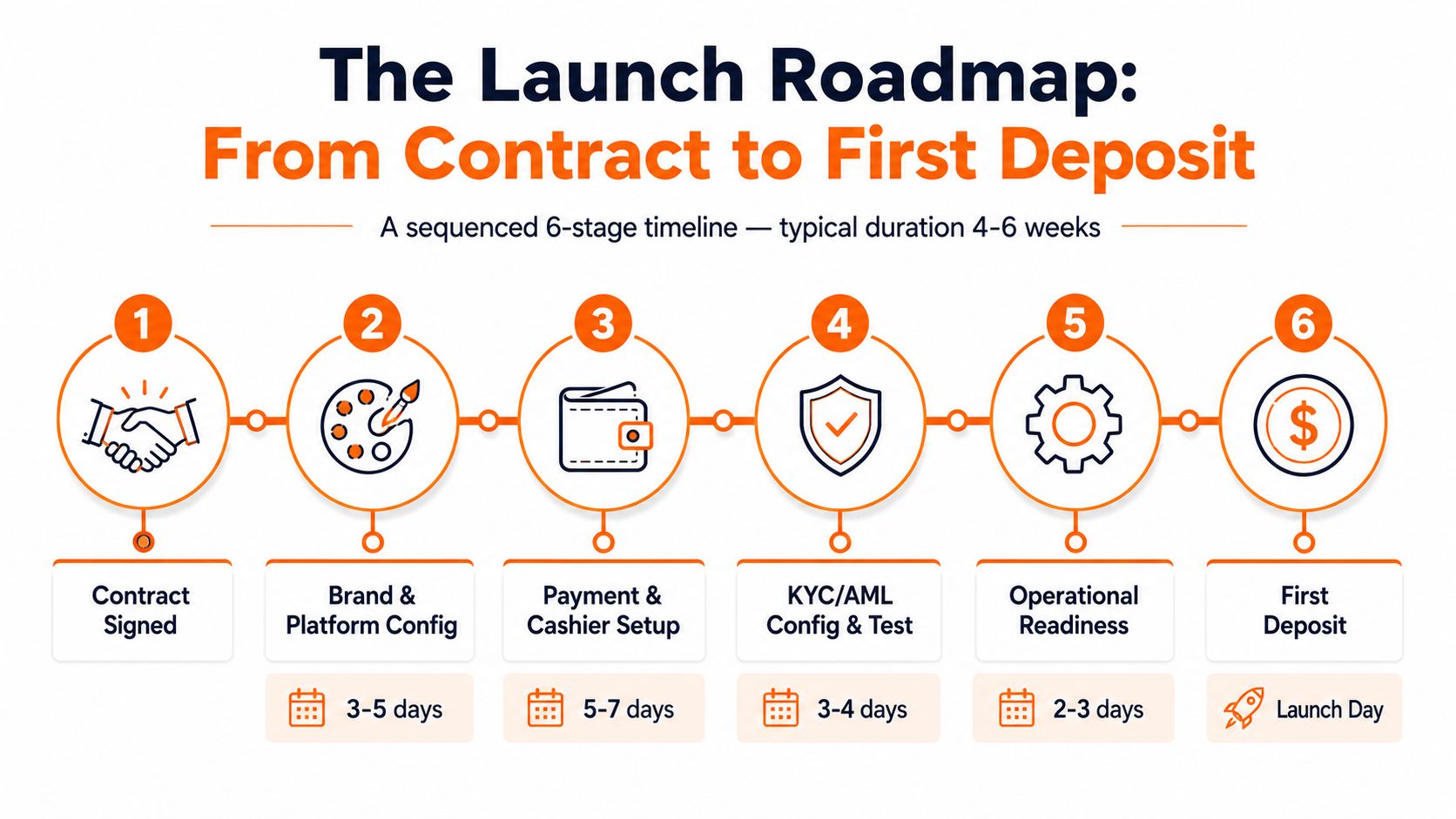
The reliable launch sequence
- Contract signed. Risk allocation starts here. The agreement must define licence responsibility, support scope, and termination rights before anything else moves.
- Brand and platform configuration. The operator loads the visual identity, player journey, and market-facing rules into the shell.
- Payment and cashier setup. Crypto deposits, withdrawals, and any fiat rails are connected and tested before live traffic exists.
- KYC and AML configuration. Identity checks, risk thresholds, and monitoring workflows are aligned with the target jurisdiction.
- Operational readiness. Support scripts, escalation paths, and risk procedures are rehearsed before real players appear.
- First deposit. The brand goes live only after the wallet, compliance, and support layers have been tested together.
The cleanest rollout plan keeps the operator from creating avoidable bottlenecks. Payment onboarding usually takes longer than branding work, and compliance setup can slow everything down if the jurisdiction expects specific reporting or responsible-gaming controls. Those are gating items, not extras.
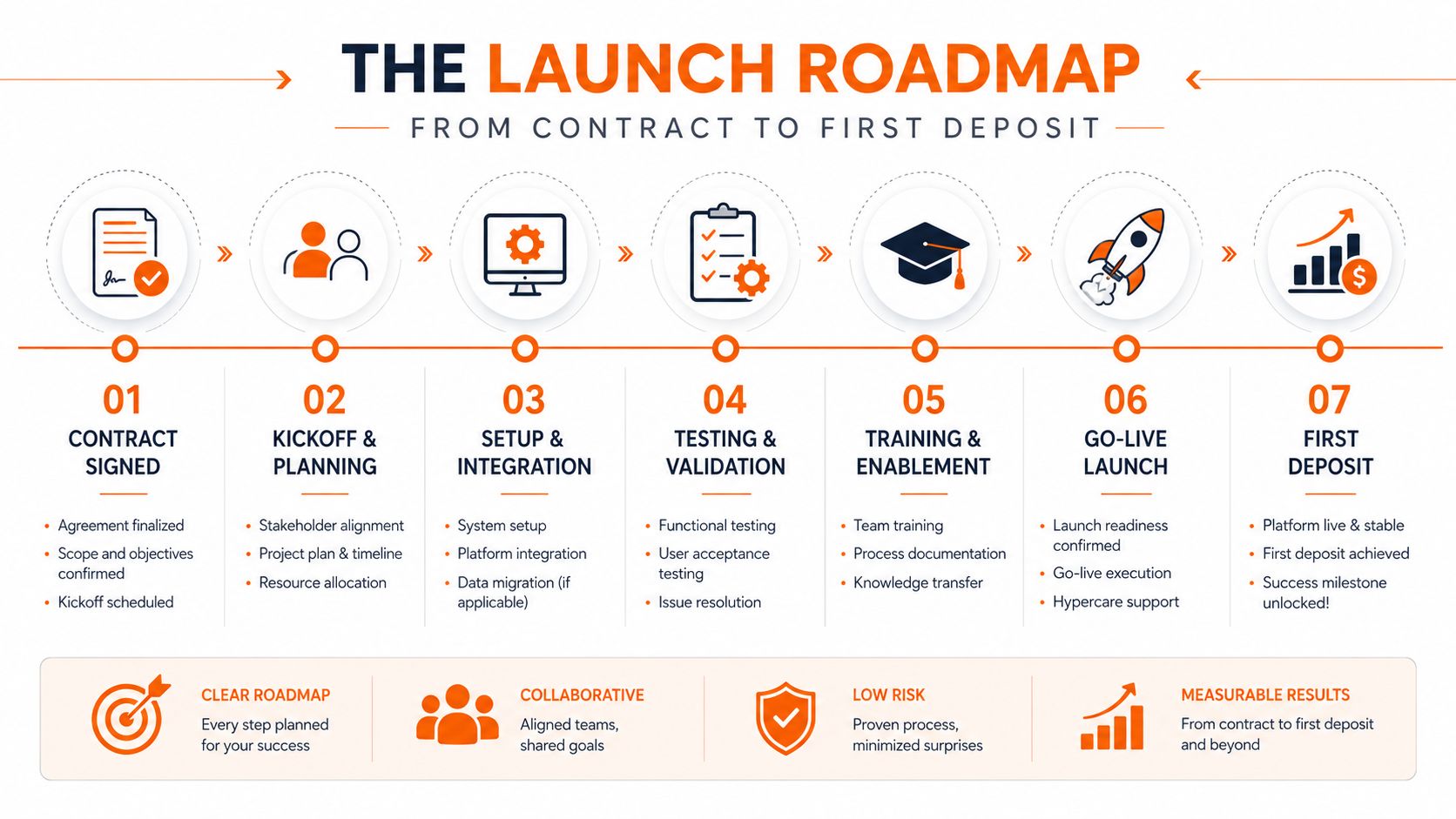
Run integration and creative work in parallel. Keep payments, testing, and support readiness tied to compliance approval. That is how you avoid a launch that looks finished but cannot process a withdrawal safely.
Who Is Actually Liable When the Licence Is Not Yours
This is the question vendor brochures skip because it gets uncomfortable fast. If the provider holds the licence and the operator runs the brand, the operator still isn't magically insulated from player disputes, AML failures, sanctions exposure, or responsible gaming mistakes. The structure may shift the paperwork, but it doesn't erase accountability.
The contract has to say who handles what when a problem lands. If the player disputes a balance, if a withdrawal triggers a compliance review, or if a geofencing control fails, somebody on the operator side still has to answer for the brand's conduct. Audit logs, reporting tools, and transaction monitoring matter because they create evidence and process, not because they transfer liability by themselves Jadex Consulting.
That's the point most operators miss. A platform can give you KYC controls, AML checks, geofencing, and reporting, but the contract decides whether the provider is merely supplying those controls or standing behind them. Those are very different legal positions.
The right question isn't “does the licence exist?” It's “what liabilities stay with me if the licence sits on someone else's stack?”
A proper operator agreement should spell out indemnities, reporting duties, escalation timelines, and termination triggers. If those clauses are vague, the brand owner is carrying more risk than the sales pitch admits. That's the part to fix before launch, not after a regulator asks questions.
Deciding Whether a White Label Crypto Casino Is the Right Move
A white label path fits a very specific operator profile. You have capital, but not the patience for a long build. You want speed, but you also need compliance infrastructure and a launch structure that won't collapse the first time a withdrawal queue gets busy. If that's your situation, white label is a sensible starting point.
It's the wrong move if you're building proprietary game logic, chasing a niche regulated market with unusual rules, or trying to launch on a shoestring. In those cases, the ongoing provider share and reduced control can become a tax on the business rather than an accelerator. The closer your long-term plan is to full ownership, the more carefully you should think about whether white label is only a bridge.
Three signals tell you a vendor deserves a deeper look. First, the wallet layer needs to be solid enough to handle multi-asset settlement without breaking reconciliation. Second, the AML toolkit has to be real, not decorative. Third, the provider needs operational references in your target jurisdiction, because local compliance habits matter more than generic feature lists.
The go-or-no-go test is simple. If the contract is clear, the wallet architecture is solid, the compliance workflow is credible, and the launch budget is real, move forward. If any one of those is fuzzy, you're not buying speed, you're buying future rework.
NexGrate builds a turnkey white-label platform for casino and sportsbook operators who need a single stack for content, payments, back office, and compliance. If you're planning a white label crypto casino launch and want a platform discussion grounded in operations instead of sales theatre, visit NexGrate and review how the stack fits your market, licence, and timeline.