The fastest or most familiar payment method isn't automatically the best choice for an online casino. Cards may deliver reach, but a declined card without a fallback can end a deposit journey. Crypto may settle quickly, but it brings regulatory, custody, and source-of-funds obligations. A local bank method can outperform an international wallet in one market and be irrelevant in another.
The best cashier is a portfolio, not a single method. Cards provide broad coverage, bank rails support larger and more traceable transfers, e-wallets and mobile wallets reduce friction, local methods improve regional conversion, prepaid products offer controlled funding, crypto serves eligible markets, and BNPL requires particularly cautious assessment.
This comparison evaluates eight online casino payment methods through the operator's real implementation questions: deposit and withdrawal experience, settlement behavior, fees and risk, AML and KYC implications, regional coverage, and integration complexity. The data points in the supplied research support a clear direction. Debit cards were preferred by 42% of respondents in a 2026 iGaming payments survey, while digital wallets followed at 38%. The same survey found that 73% expected real-time sportsbook payments to become normal within two years, reinforcing the importance of speed and instant settlement (iGaming payment-method survey).
For operators, a unified wallet and cashier can reduce vendor fragmentation. NexGrate is relevant where multi-currency payments, crypto capability, payment orchestration, and compliance controls need to work within one white-label casino and sportsbook platform.
Table of Contents
- 1. Credit and Debit Cards
- 2. Bank Transfers and Direct Debit
- 3. E-Wallets and Digital Payment Platforms
- 4. Cryptocurrency and Blockchain Payments
- 5. Mobile Payment Solutions
- 6. Regional and Local Payment Methods
- 7. Buy-Now-Pay-Later and Installment Plans
- 8. Prepaid Cards and Vouchers
- 8-Point Comparison of Online Casino Payment Methods
- Build the Cashier Around the Market You Serve
1. Credit and Debit Cards
Cards are familiar to players, but they are not automatically the easiest method for operators. Established acquiring and gateway connections can provide broad regional coverage, while acceptance still depends on the market, currency, merchant category, and gambling rules. Visa and Mastercard generally support standard deposit journeys. American Express is more dependent on local availability and acquirer policy. Debit cards suit players using available funds rather than borrowing.
Deposits are usually simple. Withdrawals create the harder product decision. Issuer rules, the original funding instrument, and local restrictions may determine whether winnings can return to a card. The cashier should state this before payment and offer a bank or wallet route when card payouts are unavailable.
Treat card authorization and card withdrawal as separate product flows, because a method that funds an account smoothly may not provide the cleanest cash-out experience.
Fraud and chargeback exposure require layered controls. Use 3DS2, tokenization, device signals, and velocity checks, then tune them by market and risk profile. Tokenized credentials speed repeat deposits without retaining raw card data. Velocity rules can flag unusual attempts. Excessive declines drive legitimate players away, while weak controls can increase disputes and strain processor relationships.
Card fees, approval rates, and settlement behavior vary by region and currency. The wider payment picture also shows why cards should not stand alone. In the supplied research, cards represented 35.9% of iGaming payment transaction value, compared with 30.2% for e-wallets (iGaming payments report).
Configure processing by jurisdiction and track approval, dispute, refund, and withdrawal metrics separately. Give the cashier a relevant fallback when a card fails, rather than making the player restart registration. Confirm how card transactions feed reconciliation, AML reviews, and KYC checks before scaling across markets.
2. Bank Transfers and Direct Debit
Bank transfers prioritize traceability over speed. ACH supports North American operations, SEPA covers euro-area transfers, and SWIFT remains relevant for international banking flows. These rails suit operators that need dependable withdrawals or larger deposits, although players may wait longer than they would with cards or wallets.
That delay becomes a user experience issue when the cashier offers no status detail. Show the expected processing stages, required account information, and any verification hold before the player submits a request. A generic “pending” label creates support work and can prompt duplicate requests.
Open Banking can reduce manual entry by allowing an eligible player to authenticate with their bank. PSD2-based connections may shorten the deposit journey in Europe, but the operator must verify provider permissions, data handling, and coverage in each target market. For withdrawals, confirm account ownership early so a payout does not stall after submission.
Bank rails also support cleaner back-office operations. Automated reconciliation can match transfer references with player accounts, currencies, and settlement statuses, reducing manual finance work. Direct debit requires separate controls because mandate management and reversals create different risks from a one-time bank transfer. Set clear return-handling rules and reflect failed or reversed payments in the player account promptly.
Use bank methods as a reliability layer, not merely as another cashier option. Their value increases when the flow connects reconciliation, ownership checks, and transparent payout status.
A bank-based flow may also support a cleaner pay-and-play journey where local regulation permits it. Operators assessing that model can review NexGrate's pay-and-play approach alongside licensing and identity-verification requirements.
Regional preference still determines adoption. Bank transfers remain a material part of a diversified payment stack, behind cards and e-wallets in the supplied analysis. Build settlement messaging, bank ownership checks, and fallback routes into the cashier before launch. Keep deposit and withdrawal performance separate in reporting, since a rail that works well for one may create delays in the other.
3. E-Wallets and Digital Payment Platforms
E-wallets can improve repeat payments because players authenticate through a familiar wallet rather than entering card details at every deposit. PayPal, Skrill, Neteller, and ecoPayz may also provide a direct withdrawal route, depending on the market, account status, and wallet rules. The player benefit is speed and recognition. The operator still needs to manage another regulated payment relationship.
Each wallet has separate onboarding requirements, transaction limits, supported currencies, risk controls, and settlement schedules. Provider quality also depends on integration detail. Incomplete status events can leave deposits in an uncertain state, while weak decline information increases support work and makes payment recovery harder.
Treat wallet coverage as a portfolio decision. Regional adoption differs, and a wallet that performs well in Europe may have limited relevance in Asia or another regulated market. The supplied 2026 Paysafe survey found that 28% of players preferred digital wallets, rising to 41% among bettors wagering five to seven times per week (Paysafe payment and retention survey). Frequent users therefore merit particular attention during payment-method selection, but volume alone does not justify adding a provider.
What operators should control
Keep a second wallet route available where licensing eligibility, player demand, and transaction economics support it. This reduces concentration risk without forcing the cashier to display every available wallet.
Credit funds only after provider APIs or webhooks confirm the transaction state. Store the provider reference, event history, currency, and final status so finance and support teams can reconcile exceptions.
Wallet identity, account ownership, transaction velocity, and payment history should feed AML and KYC workflows. A wallet login does not remove the operator's responsibility to assess risk or confirm that a withdrawal is going to the correct account.
Show clear payout stages, including operator review, wallet acceptance, and final settlement. Wallet fees and foreign-exchange costs also require route-level modelling across deposits, withdrawals, refunds, and failed attempts. A unified balance layer can help manage those differences, while NexGrate's multi-currency wallet capabilities may support a cashier serving several currencies and providers.
4. Cryptocurrency and Blockchain Payments
Crypto suits players who already hold digital assets and want deposits or withdrawals beyond traditional banking hours. Bitcoin, Ethereum, and stablecoins such as USDC or USDT can support both routes. For the operator, this adds wallet infrastructure, blockchain monitoring, exchange-rate logic, custody decisions, and a separate compliance process.
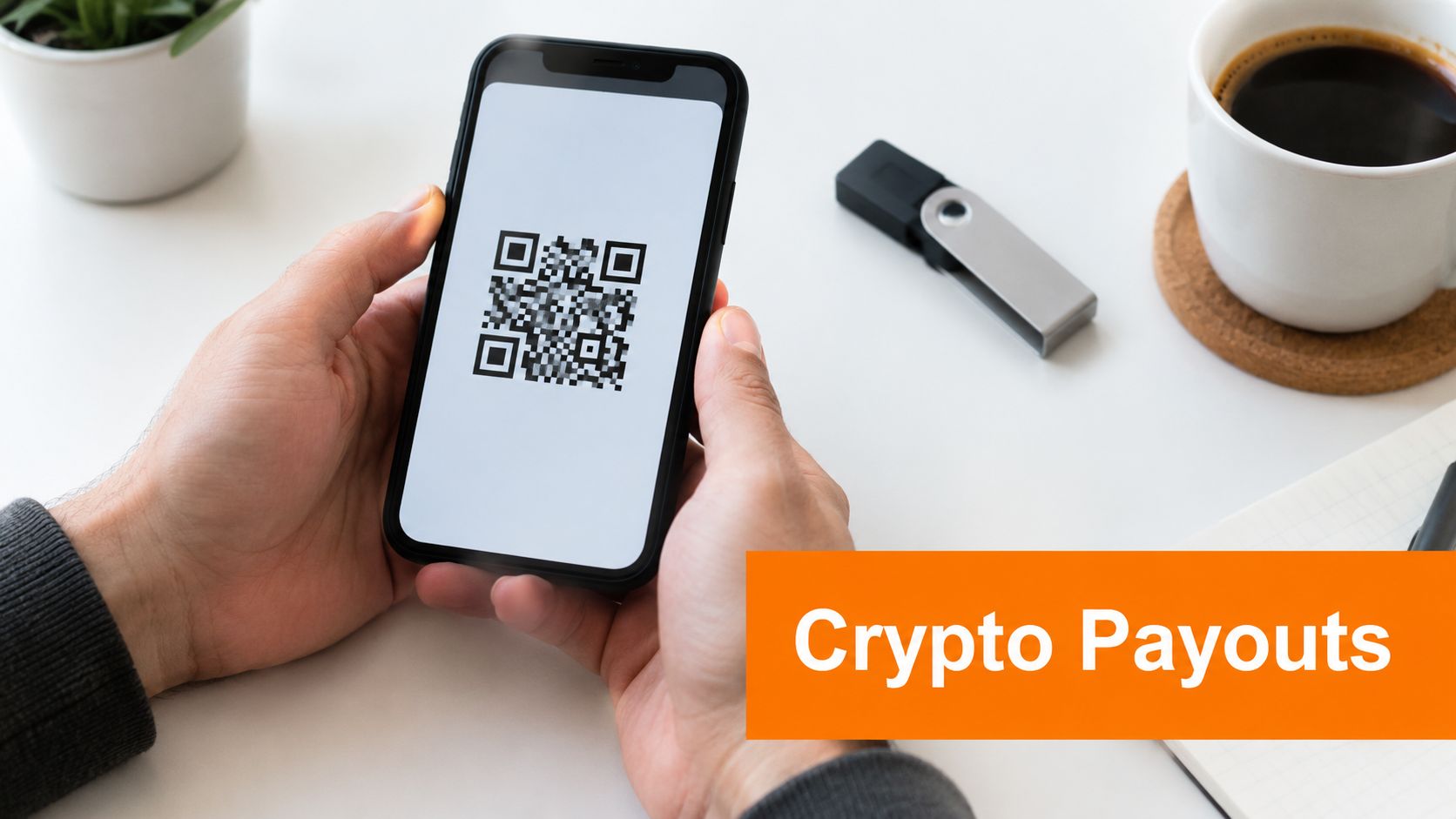
The cashier should identify the asset and network before payment begins. Generate a fresh address where appropriate, display a QR code, and state the required confirmation status. Sending funds over the wrong network can create an irreversible support case that a conventional card decline would not.
Stablecoins generally limit volatility exposure compared with non-pegged assets, but they do not remove operational risk. Operators must choose whether to convert deposits immediately, retain reserves, or settle through an exchange or custodian. Wallet screening, source-of-funds checks, sanctions exposure, unusual transaction patterns, and account ownership also require defined controls.
Native crypto support can reduce bespoke integration work. It does not transfer regulatory responsibility. Confirm that crypto gambling is permitted in the target jurisdiction and that each provider can serve the licensed entity.
A fast blockchain confirmation does not replace customer due diligence, transaction monitoring, or responsible-gambling controls.
The cashier also needs accurate ledgering, asset and network mapping, real-time exchange-rate conversion, webhook reconciliation, hot and cold wallet separation, and controlled auto-payout rules. Support teams need procedures for underpayments, overpayments, wrong networks, and pending confirmations. Settlement design should account for regional availability, conversion timing, fees, and exposure while preserving a clear player balance.
Crypto can be a meaningful part of the payment mix, but it should complement cards, transfers, wallets, and local methods rather than replace them.
A short player education module should cover wallet safety, network selection, confirmation states, and withdrawal reviews. Clear guidance reduces preventable errors without promising instant cash-out.
5. Mobile Payment Solutions
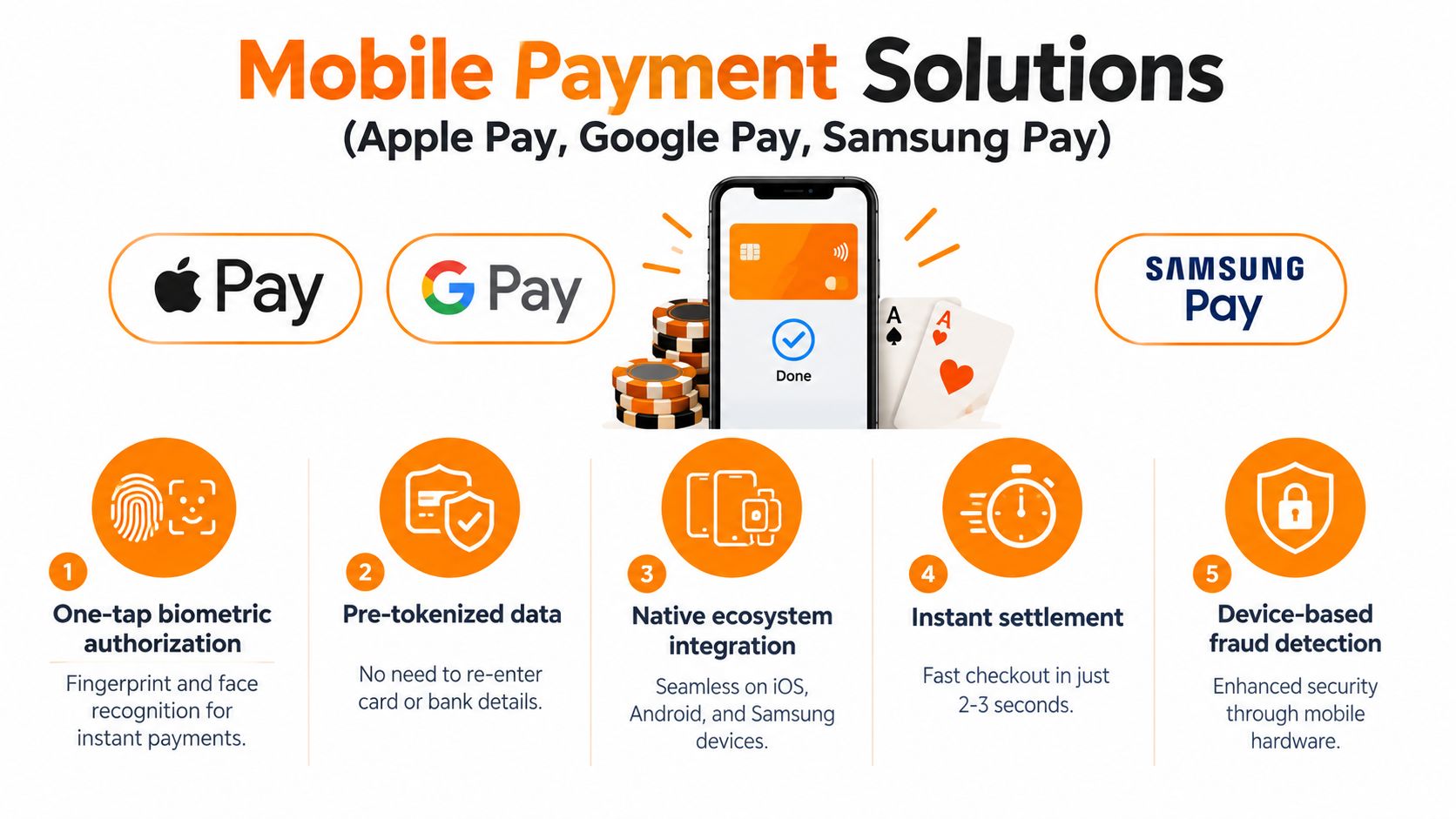
Mobile wallets shorten checkout, but they do not remove payment operations. Apple Pay, Google Pay, and Samsung Pay let players approve a transaction through a device wallet, often with biometrics or a device passcode, instead of entering card details in the casino form. The result can feel closer to a native mobile interaction than a traditional checkout.
The operator must separate mobile wallets from broader e-wallets. Apple Pay and Google Pay usually use cards or funding sources already linked to the device. They can improve authentication and reduce typing, while acceptance still depends on market rules, gambling restrictions, funding-source checks, and withdrawal support.
Cashier design determines whether the benefit reaches the player. Show eligible wallet options based on device, operating system, browser, app, currency, account, and market. A technically available wallet that sits inside a long, irrelevant method list creates avoidable abandonment.
Design for actual device and payment states
- Eligibility: Check device and account support before showing a route that cannot complete.
- Authorization: Display a confirmed success or failure state. Credit the balance only after the provider confirms the payment.
- Repeat deposits: Tokenized wallet credentials can shorten later deposits, subject to provider rules and regulatory checks.
- Withdrawals: State whether the wallet accepts payouts or whether the player must use a bank account or e-wallet.
- Performance monitoring: Compare wallet declines with card declines by market and device family, then adjust routing or support guidance.
Push notifications and balance updates can improve the mobile experience. They must follow confirmed provider events. The ledger should handle delayed webhooks, retries, and duplicate notifications without issuing duplicate credits or displaying a false success message.
Risk controls should cover device changes, account-takeover signals, unusual wallet activity, and rapid deposit and withdrawal patterns. Payment convenience also needs to remain aligned with the player account ledger, fraud rules, deposit limits, and responsible-gambling controls.
A controlled rollout starts with wallets supported by the operator's target devices and licensed markets. Add other mobile wallets only after confirming regional demand, provider coverage, settlement behavior, fees, and the compliance path. Support teams should also know how to handle an authorization that appears on the device but remains pending in the cashier.
6. Regional and Local Payment Methods
A global card logo does not guarantee local conversion. Players often trust the method they use for domestic purchases, recognize its authentication flow, and understand its currency and settlement behavior. iDEAL, Giropay, Klarna, Alipay, and WeChat Pay can therefore affect market entry, not merely expand the cashier.
Each local method adds implementation work. Map it to the correct country, currency, language, legal entity, provider, and withdrawal policy. Eligibility rules should determine what the cashier displays. Showing every available method creates choice without improving completion.
Settlement behavior affects operations and player support. Some methods redirect players to a bank or wallet interface. Others require local account identifiers, regional authentication, or provider-specific refund handling. The integration should support reliable return URLs, webhook retries, reconciliation, and payment matching when a provider reference differs from the internal player reference.
Before launch, document payment preference, licensing restrictions, provider availability, and payout behavior for every target jurisdiction. Prioritize methods that support the main deposit and withdrawal journeys. Then measure authorization, abandonment, withdrawal completion, support contacts, fraud outcomes, fees, and settlement time by market.
Market-specific operating knowledge also matters. Operators assessing expansion can use NexGrate's South American gaming perspective as one input, then validate each payment and licensing assumption against current local requirements.
A regional aggregator can reduce integration effort, but it may hide provider-level performance and fees. Reporting should remain granular enough to identify the failed method, failure reason, settlement duration, and whether a fallback recovered the deposit. Use those findings to set routing rules and cashier order.
Local methods form a distinct part of the regional payment mix, although the proportion differs by jurisdiction and should not be copied from another market. Validate demand, coverage, settlement behavior, cost, risk, and AML/KYC requirements before allocating integration budget. A local method earns its place through market evidence, not through the size of its brand name.
7. Buy-Now-Pay-Later and Installment Plans
Buy-now-pay-later (BNPL) can make a deposit look immediate while leaving the player with a deferred obligation. That mismatch makes it a poor fit for casual experimentation. Klarna, Afterpay, and Affirm serve ordinary retail purchases, but gambling deposits create different exposure because the funds may be wagered before repayment is due.
Provider approval therefore comes first. A BNPL brand operating in a country does not mean it accepts gambling transactions there. Confirm the permitted use case, operator eligibility, licensing position, and any market restrictions before presenting the method. Provider appetite can also change after launch, so approval needs documented ownership and periodic review.
For players, the checkout may feel familiar and fast. For operators, the difficult events occur later: a decline, reversal, missed installment, account dispute, or provider review can affect the player balance and settlement records. The cashier should display repayment terms clearly and must not frame deferred credit as extra gambling capacity.
Treat BNPL as a controlled payment route rather than a standard cashier option. Before a pilot, answer these operational questions:
- Does the provider permit gambling deposits for this operator and jurisdiction?
- How are affordability checks, provider decisioning, deposit limits, and responsible-gambling controls applied?
- Does the verified BNPL identity match the player account, and what happens when it does not?
- Can a declined transaction move to a card, bank transfer, wallet, or voucher without restarting registration?
- How are provider settlement, reversals, disputes, refunds, and player balances reconciled?
The integration should expose provider references, statuses, and event history to the operator ledger. It should also separate an approved authorization from settled funds, since those states can produce different withdrawal and accounting outcomes.
BNPL may address a specific payment gap, but it can also add credit, consumer-protection, advertising, AML/KYC, and responsible-gambling obligations. Test demand, approval rates, abandonment, dispute outcomes, fees, and settlement timing by jurisdiction. If eligibility or player-protection controls remain unclear, exclude the method until legal and operational owners resolve them.
8. Prepaid Cards and Vouchers
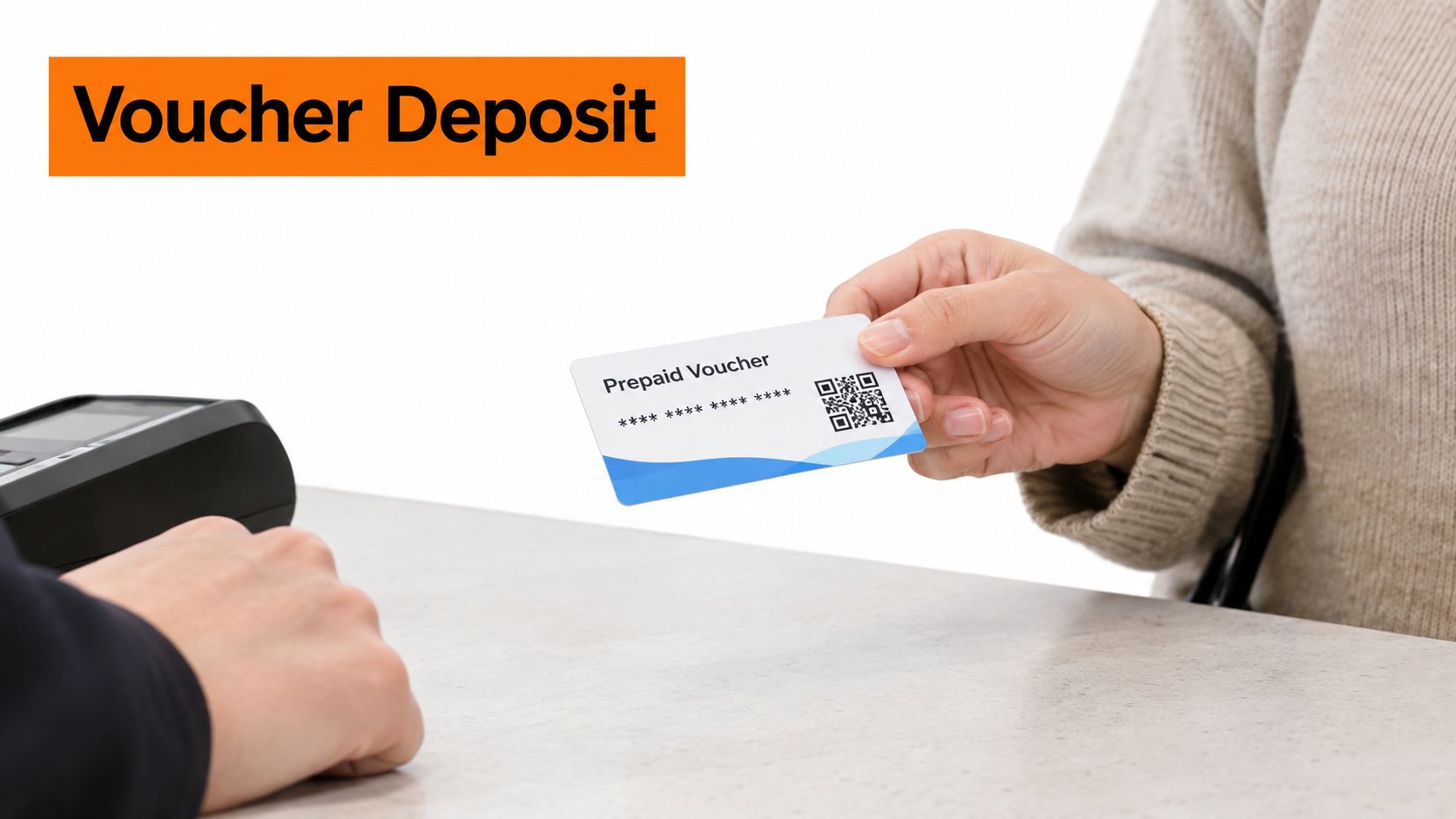
Prepaid cards and vouchers let players deposit without linking a bank card to the cashier. Paysafecard, EcoVoucher, and Neosurf are familiar examples. The player buys a physical voucher or digital code, enters its PIN, and uses the available balance within the voucher's limits.
This option serves players without bank cards and those who want gambling payments separated from their primary account. Advance funding can also support spending control. It does not replace account-level responsible-gambling measures, identity checks, or transaction monitoring.
The operator gives up some payment context. A voucher can reveal less about the original funding source than a bank-linked method, while cash purchase channels can make source-of-funds analysis harder. Monitor repeated voucher deposits, unusual timing or amounts, linked accounts, and activity that exceeds the operator's risk tolerance. These signals may require enhanced verification under the operator's AML/KYC procedures.
Regional coverage determines whether the method is practical. A voucher with broad retail distribution in one country may be unavailable or unfamiliar elsewhere. Show nearby purchase locations or explain digital purchase routes where possible. The cashier should state redemption restrictions, supported currencies, expiry rules, partial-use conditions, and whether the method supports withdrawals. Prepaid is a funding method, not a complete payout strategy, so design the withdrawal journey before promoting voucher deposits.
Integration controls that matter
- Provider diversity: Add another voucher network only when it provides meaningful geographic or operational coverage.
- PIN security: Mask sensitive codes, block repeated guesses, and record each redemption event.
- Balance rules: Handle partial redemptions, rejected or expired vouchers, and duplicate submissions with clear statuses.
- Verification triggers: Escalate accounts when transaction behavior exceeds the operator's risk tolerance.
- Reconciliation: Match voucher references and settlement files with player balances and provider reports.
Prepaid products can fit regulated markets where controlled funding and payment separation matter. Review their regional demand, settlement behavior, fees, fraud exposure, and withdrawal limitations as preferences change. Keep the method when it addresses a documented local need, not merely because it appears in a generic cashier list.
8-Point Comparison of Online Casino Payment Methods
| Payment Method | 🔄 Implementation complexity | 💡 Resource requirements | ⚡ Speed / Efficiency | 📊 Expected outcomes & quality ⭐ |
|---|---|---|---|---|
| Credit & Debit Cards (Visa, Mastercard, AmEx) | 🔄🔄, Gateway integration, PCI-DSS compliance | Payment gateway, fraud/3DS, reconciliation tools | ⚡⚡, Instant deposits; withdrawals may delay | 📊 High conversion and global reach; reliable volume; ⭐⭐⭐ |
| Bank Transfers & Direct Debit (ACH, SEPA, SWIFT) | 🔄🔄, Bank integrations, verification workflows | Banking partnerships, reconciliation, AML/KYC processes | ⚡, Settlements 1–7 business days | 📊 Low fraud & fees; ideal for large/VIP transfers; high trust; ⭐⭐⭐ |
| E‑Wallets (PayPal, Skrill, Neteller, ecoPayz) | 🔄🔄, Provider APIs and tokenization | Multiple wallet integrations, provider KYC, monitoring | ⚡⚡⚡, Instant/same‑day deposits & many withdrawals | 📊 Fast withdrawals, strong mobile adoption, reduced chargebacks; ⭐⭐⭐ |
| Cryptocurrency & Stablecoins (BTC, ETH, USDC) | 🔄🔄🔄, Wallet/custody, custody/hedging, compliance tooling | Custodians/hot‑cold wallets, AML crypto tooling, exchange bridges | ⚡⚡⚡, Near‑instant 24/7 settlement (network dependent) | 📊 Low fees & global access; high appeal to crypto‑native users; regulatory risk; ⭐⭐⭐ |
| Mobile Payments (Apple Pay, Google Pay, Samsung Pay) | 🔄🔄, SDKs, tokenization, device support | Mobile SDKs, platform certification, underlying card rails | ⚡⚡⚡, One‑tap biometric auth; fastest mobile flow | 📊 Excellent mobile conversion and security; ideal for apps/impulse deposits; ⭐⭐⭐ |
| Regional & Local Methods (iDEAL, Giropay, Alipay, WeChat) | 🔄🔄🔄, Many regional integrations and local compliance | Local PSPs/aggregators, language & regulatory support | ⚡⚡, Often real‑time locally; varies by region | 📊 Highest conversion in target markets; builds local trust; ⭐⭐⭐ |
| BNPL / Installments (Klarna, Afterpay, Affirm) | 🔄🔄, Partnership setup, underwriting integration | BNPL provider contracts, enhanced KYC, monitoring defaults | ⚡⚡, Instant funding; added credit checks | 📊 Boosts average deposit and younger uptake; higher default/regulatory risk; ⭐⭐ |
| Prepaid Cards & Vouchers (Paysafecard, Neosurf) | 🔄🔄, Voucher provider APIs & retail mapping | Voucher networks, retail partnerships, voucher reconciliation | ⚡⚡, Instant redemption but requires offline purchase | 📊 High anonymity and access for unbanked; deposit‑only limits; lower LTV; ⭐⭐ |
Build the Cashier Around the Market You Serve
There isn't a universal winner among online casino payment methods. The right mix depends on the licensed markets, player profile, expected deposit and withdrawal patterns, provider eligibility, currencies, risk appetite, and operational capacity. A cashier built for one jurisdiction can perform poorly when copied into another without changing its methods, routing, language, and compliance logic.
A sensible baseline starts with cards plus bank transfers. Cards provide familiar reach, while bank rails add a more traceable route for deposits and payouts. Add e-wallets and mobile wallets where fast repeat deposits and mobile conversion matter. In the Paysafe research, overall satisfaction with the payment experience reached 60%, but only 26% of players were strongly satisfied and 14% were firmly dissatisfied, leaving clear room to improve cashier usability, payout speed, and method relevance (Paysafe payment experience research).
Prioritize local methods by jurisdiction rather than trying to support every available option. Use prepaid selectively where retail access, privacy preferences, or controlled funding justify it. Treat crypto as a compliance-led market decision with wallet monitoring, asset controls, custody procedures, and source-of-funds workflows. Evaluate BNPL only after confirming provider eligibility, responsible-gambling safeguards, identity matching, and reversal handling.
The fallback question deserves special attention. Debit cards remain the preferred deposit option at 42%, but digital wallets are preferred by 38%, and wallet preference reaches 44% in the United States in the supplied Paysafe research (Paysafe payment conversion research). That supports a practical design principle: a wallet isn't merely another payment logo. It can be the recovery route when a card fails.
Use this implementation sequence:
- Map target markets: List jurisdictions, currencies, player segments, licensing restrictions, and preferred local rails.
- Verify eligibility: Confirm that each PSP, acquirer, wallet, crypto provider, and alternative method can serve the licensed operator.
- Model economics: Compare fees, foreign-exchange treatment, settlement timing, refunds, reversals, and withdrawal costs.
- Configure controls: Connect KYC, AML, sanctions screening, fraud rules, velocity limits, device signals, and responsible-gaming limits.
- Automate reconciliation: Synchronize provider webhooks, internal balances, settlement files, refunds, and chargebacks.
- Test both journeys: Test successful, failed, pending, reversed, duplicate, and withdrawal transactions across devices and markets.
- Maintain fallbacks: Keep alternative routes for important payment paths and monitor provider outages before they affect players.
NexGrate can fit this model when an operator needs a unified wallet and cashier alongside multi-currency payments, card and bank processing, crypto support, and compliance tooling within a white-label casino or sportsbook platform. The relevant test is operational: whether the platform's integrations, reporting, risk controls, and market coverage match the operator's actual launch plan.
NexGrate brings casino and sportsbook wallets, cashier functionality, fiat and crypto payment support, and compliance controls into one B2B platform for iGaming operators. Review the payment and integration requirements for your target markets, then visit NexGrate to discuss a suitable launch setup.