A new poker operator often discovers the ante at the worst possible moment, during table configuration or a player-support escalation. A player asks why chips left their balance before the cards appeared, while an operations manager checks the pot calculation and a finance colleague wants to know how the deduction should appear in reporting. The rule sounds simple, but a small pre-hand contribution affects game economics, wallet movement, table messaging, and player expectations.
The practical answer to what is an ante is straightforward. It's a forced stake posted by every active player before the deal. Unlike a blind, which normally applies to specific positions, an ante creates a shared starting cost across the table. That distinction matters far beyond poker terminology. It determines how much money sits in the pot, how players approach marginal hands, and how an online platform records each deduction.
Table of Contents
- Understanding the Core Concept of an Ante
- Ante vs Blinds Key Differences Explained
- How Antes Work in Common Poker Formats
- Strategic Implications of Antes for Players
- Operational Considerations for Online Platforms
- Best Practices for Platform Configuration
- Conclusion and Key Takeaways for Operators
Understanding the Core Concept of an Ante
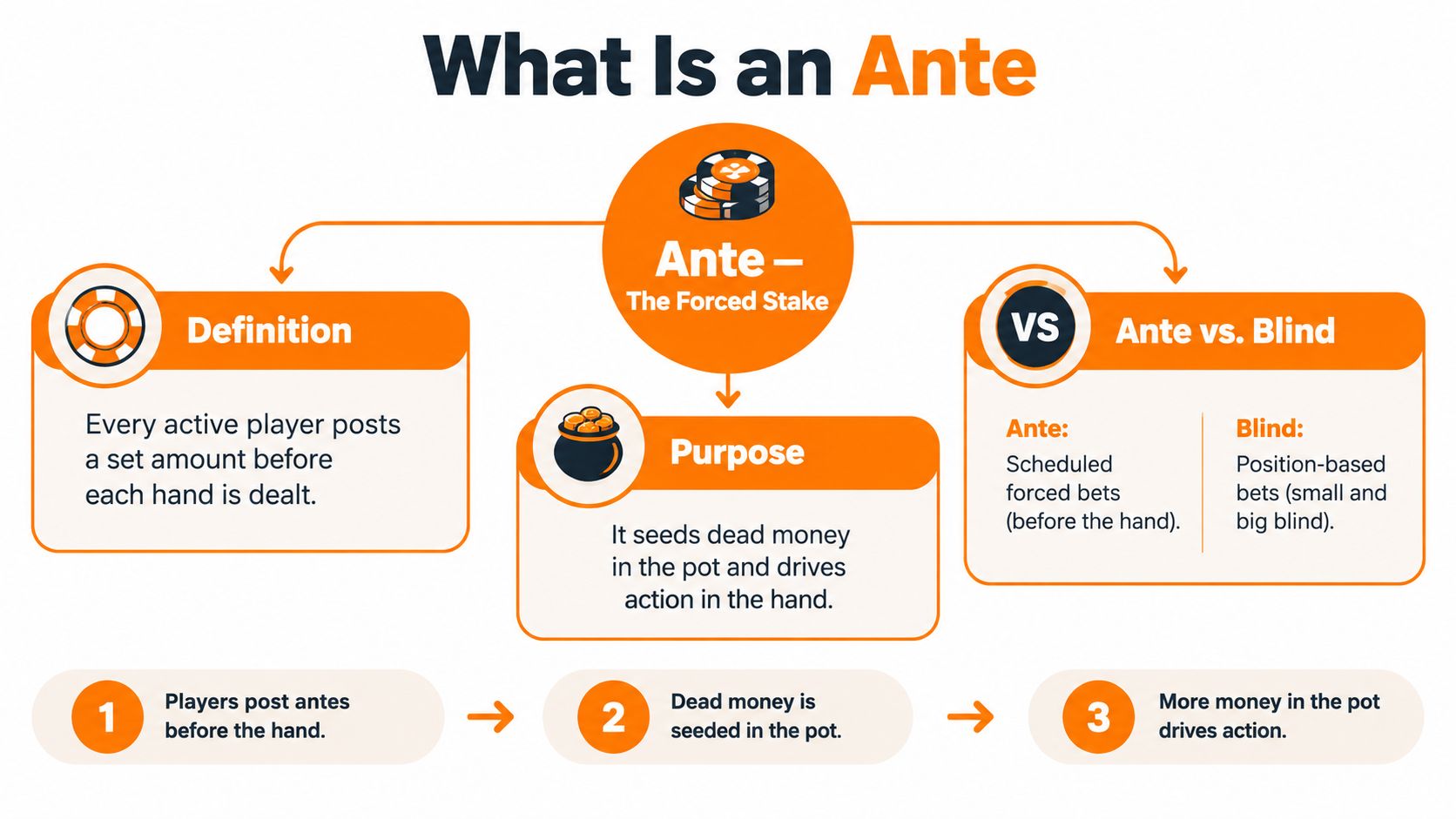
A new player may sit at a poker table, see chips removed before receiving cards, and assume the software has made an error. The explanation is the ante, a mandatory contribution that every active player posts before the hand begins. The money goes into the pot before anyone sees a card, so the hand starts with something at stake rather than an empty centre.
Dictionary and poker references describe the ante as a forced pre-deal wager. The gambling meaning traces back to the early nineteenth century, with the poker sense recorded in American English by 1838, and the term comes from the Latin ante, meaning “before,” as documented in the historical meaning of ante. That history is useful for operators because it shows that the mechanic isn't a recent tournament invention. It's a long-established way to create participation and initial liquidity at the table.
Why the pot needs an ante
Without an ante, players can sometimes fold without contributing to the hand, while only players in designated blind positions pay the initial cost. An ante changes that starting condition. Every active seat contributes, so the pot contains dead money before the first voluntary decision.
That design creates a basic commercial and mathematical effect. The platform gives players a reason to compete for the pot immediately, while the player weighs every fold against money already invested by the table. The ante doesn't force a player to continue after the deal, but it does make the pre-hand commitment universal.
Practical rule: Treat the ante as part of the product experience, not merely as a field in a game configuration screen. Players should see the amount, timing, and deduction clearly before they join the table.
The phrase “up the ante” later moved beyond poker to describe raising commitment or risk in business and other contests. That broader meaning still reflects the underlying mechanic. Someone who ups the ante increases what participants must put at risk, and a poker operator does the same when introducing or increasing a table-wide forced contribution.
For operations teams, the definition has three parts: the ante is mandatory, it is posted before the deal, and it applies to every active player. If any of those conditions changes, the product is implementing a different betting structure or a variation that needs its own rules, interface labels, and reporting treatment.
Ante vs Blinds Key Differences Explained
The central difference is how the opening cost is distributed. A blind is assigned to specific seats, while an ante applies to every active player before the cards are dealt. Poker rule references treat this distinction as a core difference in hand economics because each structure creates a different starting pot and distributes pressure differently, as explained in this poker terminology guide to antes.
| Feature | Ante | Blind |
|---|---|---|
| Who posts it | Every active player | Designated positions |
| When it posts | Before the deal | Before the deal |
| Main purpose | Seeds the pot with contributions from the table | Creates forced action from positional seats |
| Pressure distribution | Shared across active seats | Concentrated on specific positions |
| Operator concern | Multiple deductions in one hand | Position rotation and blind movement |
At a nine-player table with 50-chip antes, the antes add 450 chips before action starts. In the example documented by Poker.org's ante explanation, blinds alone create a starting pot of 750 chips, while adding those antes raises it to 1,200 chips. The arithmetic has a direct product impact. A larger opening pot can make contesting the hand more attractive, while the wallet must record and settle more pre-flop deductions across the table.
The operator trade-off
A blind-only table is easier to explain to new players and concentrates the first forced payment in two positions. An ante creates a larger shared pot, but the interface must show more stake values and the wallet must process contributions from every eligible seat. Hand histories, settlement records, and finance reports also need to identify the ante separately from each blind.
The player experience changes with the distribution of risk. A player in a favourable position is competing for the full amount already in the middle, not only the blinds. That can encourage more attempts to win uncontested pots, particularly when players have limited chips remaining.
Fairness perceptions can differ as well. Players often understand a rotating blind because its burden follows a visible seat order. An ante charges everyone at the same time, which is economically even across active seats but can feel more immediate to casual players unfamiliar with poker mechanics.
Configuration labels should reflect the actual rule. Calling an ante another blind produces misleading table copy, confusing hand histories, and inaccurate support guidance. Display ante, small blind, and big blind as separate values wherever the platform shows stakes, table rules, wallet deductions, or hand settlement. That separation gives players a clearer cost breakdown and gives operations teams cleaner reporting.
How Antes Work in Common Poker Formats
Ante handling depends on the game format, the table size, and the stage of play. The operator's task is to define when the contribution applies, who qualifies as an active player, how the amount is displayed, and what happens if a player's balance can't cover it.
In a cash-game structure, the ante can be configured as a recurring pre-hand deduction. Every eligible seat contributes before the deal, and the system then moves to the voluntary betting round. The contribution remains part of the pot even if the player folds immediately. That makes the ante a predictable cost of taking a seat, not a fee that depends on whether the player continues.
Tournament structures add another layer. Blinds and antes can rise as the event progresses, increasing the pressure on short stacks and ensuring that chips continue to move around the table. An operator needs a scheduled level system that changes the values cleanly, communicates the next level to players, and prevents a hand from using mixed settings after the level transition.
A reliable pre-hand sequence
A sound implementation follows a clear order:
- Confirm eligible seats. Identify active players, missed blinds, sit-outs, and players who have disconnected before the hand begins.
- Load the current stake configuration. Retrieve the ante and blind values for the table's current level.
- Validate balances. Check whether each eligible player can cover the required contribution under the platform's short-stack rules.
- Post deductions atomically. Move the contributions into the pot without leaving one player charged and another player uncharged if a transaction fails.
- Publish the pot state. Display the contributions in the table interface and record them in the hand history.
- Deal only after settlement. The cards should not appear until the pre-hand deductions have been accepted and logged.
This sequence matters in both cash and tournament play. A platform may use different ante schedules, but the player should always see a consistent relationship between the displayed rule and the actual wallet movement. The poker rules glossary entry for ante mechanics also highlights the ante's role as a table-wide cost that accelerates pot formation.
A common failure is to configure the ante correctly in the front end but omit it from tournament exports, hand histories, or player statements. That creates reconciliation work later. The ante must exist as a first-class transaction in the game engine, wallet, reporting layer, and customer-support view.
Strategic Implications of Antes for Players
Antes change the decision environment before a player evaluates a hand. The player isn't deciding whether to enter an empty pot. They're deciding whether to compete for a pot that already contains contributions from every active seat.
That dead money improves the immediate price of winning the pot, particularly for players acting later in the betting order. A late-position player can see folds ahead, assess the amount already in the middle, and decide whether an opening raise has enough potential to succeed. The same logic can encourage wider opening ranges, more attempts to steal, and more resistance to raises when the pot has grown through universal contributions.

Why marginal hands become more relevant
A blind-only structure lets players outside the blind positions fold without making a direct pre-hand payment. An ante removes that cost-free starting point. Every active player has already committed something, so folding is still often correct, but the threshold for contesting the pot can change.
The effect is strongest when stacks are shallow. A fixed ante consumes a more meaningful share of a short stack than of a deep one, which can push players toward faster decisions and more aggressive attempts to collect uncontested pots. The operator shouldn't interpret that behaviour as a simple increase in engagement. It may also produce more volatile stack movement and a sharper difference between experienced players and casual participants.
The ante also affects the breakeven calculation for calls and raises. A player compares the amount required to continue with the total pot, including contributions that came from players who have already folded. That's why an ante can make a marginal hand worth defending in one structure but not another, even when the blinds and cards are unchanged.
A larger starting pot can create more action, but it also makes the table feel faster and less forgiving. Configuration should balance both effects.
Here's the operational value of understanding this strategy. If an operator changes from blind-only play to an ante structure, player behaviour may change without any change to the game's graphic design. Support teams should expect questions about why balances fall before the deal, while responsible-gaming and product teams should monitor whether casual users understand the added cost.
The following video provides a visual introduction to poker betting mechanics and can help non-poker stakeholders build a shared vocabulary before reviewing game rules or player communications.
Operational Considerations for Online Platforms
For an online operator, an ante is a distributed wallet event. One hand can require deductions from every active seat before the platform can deal a card. That makes transaction integrity more important than just displaying the correct ante value.
The game engine should determine eligibility, reserve the required amounts, post the contributions, and return a clear settlement result to the table service. If one wallet operation fails, the platform needs a defined response. It may pause the deal, remove an ineligible seat according to the rules, or cancel the pre-hand posting. What it shouldn't do is leave an inconsistent pot or force support staff to reconstruct what happened from partial logs.

Configuration and wallet controls
A production-grade poker platform needs separate configuration fields for:
- Ante value: The amount posted by each eligible player.
- Blind values: The positional contributions used alongside or instead of the ante.
- Eligibility rules: The treatment of sit-outs, disconnected players, new arrivals, and short stacks.
- Level timing: The point at which a tournament or table moves to a new stake configuration.
- Rounding and currency logic: The treatment of chip denominations and any conversion between displayed and ledger values.
- Transaction identifiers: A link between the wallet deduction, hand ID, seat, pot, and settlement record.
The reporting layer should distinguish ante deductions from voluntary bets, blinds, fees, bonuses, and refunds. That separation helps finance and compliance teams reconcile player balances and investigate disputes. It also gives product managers a cleaner view of how a table structure affects pot formation without confusing forced contributions with revenue.
The front end needs equal precision. Display the ante in the table lobby, rules panel, buy-in flow, and hand history. A player who sees “blinds” but later notices a separate deduction will reasonably suspect a mismatch. Clear labels reduce avoidable contacts and make the game feel predictable.
Operators evaluating poker game software for online platforms should ask to see the complete event trail, not just the table interface. A convincing demo should show the configuration screen, wallet ledger, failed-payment behaviour, hand history, reporting export, and audit log for the same hand.
Control point: The platform should be able to reconstruct every ante from table state to wallet entry without relying on manual database interpretation.
Best Practices for Platform Configuration
Ante settings should be governed as product rules, not adjusted informally at table level. The amount needs to fit the stake and intended pace. A negligible value may have little effect on action, while an aggressive setting can make casual players feel their balance is declining before they have made a meaningful decision.
Separate default configurations from scheduled changes. Cash tables usually need stable settings that players can understand quickly. Tournament structures need level-based updates, advance communication, and a rule preventing a new ante from taking effect halfway through an active hand. Record who approved each change, why it was made, and which tables or schedules it affects.
Configuration decisions that hold up in production
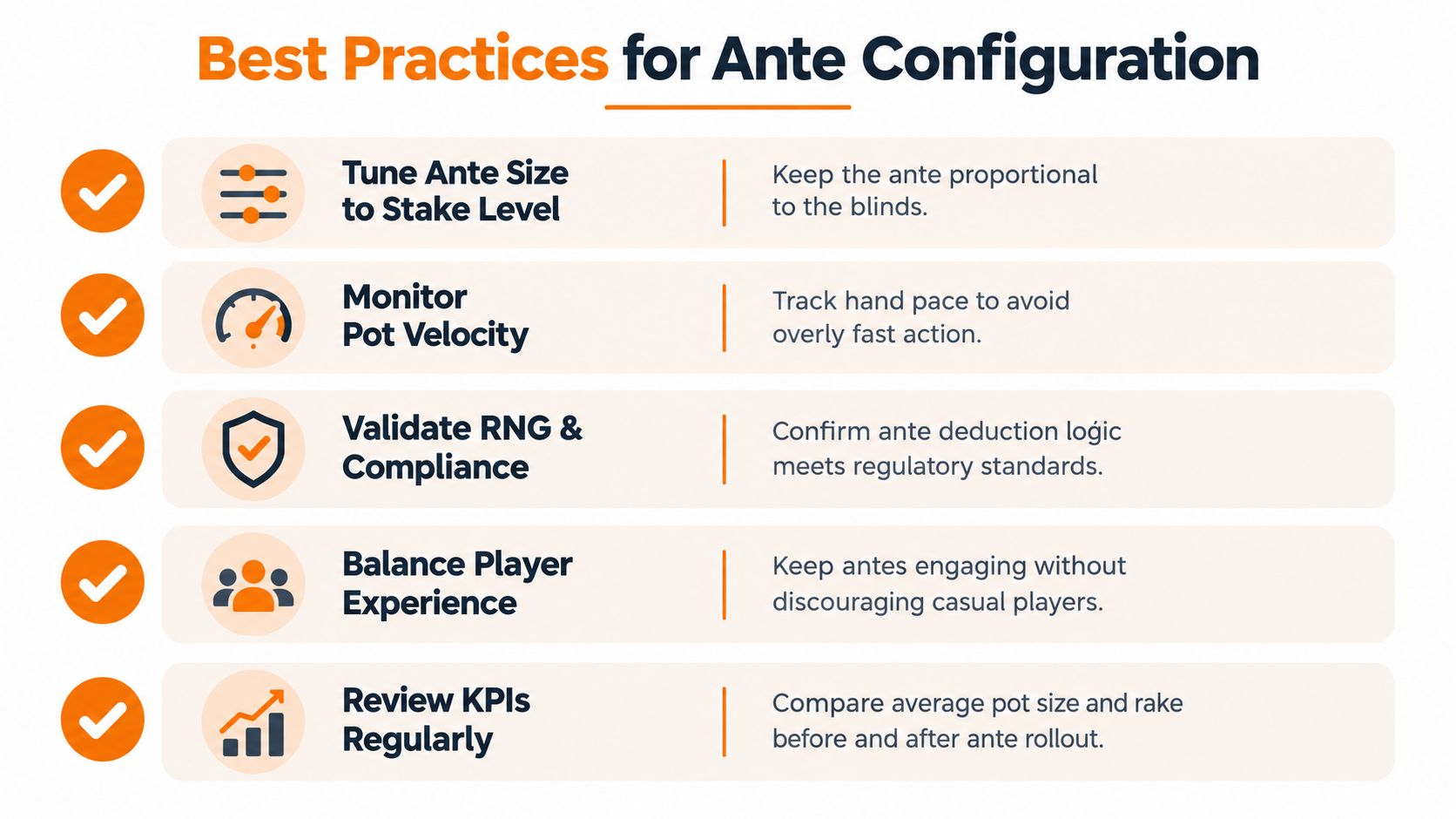
- Keep the ante proportional to the stake: Use the big blind as the reference point for tournament levels. Antes commonly sit around 5% to 10% of the big blind, but the final setting should match the format and target experience, as outlined in this ante sizing reference. Store that relationship explicitly rather than relying on an unexplained fixed amount.
- Test pot velocity before rollout: Run an A/B test with comparable tables or tournament cohorts. Keep the structure, player eligibility, and observation window consistent, then compare hands per hour, average pot size, voluntary participation, time to first action, and early exits. Review support contacts and balance complaints alongside game metrics. A faster table may support stronger engagement, but excessive pressure can discourage new players.
- Make deductions visible: Show the ante before entry, at the table, and in the hand history. A generic “entry” or “table charge” label creates avoidable uncertainty.
- Validate compliance and auditability: Test eligibility rules, the deduction path, hand sequencing, and transaction records during normal and failed scenarios. Regulatory review depends on reproducible system behaviour and documented controls, not only on a rules page.
- Connect rewards carefully: Decide whether loyalty points, missions, rake calculations, and promotional eligibility treat forced contributions differently from voluntary wagers. Document the policy so marketing, finance, and product teams apply the same interpretation.
Configuration governance also requires a defined change process. Use versioned settings, approval gates, and rollback criteria. Before a new ante reaches production, confirm that the lobby, table client, rules content, and analytics definitions use the same label and value.
Fragmented services can interpret the ante differently. An integrated white-label casino integration approach can reduce that mismatch when the operator checks data flow end to end before launch.
Start with a limited, clearly labelled rollout. Review the A/B results, disputed hands, and operational alerts before extending the structure to more tables or tournament schedules. Treat the ante as a deliberate game-design parameter with measurable effects on player experience and platform performance.
Conclusion and Key Takeaways for Operators
An ante is a small forced contribution with a large operational footprint. It changes the starting pot, spreads pressure across active seats, influences opening decisions, and introduces multiple wallet deductions before a hand begins. For a player, it's a rule to understand. For an operator, it's a configuration variable that touches game logic, payments, reporting, support, and compliance.
The central distinction is simple: blinds are position-based, while antes are table-wide. That difference determines how much money enters the pot at the start and how evenly the initial cost is distributed. The operator's job is to make that structure clear and ensure the platform applies it consistently.
Operator checklist
- Define eligibility: Specify who pays when players sit out, disconnect, arrive late, or lack the required balance.
- Separate ledger events: Record antes distinctly from blinds, voluntary bets, fees, bonuses, and refunds.
- Synchronise services: Keep the table engine, wallet, hand history, bonus system, and reporting layer aligned.
- Explain the rule: Display the ante in the lobby, table interface, rules content, and player statements.
- Test failure paths: Verify what happens when a deduction fails, a level changes, or a player's balance becomes insufficient.
- Review behaviour: Watch pot formation, hand pace, support contacts, and player understanding after a configuration change.
- Document governance: Keep an auditable record of who changed the setting, when it changed, and which tables used it.
A platform that handles these details well makes the ante feel routine. One that handles them poorly creates unexplained balance changes, reconciliation gaps, and avoidable player frustration. The wider iGaming operating model makes the same lesson clear across casino products: simple front-end rules often depend on disciplined back-office execution.
The ante has survived because it solves a real game-design problem. It ensures that every active seat contributes to the initial pot and gives players a reason to contest the hand. Online operators can preserve that value only when the mechanic is transparent, mathematically coherent, and supported by reliable transaction controls.
NexGrate provides a turnkey white-label platform that connects poker and casino content with player wallets, payments, compliance tools, reporting, and back-office operations. Visit NexGrate to discuss how a unified platform can support ante configuration and the wider operational requirements of an online gaming brand.