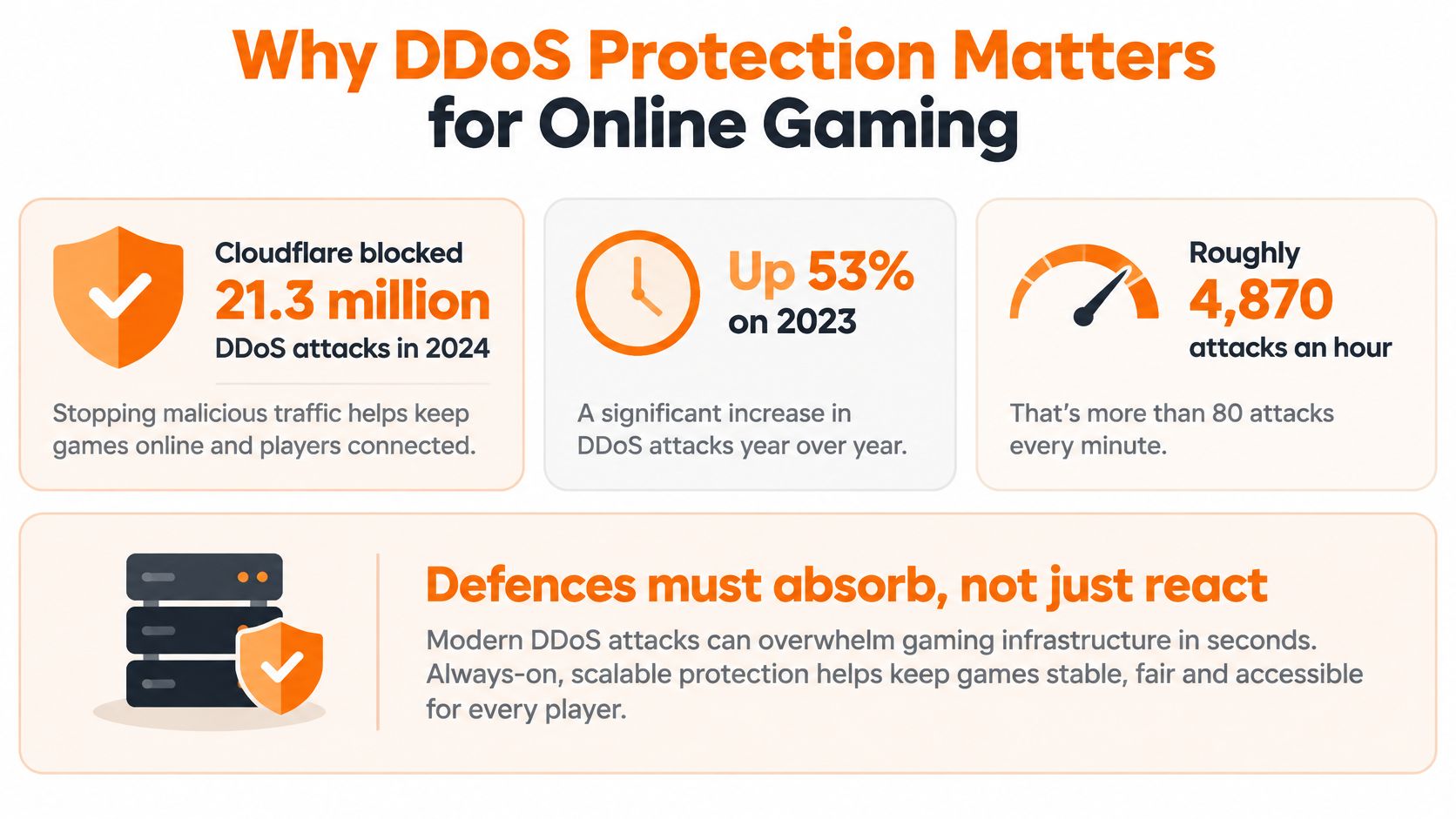
Cloudflare reports that its automated systems blocked approximately 21.3 million DDoS attacks in 2024, a 53% increase from 2023, in its 2024 fourth-quarter DDoS threat report. For a gaming operator, the practical test is whether a real player can still log in, deposit, and place a bet during an attack.
Basic DDoS protection succeeds when those transactions remain available. Start by filtering traffic before it reaches the origin, then add endpoint-specific limits, application inspection, and a clear escalation plan.
Table of Contents
- Why DDoS Protection Matters for Online Gaming
- The Four Basic Layers of DDoS Defense
- Sizing Protection for Small Attacks and Rare Spikes
- How to Set Up Basic Protection Step by Step
- Protecting Player Transactions, Not Just Bandwidth
- When to Escalate and What to Ask Your Provider
Why DDoS Protection Matters for Online Gaming
A DDoS attack is a crowd trying to overwhelm a service with traffic so legitimate users can't get through. Think of a casino with one unguarded door: fake visitors pour in until real players can't enter. Effective defenses absorb, classify, and filter traffic before it reaches the application or origin server, rather than waiting for an overloaded server to recover.
Cloudflare's 2024 figures show why a gaming operator shouldn't treat this as an occasional edge case. The same report records more than 420 hyper-volumetric attacks in the fourth quarter that exceeded 1 billion packets per second or 1 terabit per second. In other words, protection has to handle both routine floods and traffic large enough to saturate a site's own network connection.
Gaming services have a particular availability challenge. Live betting, odds updates, and promotions create genuine peaks, giving malicious requests cover in traffic that may already be rising. A login or wallet outage can affect several casino and sportsbook brands at once when they share a platform or critical services.
That makes availability more than a bandwidth concern. A site may still serve its home page while players can't authenticate or reach the cashier. Operators managing several brands also need to consider how operational risks cascade across shared systems, a topic explored in these risk management best practices.
Start with a quick exposure check: can someone reach the origin server directly instead of going through your CDN or reverse proxy? If so, attackers may be able to bypass the edge protections you've configured. The four controls below form a practical baseline, but their value depends on putting them in the right order and confirming that critical player actions still complete.
The Four Basic Layers of DDoS Defense
A castle doesn't rely on one wall. It uses a moat, a gate, guards, and locks inside. DDoS protection works the same way: each layer catches a different kind of problem, and a firewall alone can't cover every route to an application.
Three terms help distinguish the threats:
- Volumetric floods consume bandwidth and packet-processing capacity before traffic reaches the application.
- State-exhaustion attacks fill connection tables, including with half-open SYN sessions.
- Application-layer floods send valid-looking HTTP or API requests that consume database, authentication, or payment capacity.
CISA's DDoS Quick Guide describes layered network controls, including rate limits at the network edge and SYN-proxy mechanisms to prevent malicious half-open connections from exhausting session state.
| Control | Stops | Where It Sits | Basic Setup |
|---|---|---|---|
| Rate limiting | Request floods, login and bet-spam bursts | Reverse proxy, API gateway, and origin | Set per-IP and per-account quotas for each endpoint |
| CDN or reverse proxy | Volumetric floods, direct-to-origin attacks | Edge network in front of the site | Route public traffic through it and cache static files |
| Web application firewall | Malicious HTTP patterns, scripted bot traffic | Layer 7, in front of the application | Start in log mode, then enable managed rules |
| Network filtering | SYN, UDP, and ICMP floods, spoofed sources | Routers and firewalls at the network edge | Apply ACLs, SYN proxy or cookies, and source-address validation |
Rate limits cap how many requests an address or account can send to a specific endpoint. Set them by endpoint, not with one universal rule: an authenticated bet-placement API has different needs from static images. Login, wallet, and cashier routes should have controls that account for abuse without blocking ordinary customers who share an IP address.
A CDN or reverse proxy receives public traffic before it reaches your origin, can absorb traffic at the edge, and helps keep the origin address out of public view. A WAF inspects HTTP traffic for malicious patterns, but it won't stop a bandwidth flood that overwhelms the connection before requests reach it.
Network filtering handles traffic at routers and firewalls. Separate SYN, UDP, and ICMP thresholds, and use SYN cookies or a SYN proxy to protect connection state. Blocking all SYN traffic is a blunt response that can harm real users; anomaly detection and adaptive shaping are safer than static emergency rules.
For an accessible overview of how defenses fit together, DDoS attack prevention strategies offers additional context. For most gaming sites, start with a CDN or reverse proxy and endpoint-specific limits, then add WAF rules and network filtering. Each layer should have a clear job, rather than duplicating rules that are hard to troubleshoot.
Sizing Protection for Small Attacks and Rare Spikes
Capacity planning has to cover common small attacks and rare bursts. In its 2025 second-quarter DDoS report, Cloudflare reported that 94% of L3/L4 attacks were below 500 Mbps and about 85% were below 50,000 packets per second. A small minority reached 7.3 Tbps and 4.8 billion packets per second, while 6% of HTTP attacks exceeded 1 million requests per second.
That distribution points to a two-part design. Always-on edge filtering handles routine attacks, while upstream, globally distributed scrubbing is needed for saturation events that exceed a local link's capacity. Keeping the origin undiscoverable, routing public traffic through a proxy, caching static content, and enforcing per-IP and per-account quotas all reduce avoidable load. Maintain an out-of-band way to contact your mitigation provider if the traffic exceeds what your own connection can carry.
Size for the bottleneck, not just the headline
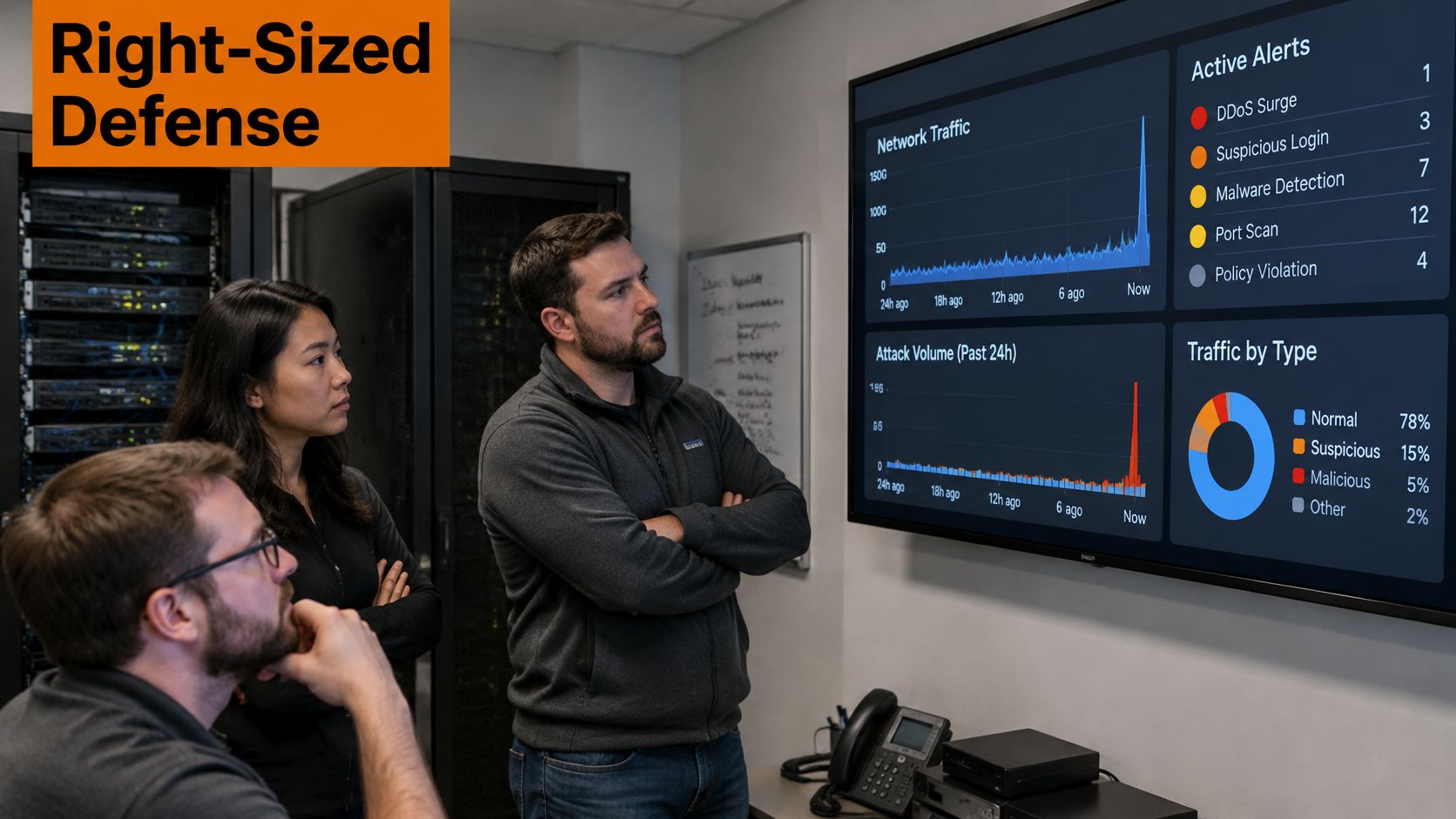
Answer three questions before selecting capacity: How much bandwidth does the origin link carry at peak? How many requests per second can the application tolerate? Can one region continue serving users if traffic surges there? Those answers reveal whether the bottleneck is the network, application, or regional design.
At the network edge, use ACLs or unicast reverse-path forwarding for source-address validation. Keep remotely triggered blackholing or Flow Specification as last-resort controls: they can protect other parts of the network by dropping attack traffic, but they may also make the target unavailable.
Track these signals separately:
- Requests per second
- Packets per second
- Concurrent connections
- Authentication failures
- Wallet and API latency
- Origin bandwidth
A sporting event can produce a legitimate rise in application requests even when network-layer indicators look normal. Conversely, packets may surge while application requests remain steady. Compare the signals instead of treating one busy graph as a verdict; the setup steps below turn those measurements into controls.
How to Set Up Basic Protection Step by Step
A reliable setup protects the route from the public internet to the origin, then puts sensible controls around the actions that matter to players. Use this sequence to avoid the common mistake of adding rate limits while leaving a direct route to the server open.
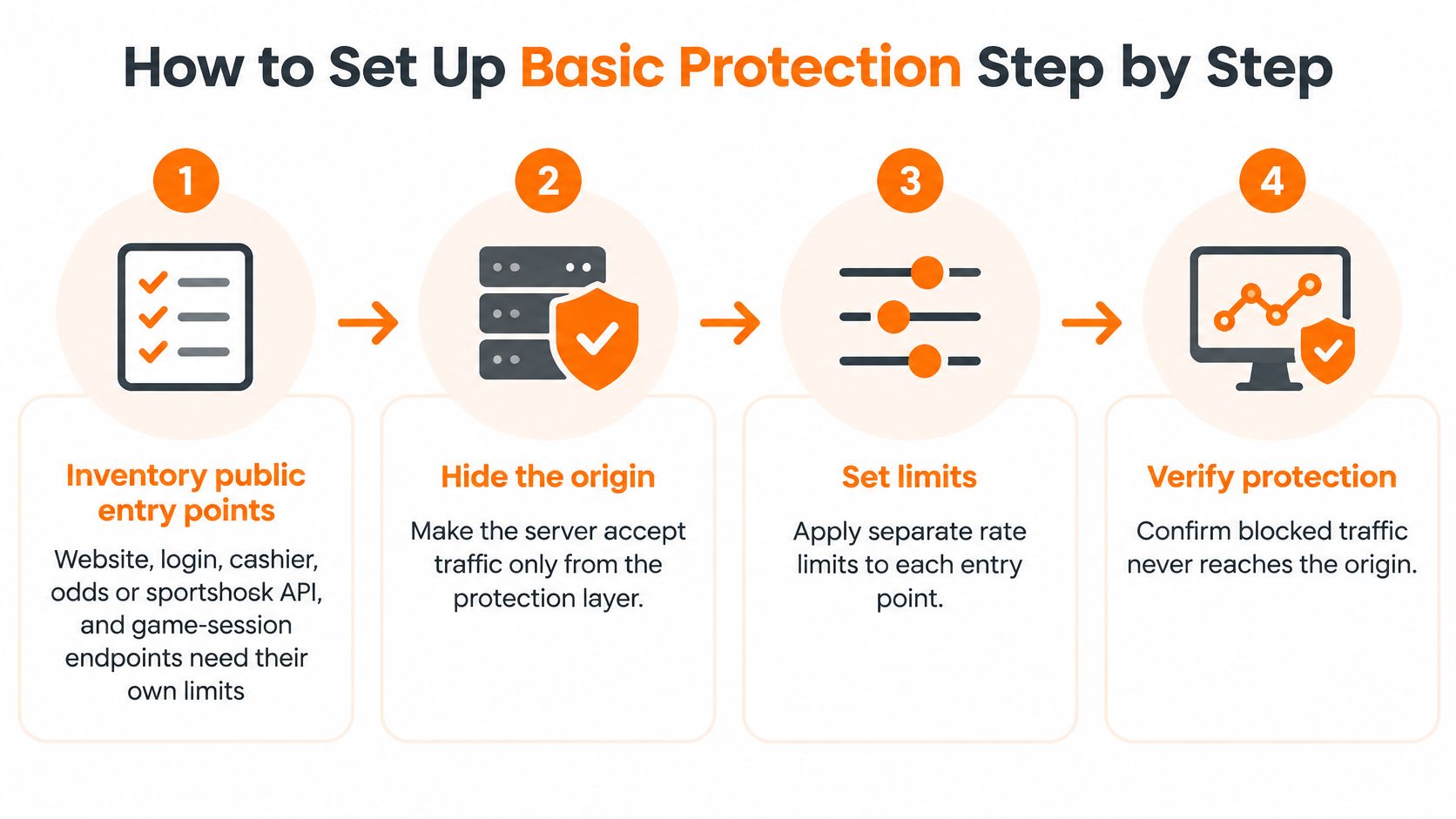
Inventory public entry points. List the website, login, cashier, odds or sportsbook API, and game-session endpoints. Give each its own limits, because static content and payment requests have different traffic patterns and consequences.
Hide the origin. Configure the server to accept public traffic only through the CDN or reverse proxy. Skipping this lockdown is a critical slip: if attackers can reach the origin directly, they can bypass controls placed at the protection layer.
Route traffic through the edge and cache static files. Send all public requests through the CDN or reverse proxy so it can filter or serve cacheable content before the application handles it. Confirm the origin can't still be reached through a separate public route.
Set endpoint-specific rate limits. Apply stricter controls to login, wallet, and payment routes, and looser ones to static assets. Avoid applying one limit to every endpoint, and use progressive challenges or temporary blocks rather than blanket IP bans that can affect legitimate players sharing an address.
Run the WAF in log mode first. Review its decisions and tune false positives before turning managed rules to blocking. A rule that rejects legitimate login or bet requests can create an outage even when the attack traffic is being stopped.
Enable network filtering. Configure source-address validation, SYN protection, and separate ICMP and UDP thresholds with your network or hosting provider. This adds protections that application-layer controls can't supply when a flood consumes capacity before it reaches the application.
Record a baseline. Measure normal request rates during ordinary hours and during a major event. A baseline gives the team context for deciding whether a sudden change is expected demand or a possible attack.
Alert on player-impact signals. Set alerts for request rates, authentication failures, wallet latency, and origin bandwidth, then test that they reach the right operator. A dashboard nobody responds to isn't an incident control.
Write down the escalation path. Name the person to contact at your hosting or DDoS provider and rehearse the handover. For an independent check of your site's security posture, investigate network security with SiteAlive as one part of your wider operational review.
Protecting Player Transactions, Not Just Bandwidth
Suppose repeated login attempts target several accounts while bonus claims rise, odds requests hammer the sportsbook API, and balance queries pile up at the wallet. None of this has to create a dramatic bandwidth spike. Yet authentication, database, API, or payment-provider capacity can become so busy that legitimate players can't place bets or deposit.
That's the weakness in judging protection only by traffic volume. In its guidance on understanding and responding to DDoS attacks, CISA emphasizes monitoring and traffic analysis to help operators distinguish an attack from maintenance or an internal network problem. Operators need both diagnosis and a plan for preserving the transactions players depend on.
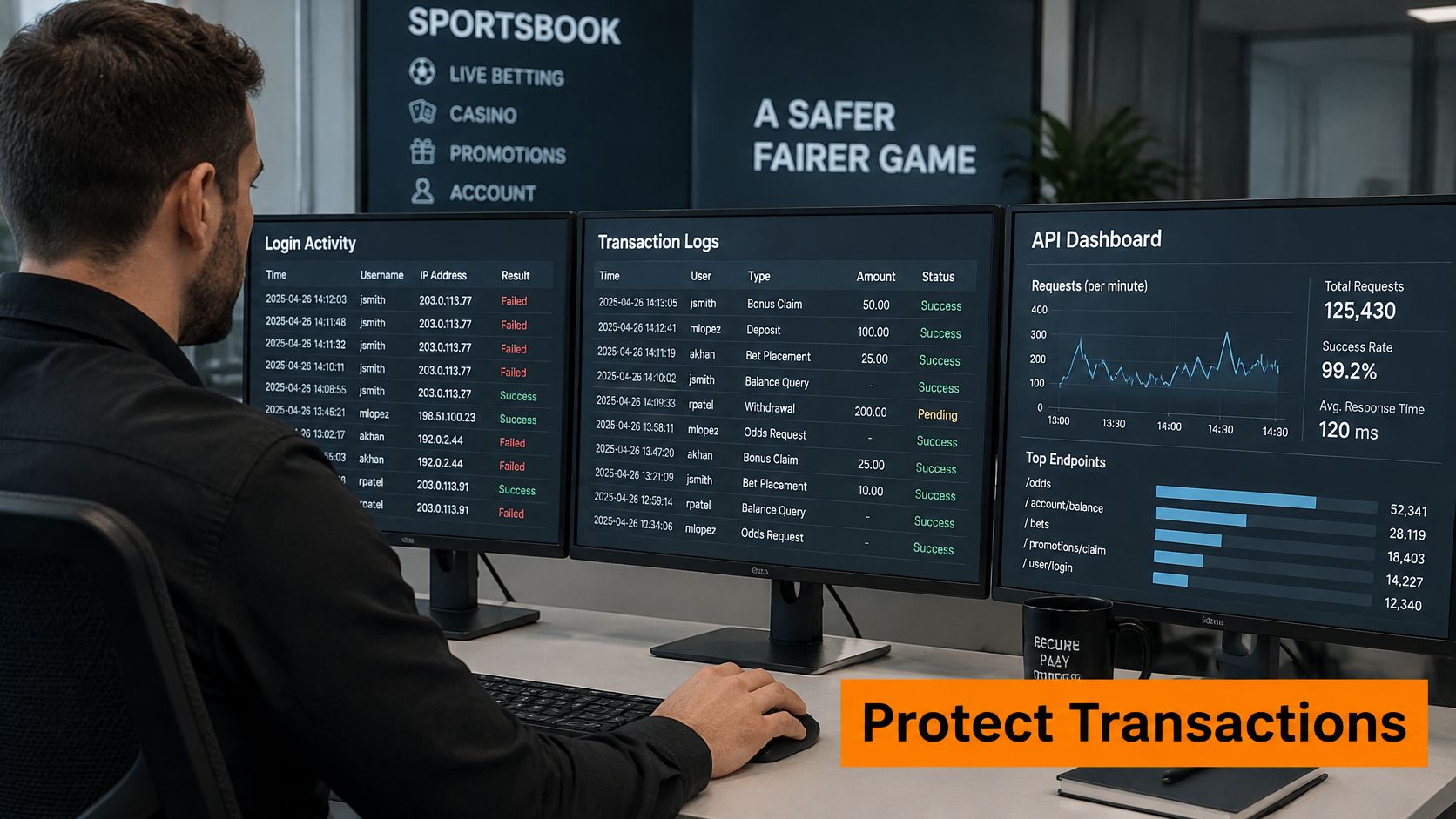
Measure availability by successful critical transactions and recovery time, not just packets blocked. Set limits by account, IP, device, and session; protect APIs and queues; and give authenticated users a path through when safe. Assign an owner for each control across the CDN, WAF, API gateway, origin, and payment-provider layers, so a failing dependency doesn't leave teams unsure who can act.
A practical transaction checklist should name each action, its normal operating limits, and the fallback if the primary route is under pressure. Build it around:
- Login: What limits apply, and what challenge or recovery path is available?
- Deposit: How will the cashier stay reachable if a payment dependency slows?
- Bet placement: How will the API preserve access for authenticated players?
- Withdrawal: What control prevents abuse while keeping legitimate requests manageable?
- Balance check: Can players still get account information without overwhelming wallet services?
For operators reviewing the wider payments setup, NexGrate's payments offering is relevant to the cashier and wallet side of the player journey.
When to Escalate and What to Ask Your Provider
Escalation should follow written triggers, not improvisation under pressure. Cloudflare reports that DDoS mitigation volumes have grown sharply in recent years in its 2025 Q2 DDoS report. Treat mitigation and escalation as planned operational work, not an emergency purchase.
Define each trigger alongside the action it requires:
- Traffic exceeds your link capacity: Contact the CDN, hosting, or upstream provider to request traffic scrubbing.
- The origin remains reachable after lockdown: Restrict access and follow the origin-exposure runbook.
- Authentication failures or wallet latency stay above the agreed threshold: Notify the named service owner and start the incident process.
- Outages recur during live events: Review capacity and controls with the provider before the next event.
- Contractual or regulatory uptime targets are at risk: Notify the accountable operations or compliance owner and invoke the agreed response plan.
Set the decision before the incident. Record the trigger, contact, and mitigation-time commitment in the runbook and contract.
Remotely triggered blackholing or Flow Specification can drop attack traffic to protect the rest of the network. Both can also take the targeted service offline, so reserve them for cases where keeping that service available is no longer possible.
Before signing or renewing, ask whether hosting includes DDoS protection, what monitoring and escalation support is provided, and what mitigation time the contract commits to. Keep the answers, contact path, and decision authority in one operational record. For guidance on selecting and managing suppliers, use these vendor management best practices.
Write down the thresholds, contacts, and fallback actions before an attack. Confirm that the people responsible can reach the right provider and authorize the response.
NexGrate's product pages cover Nex AI, Casino, Sportsbook API, Payments, Compliance, and Markets. Operators planning a launch or reviewing availability across player journeys can explore NexGrate's platform.