You're staring at three parallel problems and the board wants one answer. The license is moving, the brand is half designed, and the payment stack still feels like a set of promises rather than a live operation. That's exactly where a turnkey casino solution enters the conversation, not as a buzzword, but as a decision about whether you launch in weeks or spend quarters stitching systems together.
The mistake operators make is thinking the choice is about features. It isn't. It's about whether you want to buy speed, or whether you're willing to trade control, margin, and future flexibility for it. A credible turnkey stack can compress integration work into a contract, but a weak one just moves the complexity behind a cleaner sales deck.
Table of Contents
- The Operator's Dilemma on Launch Day
- What a Turnkey Casino Solution Includes
- Costs, Timelines, and Where Budgets Slip
- Turnkey vs Custom Build in Real Numbers
- Vendor Selection Checklist Operators Can Use
- The Lock-In Question Most Articles Skip
- Compliance, Crypto, and Migrating a Live Brand
- Next Steps and Operator FAQ
The Operator's Dilemma on Launch Day
The cleanest launch plans usually start with messy realities. The license opinion is in motion, the CRM is still in draft, and someone on the commercial side keeps asking when the first deposit test will happen because the PSP team says onboarding is “nearly done.” That's the exact moment when a founder or product lead stops debating branding and starts buying time.
A turnkey casino solution looks attractive here because it collapses a long list of decisions into one procurement event. Instead of managing separate choices for games, cashier, back office, KYC, AML, and reporting, you're choosing a platform owner who has already stitched those pieces together. The appeal is obvious, especially when the alternative is running point across several vendors and waiting on every one of them.
What operators miss is that launch day is not the finish line. It's the point where dependencies become real, because the payment stack has to work under live traffic, compliance logs have to stand up to scrutiny, and content updates can't wait for a separate integration window. The question isn't whether the bundle is broad enough, it's whether the bundle reduces launch risk without handing the vendor control over every future change.
Practical rule: if the vendor can't show you how the stack behaves when one part fails, you're not buying resilience, you're buying a prettier bottleneck.
That's why the decision should be framed before the demo. You're not shopping for a catalog. You're choosing how much operational control you're willing to trade for a shorter route to market.
What a Turnkey Casino Solution Includes
A credible turnkey casino solution is a single operating stack, not a pile of mismatched tools sharing a logo. It brings together game aggregation, payments, back-office tooling, KYC and AML workflows, CRM, and licensing support in one package. That is what operators are paying for, a faster path to launch and less integration work, not some abstract promise of simplicity.
The stack has to behave like one system
The game layer should sit behind a single aggregation API, not a web of direct studio links. Each extra direct integration adds certification work, vendor coordination, and more friction when a studio pushes new content or changes a release. The back office needs the same discipline, one control plane for player risk, bonus segmentation, exposure limits, fraud rules, affiliate tracking, and audit logs, so operations are not forced to reconcile five different dashboards.
For casino and sportsbook operators, the wallet is the control point. If the casino balance, sportsbook balance, and cashier do not live in the same financial model, reconciliation gets harder and support starts fielding avoidable balance confusion from players. Payments need the same treatment. PSP aggregation, routing fallback, multi-currency handling, and, where permitted, crypto support belong inside the cashier, not spread across separate systems.
| Layer | What It Does | Why It Must Be Unified |
|---|---|---|
| Game aggregation | Delivers casino content through one API | Cuts vendor connections and keeps content updates automated |
| Sportsbook engine | Manages pre-match and in-play betting | Prevents wallet and settlement fragmentation |
| Wallet and cashier | Handles balances, deposits, withdrawals | Keeps player funds and reconciliation in one place |
| Payments | Routes PSPs, cards, bank rails, crypto | Improves payment success and fallback handling |
| Back office | Runs CRM, risk, fraud, affiliate, logs | Gives one source of truth for operations |
| Compliance | Applies KYC, AML, geofencing, reporting | Reduces regulatory gaps across markets |
The stronger systems also give operators real-time dashboards, because risk spikes, GGR movement, and player behavior need to be visible as they happen, not after the finance close. A platform that shows the business in motion is doing its job. A stack that only stores data is just hosting it.
Costs, Timelines, and Where Budgets Slip
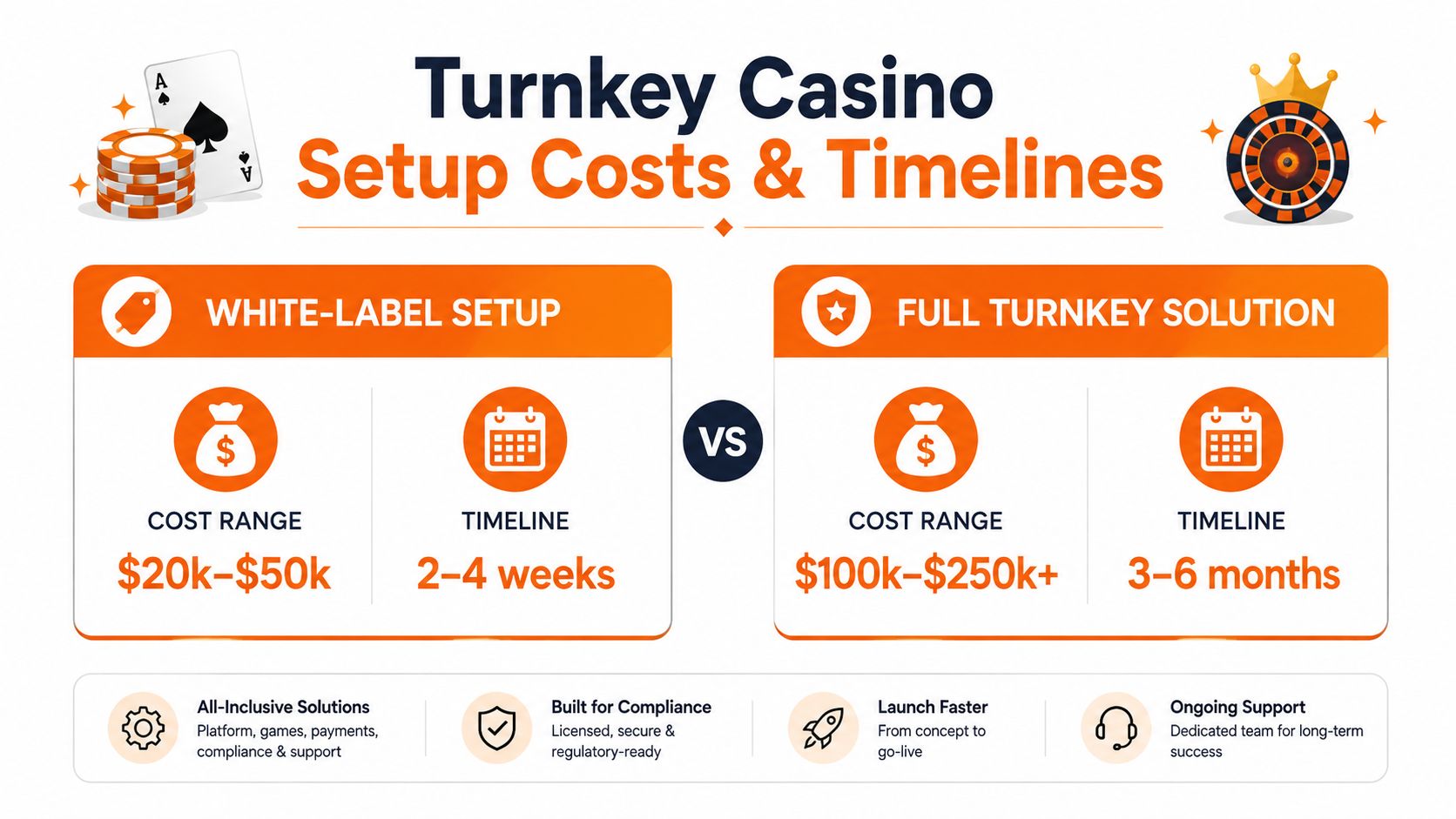
The headline numbers are tidy, the budget story is not. Industry summaries have described white-label / turnkey launch timelines of 4–6 weeks and average setup fees of $20k–$50k, while full turnkey deployments are often priced at $30k–$150k upfront with ongoing revenue share of roughly 10–20% of GGR. That range only holds when the license, PSP approvals, and game certifications are already in place.
What breaks the schedule
Launch delays usually come from dependencies operators treat as side issues. Payment routing is a common one, because one PSP can clear internal review while another stalls, and the stack still needs fallback logic when the primary route fails. Compliance changes can add delay too, especially when a market needs different reporting, geofencing, or responsible-gaming controls than the team planned for.
Budget rule: the setup fee is the visible cost, the revenue-share clause is the long tail, and integration exceptions are where your forecast usually gets bruised.
The other hidden cost is operational drift. If the platform charges revenue share, underperformance hurts more because you are paying on gross gaming revenue, not just a fixed infrastructure fee. That structure suits speed, but it tightens margin control, especially when content modules, payment enhancement work, or jurisdiction-specific compliance updates get added later.
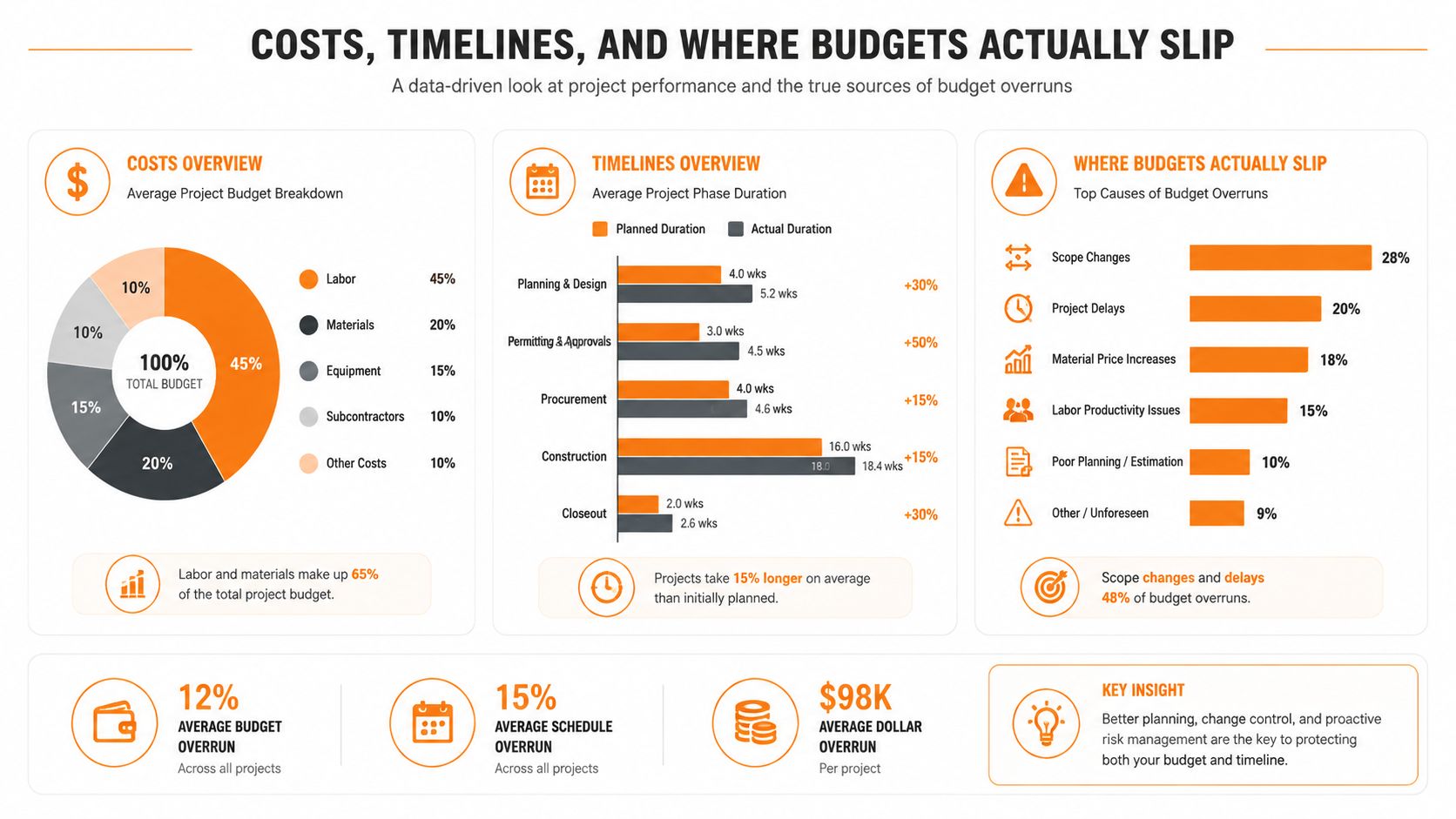
Budgets usually slip around the platform, not inside the headline fee. Payment routing, chargeback handling, compliance upgrades, and add-on modules like sportsbook or live dealer content all create extra work and extra cost. If a vendor talks only about launch speed and does not walk through those adjacent costs, they are selling the front door and ignoring the building.
For a fuller comparison of ownership versus speed, review the economics in online casino software development trade-offs.
Turnkey vs Custom Build in Real Numbers
A turnkey deal wins when speed matters more than ownership. A custom build wins when the roadmap is the product and the operator has the capital, engineering discipline, and market patience to carry it. That's the clean split, and pretending otherwise only helps vendors.
A turnkey casino solution compresses integration and reduces engineering burden. You get a working stack faster, a single vendor to coordinate, and a shorter path to market. A custom build gives you deeper control over wallet logic, content routing, risk rules, and release timing, which matters when the brand's differentiation depends on product mechanics rather than just acquisition.
The trade-off shows up in three places. First, control, because the turnkey owner decides how much roadmap flexibility you really get. Second, margin, because recurring revenue share can become more expensive over time than owned infrastructure. Third, exit risk, because moving away from a platform that owns the wallet, compliance workflow, and aggregator layer is much harder than replacing a point tool.
If you're evaluating that decision from scratch, a useful reference point is the broader economics of online casino software development, especially when you compare what you gain in ownership versus what you lose in launch speed: turnkey versus development trade-offs.
My view is simple. Use turnkey when the primary goal is fast entry into a regulated market with limited internal engineering. Build custom only when your strategy depends on product depth, multi-market control, or a long-lived operating model that justifies the upfront complexity.
Vendor Selection Checklist Operators Can Use
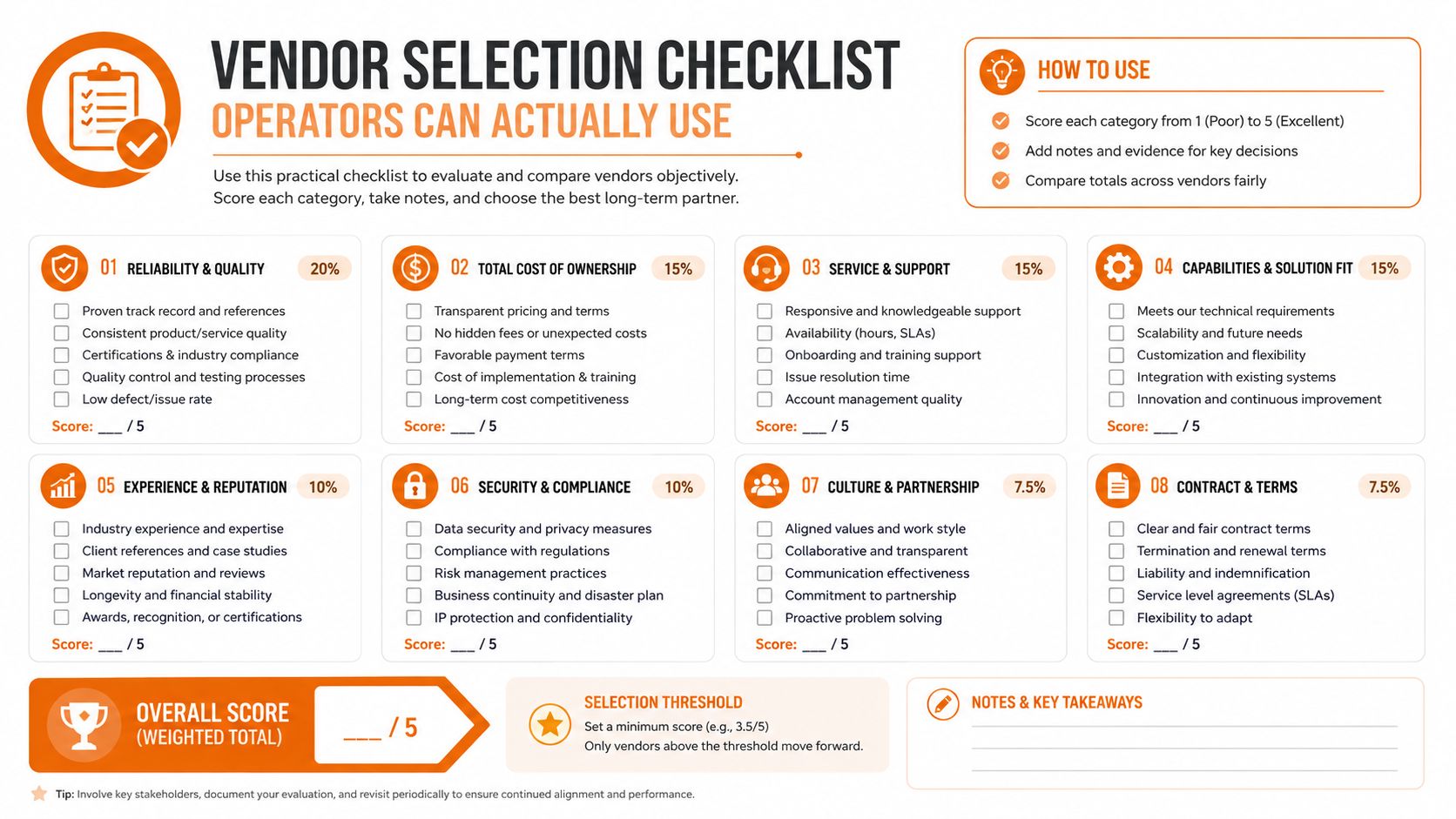
A demo should show failure modes before it shows polish. If a vendor can stage a beautiful lobby but cannot prove how the stack handles compliance, fallback routing, and migration, walk away. Good operators need pass or fail answers, not sales theatre.
What to test in the demo
- Single aggregation API: Ask to see one integration layer feeding the lobby, not separate studio calls hidden behind a wrapper.
- Real-time back office: Confirm the dashboard shows player risk, bonus segmentation, exposure limits, fraud rules, affiliate activity, and audit logs in one place.
- Audit-ready evidence: Request certification records for RNG, PCI DSS, ISO 27001, TLS in transit, and edge DDoS protection.
- SLA commitment: Treat 99.9% uptime as the floor for real-money operations and 99.95% as the stronger enterprise target, as noted in independent industry guidance.
- Payment redundancy: Verify that at least one acquiring PSP is live and a backup route exists when the primary provider fails.
- Jurisdiction controls: Make the vendor show geofencing, currency restrictions, and market-specific compliance rules rather than just describing them.
- Crypto handling: Confirm crypto sits in the same wallet and cashier flow, where permitted, instead of becoming a separate player balance.
- Migration path: Demand written terms for data portability, content migration rights, and the ability to move PSPs or aggregators without rebuilding the wallet.
If the vendor cannot answer these points cleanly, the platform is a dressed-up wrapper. If they can, you are looking at a system built for regulated operations, not a launch-day brochure.
A real procurement review should also cover how the vendor is managed after signature. Use vendor management best practices to test ownership, escalation paths, and how fast issues move from ticket to resolution.
The Lock-In Question Most Articles Skip
The risk in a turnkey deal isn't the launch. It's the years after launch, when the vendor owns the payment stack, the compliance update path, and the content roadmap that your brand depends on. That's where a lot of margin leakage hides, because the platform may still work perfectly while limiting your commercial options.
A lot of buyers only discover lock-in after they're live. The cashier is tied to one routing logic, the aggregator is hard to swap, and even routine content expansion requires vendor approval or a contract refresh. That's not a technical problem alone, it's a negotiating problem that should have been addressed before signature.
Deal rule: if you can't change PSPs or content sources without reworking the wallet, you don't own the operating model.
The clauses that matter are plain. Data portability should be explicit, content migration rights should be written down, and termination terms should explain how long the vendor will support the exit. If the platform promises flexibility but won't define how you leave, they're asking you to trust goodwill instead of contract language.
You should also look at roadmap dependence. If compliance updates, studio integrations, or payment changes all sit with the vendor's internal schedule, then your market expansion pace will always be partly outside your control. That's fine if speed is the only goal, but it's a weak position for operators planning multi-market growth or future migration.
Compliance, Crypto, and Migrating a Live Brand
Compliance, crypto, and migration belong in the same planning conversation because they all touch the wallet and the player record. A credible regulated stack should support KYC, AML, geofenced responsible-gaming enforcement, and audit-ready reporting under one operating model, not as disconnected modules. That same structure is what lets crypto work as a payment rail inside the cashier instead of becoming a separate financial island.
If you're evaluating crypto support, treat it as an extension of payments, not a standalone product. The question is whether deposits and withdrawals flow through the same wallet logic, the same risk rules, and the same reporting framework as fiat. For a practical view of how that should be handled, see crypto casino software considerations.
Migration is the part teams underestimate most. Moving a live brand off a legacy backend is a planning project, not a weekend cutover, because player balances, bonuses, open bets, payment rails, and compliance records all have to survive the move without freezing revenue. The right operator thinks in stages, parallel run, validation, and controlled switch, not in a single overnight flip.
Next Steps and Operator FAQ
Treat the next 30 days like a controlled procurement sprint. Shortlist three vendors, run a technical demo against the actual aggregation API, confirm uptime and security evidence, test payment fallback in a sandbox, and read the exit clauses as if they decide your next funding round. Operators who skip the exit review end up paying for convenience twice, once at launch and again when they try to leave.
FAQ
How long does a credible turnkey launch really take? A credible turnkey launch is fast only after licensing, payments, and game certifications are already in place. If those pieces are still pending, the timeline stretches because the vendor is waiting on third parties, not because the platform is magically ready.
What does a realistic revenue share look like? Realistic revenue-share models sit in the low double digits for many turnkey deals. The number matters less than the fine print, because service scope, payment handling, compliance support, and exit terms can erase the headline advantage.
Can one platform support both casino and sportsbook on one wallet? Yes, if the wallet, cashier, payments, and back office are unified in a single system rather than glued together after the fact.
What should operators check before signing? Check who owns the player data, how bonus logic is handled, what happens to payment routing when a provider fails, and whether the contract makes migration expensive. A polished demo means nothing if the operating model traps margin or makes future scaling harder.
What separates a credible turnkey stack from a dressed-up white-label skin? A credible stack gives you control over cashier logic, reporting, compliance workflows, and commercial terms. A skin gives you branding on top of someone else's roadmap.
NexGrate provides a turnkey white-label casino and sportsbook platform that combines content, betting, payments, and compliance controls in one stack. If you're comparing launch speed against lock-in and want a cleaner view of the operating model, visit NexGrate and evaluate the platform against the criteria in this article.