
A peak evening can expose the weakness in an operator's business continuity plan within minutes. During a major football fixture, the primary wallet database starts lagging while the live dealer studio feed drops. Deposits fail, settled bets don't credit, cashiers show conflicting balances, and player complaints reach regulators before the incident channel has agreed on a customer message.
Revenue is only part of the damage. The operator must preserve player balances, prove how bets were settled, explain the effect of the outage, and restore confidence with every affected stakeholder. A plan that says “activate the backup environment” isn't enough. The team must prove that the wallet, payment routes, betting services, content providers, and infrastructure still work together when one of them fails.
Table of Contents
- What Continuity Really Protects on an iGaming Platform
- Setting Recovery Targets Tied to Player Experience
- Mapping Third-Party Dependencies That Quietly Carry the Brand
- Building Runbooks and Communication Paths Your Team Can Execute From
- Testing Against Live Dependencies Instead of Paper Scenarios
- Keeping the Plan Alive as Architecture and Vendors Change
- Your First 90 Days of Continuity Work
What Continuity Really Protects on an iGaming Platform
A casino platform fails at the intersections between systems. The wallet may remain available while a payment provider stops confirming deposits. The sportsbook may accept a wager while an upstream odds feed has become stale. A live casino lobby may load correctly while the studio uplink is unusable. Players experience one brand, so they judge the entire operation by the seam where those systems meet.
Continuity therefore protects more than uptime. It protects the operator's license to operate, including player-balance integrity, bet settlement records, RNG outcomes, responsible gaming controls, and the evidence needed to explain an incident to a regulator. A business continuity plan must define what the operator preserves, what it can temporarily degrade, and what it must stop before uncertainty becomes a compliance problem.
The records that cannot be reconstructed casually
The wallet ledger is the foundation of recovery. If a PSP authorizes a deposit but the player balance does not change, the team needs a traceable state transition, not a manual guess. If a withdrawal is released while the processor is unavailable, reconciliation becomes a control issue that needs clear ownership and evidence.
The bet settlement log is the legal and operational record. It should show the accepted wager, relevant market or game outcome, settlement decision, and any later correction. RNG products also require preservation of the evidence demanded by applicable controls and certification arrangements.
Player session continuity covers a different risk. It records what the player saw, attempted, and expected. A disconnected live table, interrupted in-play wager, or bonus balance that appears to vanish can create disputes even when the underlying ledger remains technically correct.
Operational rule: Reachability alone doesn't prove recovery. It's proven when the player-facing transaction can complete, reconcile, and be explained.
DDoS protection belongs in this proof because an attack can disrupt access to several dependencies at once. The DDoS protection and hosting guidance should be assessed alongside wallet, KYC, payment, and content recovery paths, rather than held as a separate infrastructure document.
A useful continuity plan tests these seams directly. It checks whether the cashier can recover through an alternate provider, whether the sportsbook can suspend affected markets safely, and whether game content can fail over without corrupting sessions. It also requires compliance to produce a defensible incident timeline, with each material state change tied to an owner and supporting record. Recovery is proven through that end-to-end evidence, not through a green infrastructure dashboard alone.
Setting Recovery Targets Tied to Player Experience
Generic labels such as “Tier 1 database” don't tell an incident commander what to do. A better business continuity plan starts with the product surface and the player harm it must prevent. The same infrastructure component may support a critical cashier workflow and a lower-priority reporting function, so recovery priority belongs to the service journey, not the server catalogue.
Start with the player-visible failure
Write the target in operational language. “Restore wallet service” is incomplete. “Allow a player to view an accurate balance and complete a deposit without creating a duplicate credit” is testable. “Recover sportsbook” should become “accept, reject, or clearly suspend in-play wagers while preserving the settlement state.”
Use four questions for every important surface:
- What does the player lose? Is it access to funds, the ability to place a wager, a game session, a bonus balance, or a withdrawal?
- What must the operator preserve? Identify the ledger entry, bet event, game outcome, KYC decision, or communication record.
- What can degrade safely? A casino lobby may show selected cached content, while a wallet must not display an uncertain balance as if it were accurate.
- What must stop? If the operator can't verify odds, identity, payment authorization, or settlement, accepting new activity may create greater risk than pausing it.
Recovery Time Objective, or RTO, should measure the time from incident detection until the affected player-facing service is usable again. Recovery Point Objective, or RPO, should express the maximum wallet or bet-history loss a player could experience, not the interval between database dumps.
A practical target map
The following targets are planning examples for an operator to validate against its own obligations, architecture, and peak schedule. They aren't universal service promises.
| Product Surface | Recovery Time Objective | Recovery Point Objective | Player-Visible Failure Prevented |
|---|---|---|---|
| Cashier and wallet | 5 minutes | Near-zero wallet-ledger loss | Deposits, withdrawals, or balances becoming uncertain |
| In-play sportsbook | 5 minutes | No untraceable accepted wager | Bets appearing accepted without reliable odds or settlement state |
| Live casino | 60 minutes | Preserve session and transaction evidence | Tables remaining blank or sessions ending without an audit trail |
| Bonus services | Aligned to wallet recovery | Preserve issued and consumed bonus events | Miscredited rewards or inconsistent wagering requirements |
| Back-office reporting | Looser target | Reconstruct from authoritative records | Delayed internal reports without changing player balances |
The targets should reflect the event calendar. A payment failure during a slot tournament can block deposits, entries, prize funding, and withdrawals at the moment demand is concentrated. The same provider degradation during a quiet maintenance window may allow a controlled queue or temporary payment-method pause.
Contractual obligations also matter. A PSP's default SLA doesn't automatically become the operator's player promise. Map the provider commitment to the actual journey, then test whether your team can detect the failure, route around it, reconcile the outcome, and communicate clearly.
Mapping Third-Party Dependencies That Quietly Carry the Brand
The brand may be owned by one operator, but the player journey crosses a large dependency graph. A useful inventory groups vendors by failure domain and records the effect of partial degradation, complete loss, and uncertain recovery. This is more valuable than a flat list of company names because incident decisions depend on what each provider does for the player.
Industry commentary identifies third-party dependency and architecture concentration as major continuity gaps, especially for cloud-first and API-heavy businesses. The 2025 risk-trends discussion of cloud backup and continuity gaps also notes that cyber events, IT disruptions, adverse financial conditions, natural disasters, and HR issues remained the top five risks for another year. The practical implication is clear: map persistent and overlapping failures, not just one dramatic disaster scenario.
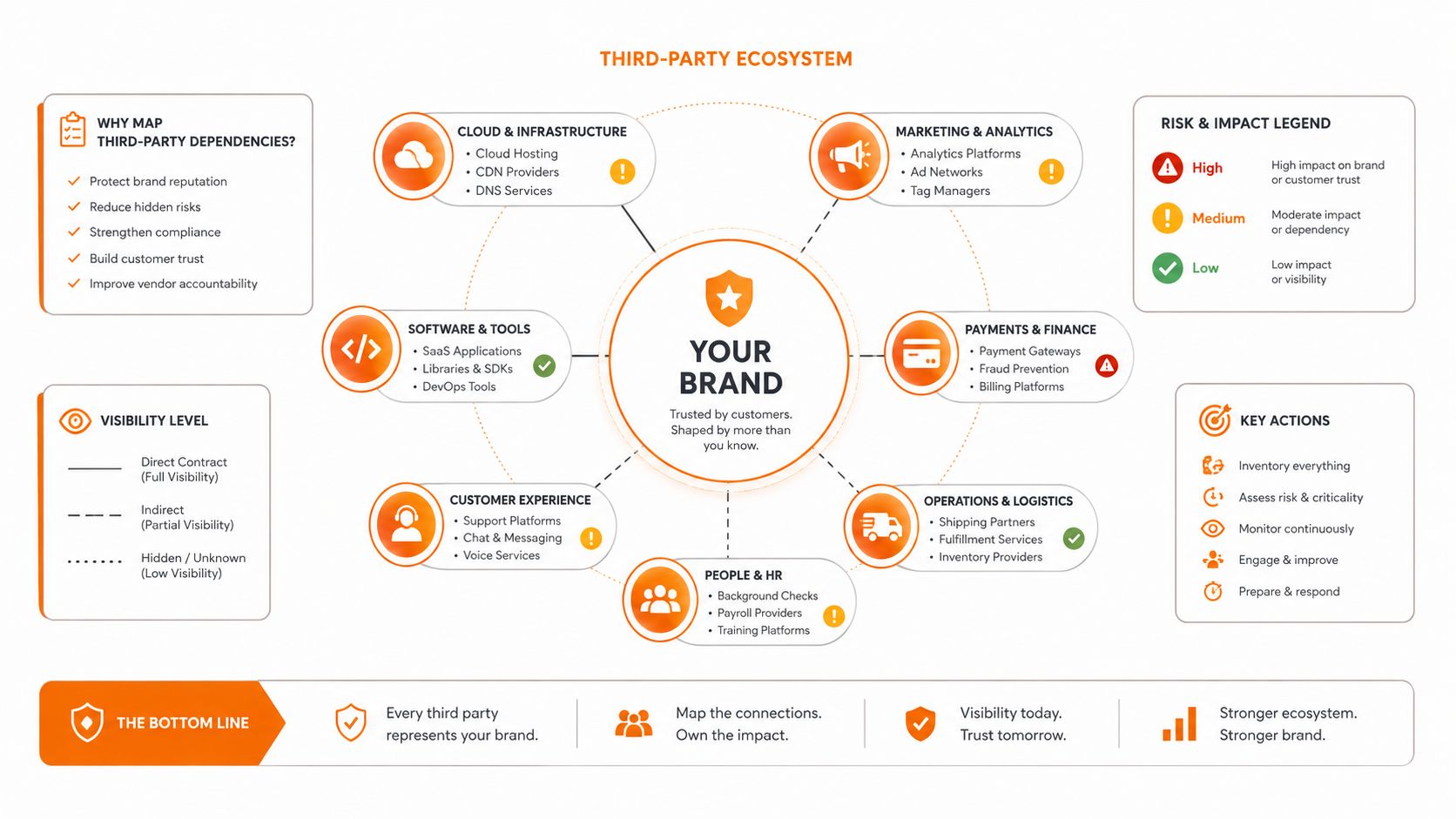
Read the graph by failure domain
Hosting and edge delivery cover the cloud region, CDN, routing, and edge nodes. A single-region impairment may call for traffic diversion, while a broader control-plane issue may require a degraded experience or controlled suspension of selected functions.
DDoS protection needs more than a provider name. Record scrubbing capacity, routing dependencies, failover mechanics, and the operational contact who can confirm mitigation. If the protection layer is degraded, the operator may need to reduce exposed surfaces before the application itself becomes unreachable.
Wallet integrity includes the ledger store, transaction service, settlement engine, bonus engine, and reconciliation process with the PSP. Partial failure changes the response. If balance reads are stale but writes are safe, the operator may permit limited access. If writes and reconciliation are uncertain, new deposits and withdrawals should stop.
Payment providers include acquirers, PSPs, alternative methods, and chargeback feeds. A failed card route doesn't necessarily justify closing the cashier if an alternate method can be verified. It does require clear routing rules and post-recovery reconciliation.
RNG and live casino studios have different recovery characteristics. Certified RNG content may support controlled routing to another provider or a restricted catalogue. Live casino depends on the studio uplink, table availability, session state, and the integrity of game events. A cached lobby isn't a substitute for a functioning table.
Sportsbook feeds need primary and secondary odds providers, trading-desk handoff, market suspension rules, and replay procedures. A feed loss during morning line maintenance may be tolerable. During live betting, accepting wagers without current and defensible pricing isn't.
KYC and AML vendors support identity verification, document checks, transaction monitoring, and risk decisions. If verification is unavailable, an operator needs pre-approved rules for existing players, new registrations, withdrawals, and enhanced due diligence. A single network attack can affect the KYC vendor, PSP, and wallet API together, so the response must consider the combined player journey.
Use the vendor management best practices to connect contractual review with actual recovery evidence. Ask how often each provider tests its own failover, which recovery objectives apply to your service, and what evidence you'll receive after an exercise.
The provider map becomes useful only when it drives decisions. For each dependency, document whether the correct response is fail over, degrade, queue, or stop accepting new activity.
The map is easier to operate when teams can see those relationships rather than reading them as disconnected entries.
Building Runbooks and Communication Paths Your Team Can Execute From
Long documents stored in a shared drive rarely help an on-call engineer during an incident. A usable business continuity plan puts current contacts, observable checks, safe decision points, and escalation routes inside the incident channel. It also gives compliance teams evidence that the response matched the jurisdiction and the affected activity.
Write for the first ten minutes
Create one operational runbook for each tier-one surface: wallet, payments, sportsbook feed, live casino studio, and KYC. Name a primary owner and backup. List the data sources they must verify before changing traffic, pausing transactions, or switching providers.
Start with a short checklist:
- Confirm scope: Identify the affected brand, jurisdiction, product, provider, and start time.
- Verify state: Compare application health, transaction events, provider status, queues, and reconciliation signals.
- Protect integrity: Freeze uncertain writes or affected markets before attempting recovery.
- Select the response: Choose failover, graceful degradation, queueing, or suspension according to the available data.
- Record decisions: Capture the operator, timestamp, evidence, and reason for every material action.
Decision trees must remove guesswork at the seams between systems. If the primary PSP is unavailable and the alternate route passes synthetic validation, fail over. If the live studio is unreachable while no alternative table is ready, show a clear service message instead of leaving players in an endlessly loading lobby. If sportsbook odds are stale, suspend the affected markets. The trading team must be able to defend every accepted wager.
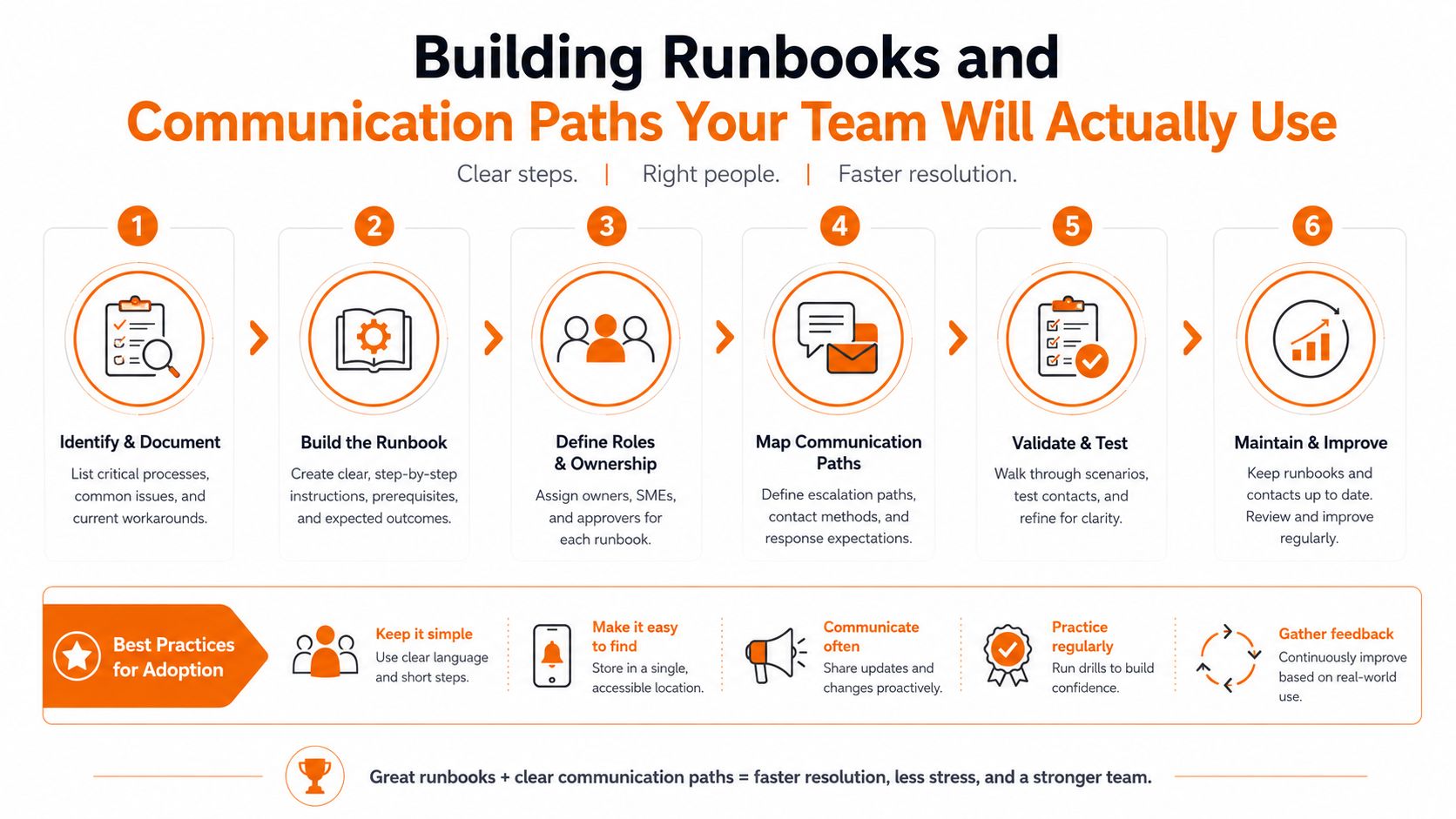
Separate the communication lanes
Each stakeholder needs information suited to its decision. Regulators need a formal incident record and the notification cadence required by the relevant jurisdiction. Players need plain language about what remains available, what is paused, and how stuck deposits or unsettled wagers will be handled. Providers need severity classification, technical evidence, contractual references, and any PCI or DPA implications.
Build a communication matrix with named approvers for every lane:
| Audience | First Message | Follow-up Evidence |
|---|---|---|
| Regulators | Formal incident notice through the approved path | Timeline, affected functions, player impact, corrective actions |
| Players | Status page, in-product banner, and support guidance | Resolution update, transaction handling, dispute route |
| Providers | Severity tag and technical symptoms | Logs, correlation identifiers, recovery confirmation |
Prepare sensitive wording before systems fail. Keep templates ready for an unavailable cashier, suspended sportsbook markets, interrupted live play, and delayed verification. Add escalation timers, war-room activation criteria, and a post-mortem trigger that opens within 24 hours of closure.
The runbook must define prohibited actions too. Manual balance edits, unverified settlement overrides, and uncoordinated provider switching can turn an outage into an audit problem. Each step should leave an evidence trail that supports recovery decisions and later regulatory review.
Testing Against Live Dependencies Instead of Paper Scenarios
A tabletop exercise can reveal confusion about roles, but it can also create false confidence. If nobody restores a wallet database, routes a synthetic deposit through an alternate PSP, replays a sportsbook feed, or redirects a live casino session path, the team has tested conversation rather than recovery.
The 2025 continuity and resilience survey describes a shift away from static documentation toward exercising, testing, and recovery planning. It also reports that 45.5% of organizations distinguish business continuity and resilience as separate functions, up from 39.4% in 2023. The broader lesson is that a written plan may already be mature while operational proof remains weak. See the BCI reporting on continuity and resilience practice for that direction of travel.
Measure the player-facing result
Begin with a controlled non-production environment or an agreed maintenance window. Notify the relevant providers, define the abort condition, and make sure the exercise can't contaminate live balances or settlements. Then measure the recovery from detection through service usability, not from the moment someone opens the runbook.
Track:
- Restore duration: How long until the player-facing workflow is usable?
- Data loss window: Which wallet, wager, or session events require reconstruction?
- Reconciliation outcome: Do internal records match PSP, game, and sportsbook evidence?
- Player effect: How many functions were unavailable, degraded, queued, or suspended?
- Decision quality: Did the team choose the correct control response before recovery?
Move from off-peak drills to high-pressure scenarios only after the controlled test produces reliable evidence. A payment failover that works with a synthetic deposit may still fail when bonus rules, currency handling, chargeback status, or withdrawal checks are included.
| Dependency | Test Action | Pass Criterion | Measured Metric |
|---|---|---|---|
| Wallet database | Restore a controlled replica and replay transaction events | Balance and ledger state reconcile without an unexplained gap | Restore duration, reconciliation result, data loss window |
| Payment provider | Route synthetic deposits and withdrawals to an approved alternate | Transactions receive clear states and return to the wallet correctly | Completion time, duplicate-prevention result, exception count |
| Sportsbook feed | Disable the primary feed and replay approved market data | Affected markets suspend or recover without untraceable wagers | Feed recovery time, market state accuracy, wager traceability |
| Live casino studio | Redirect the studio route to a prepared backup path | Players receive a functioning table or an explicit service state | Route-switch time, session outcome, player-visible interruption |
| KYC vendor | Simulate verification unavailability | Registration and withdrawal rules apply without bypassing controls | Decision latency, queue state, escalation accuracy |
A failed exercise is useful if the team records the exact gap and assigns a repair. Production is the expensive place to discover that the alternate PSP has a different callback model or that the backup studio can't preserve the session evidence regulators expect.
Keeping the Plan Alive as Architecture and Vendors Change
A business continuity plan decays whenever architecture changes without a corresponding recovery review. A new payment provider, a wallet microservice refactor, a different KYC vendor, or a new RNG studio can alter the failure order even if the customer-facing product looks unchanged.
Put continuity inside change control
Any release that touches a tier-one dependency should trigger a short continuity assessment. The owner should confirm that the runbook still matches the deployment, the RTO and RPO remain achievable, the provider contacts are current, and the communication matrix still identifies the correct approvers.
The review can be lightweight, but it can't be optional. Require evidence for changes that affect:
- Transaction state: wallet writes, settlement, reconciliation, bonuses, or withdrawals.
- External routing: PSPs, odds feeds, studios, CDN, DDoS controls, or KYC services.
- Regulatory records: audit logs, reporting, responsible gaming controls, or incident evidence.
- Recovery topology: regions, replicas, queues, backup stores, or failover mechanisms.
Third-party churn deserves its own register. Replacing a KYC vendor or RNG studio may change recovery priorities more than an internal code refactor because the new provider can introduce different APIs, callbacks, data retention rules, and outage procedures.
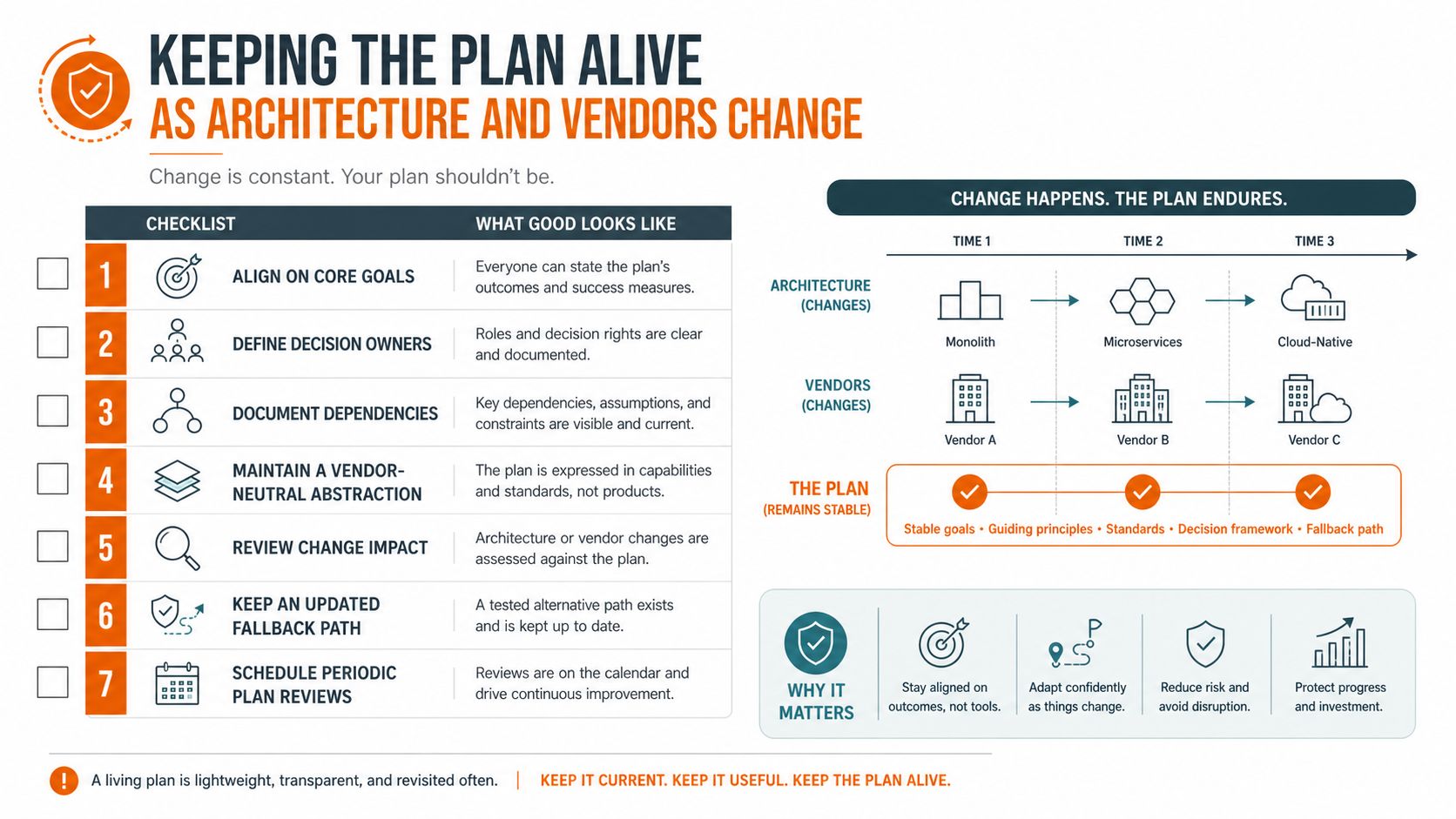
Re-baseline on a regular operating rhythm
Run a quarterly re-baselining exercise that confirms owner rosters, provider contacts, status pages, regulator paths, service dependencies, and recent test results. Leadership should see plan health as a recurring governance item, with open gaps, overdue tests, failed objectives, and changes awaiting validation.
The iGaming software provider landscape can also change the dependency picture as operators add content, payments, sportsbook capability, or compliance integrations. The plan should reflect the live architecture, not the architecture that existed during the last audit.
Governance test: If a release can change recovery behavior without opening a continuity task, the change-control process is incomplete.
Your First 90 Days of Continuity Work
You don't need to wait for a new platform, a large budget, or a perfect risk register. Start with the journeys that can create the greatest player, regulatory, and reconciliation exposure, then produce evidence that the team can recover them.
Sprint one establishes ownership
During the first two weeks, inventory every external dependency connected to the player journey. Record the provider, service, contract SLA, escalation route, data exchanged, failure mode, and internal owner. Assign a backup owner before the inventory is considered complete.
The first artifact should be a dependency register that an incident commander can use without asking who owns the PSP callback, the sportsbook feed, or the KYC escalation. Include wallet, payments, content, studios, sportsbook, hosting, edge protection, and compliance services.
Sprint two sets the recovery contract
Use the next two weeks to set RTO and RPO targets for each product surface. Tie each target to a player-visible failure and an explicit control decision. Compliance should review the treatment of unsettled wagers, interrupted game sessions, withdrawals, identity checks, and incident communications.
Don't copy provider objectives directly into the plan. Ask whether your own detection, routing, reconciliation, and communication steps can meet the target.
Sprint three turns policy into action
Draft three runbooks covering wallet failure, payment-provider failure, and one sportsbook feed failure. Each needs a named owner, backup, pre-flight checks, decision tree, escalation timer, provider contact, player message, and regulator-ready evidence list.
Use the runbooks in a review with operations, engineering, payments, trading, customer support, and compliance. A runbook that only makes sense to its author isn't ready for an outage.
Sprint four proves one dependency
Execute the first live dependency test against a non-production wallet mirror. Restore the controlled environment, replay representative transaction events, and verify that wallet reconciliation completes within the agreed RPO. Record restore duration, data loss window, reconciliation exceptions, and the player-facing decision the production team would make.
Reserve the final week for review rather than squeezing it out of the schedule. Compliance should receive one regulator-ready artifact, leadership should receive a written gap decision, and owners should agree which issues must close before the next quarter.
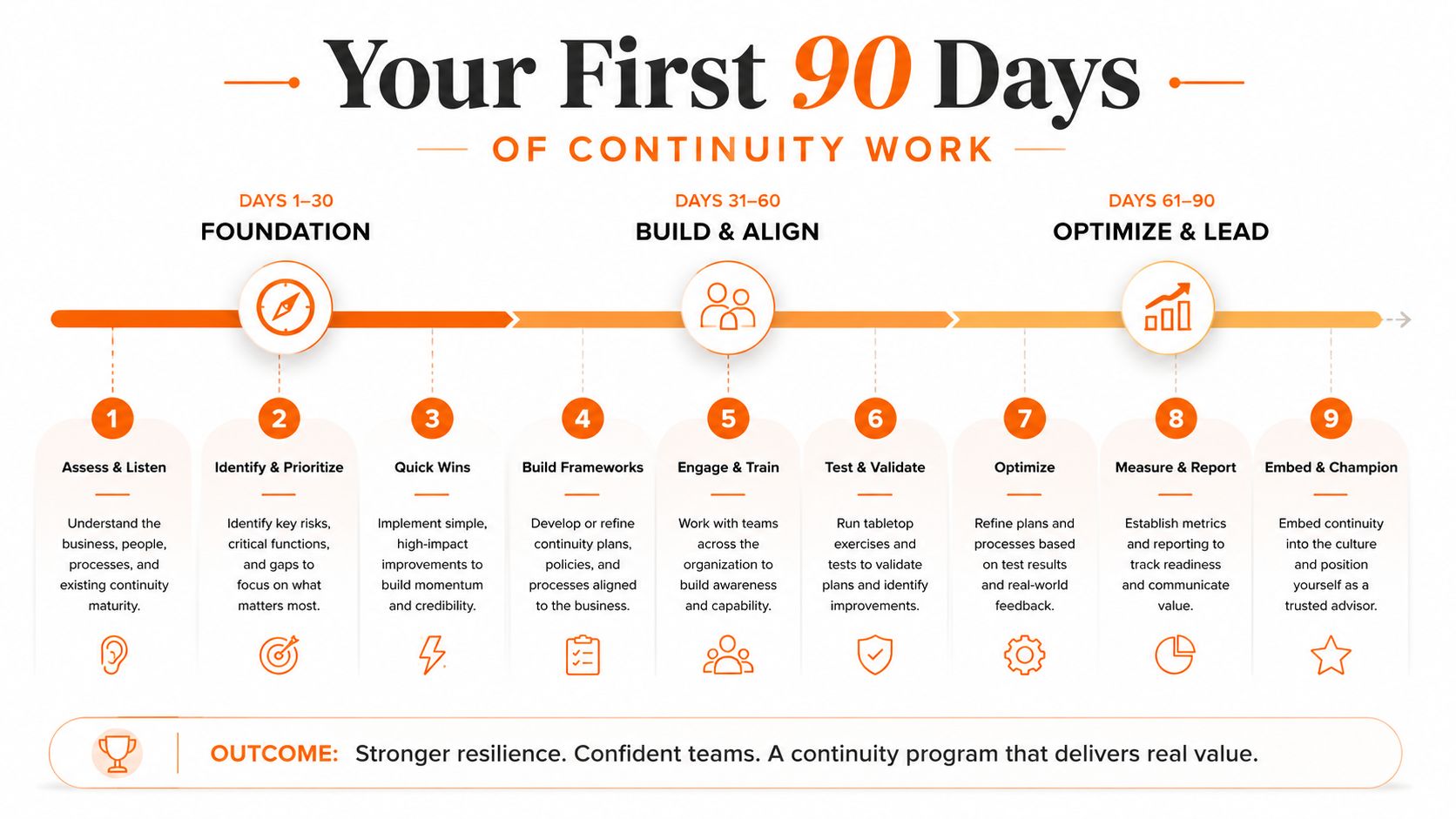
Start this week with a shared spreadsheet if that's what the team has. Name the owners, map the wallet and payment path, select the first controlled test, and schedule the compliance review. The first measurable proof isn't a polished document. It's a recovery result that shows whether the operator can protect balances, preserve settlement evidence, and communicate clearly when the seams fail.
NexGrate provides a turnkey white-label platform for online casino and sportsbook operations, bringing together wallets, payments, betting, game content, compliance controls, hosting, and third-party integrations. If you're building or migrating an iGaming operation and need a platform that supports practical continuity planning across those seams, visit NexGrate to discuss your operating model.