The most feature-rich affiliate platform isn't automatically the right choice for an iGaming operator. A casino and sportsbook brand needs more than click attribution. It needs commission logic that can reflect CPA, revenue share, and hybrid deals, reporting that separates products and markets, compliance workflows that withstand scrutiny, and payment records that reconcile with player and transaction data.
The operating model matters just as much. A turnkey white-label platform may provide native referral tracking inside the same backend as the wallet, casino, sportsbook, payments, and compliance tools. A specialist affiliate system can offer deeper partner administration and multi-brand controls, but it may demand substantial integration work. A general partnership platform can bring broader automation and partner discovery, yet may require more configuration before it fits regulated gaming.
The list below evaluates each option against those realities. The key question isn't which tool has the longest feature list. It's which tracking layer gives your team reliable attribution, defensible commission decisions, manageable integrations, and enough control for the brands and jurisdictions you operate.
Table of Contents
- 1. NexGrate Turnkey Casino and Sportsbook Platform
- 2. Income Access by Paysafe
- 3. NetRefer
- 4. PartnerMatrix by EveryMatrix
- 5. Affilka by SOFTSWISS
- 6. Cellxpert
- 7. MyAffiliates
- 8. impact.com
- 9. Everflow
- 10. TUNE
- Top 10 Referral Tracking Platforms, Feature Comparison
- Turn the Shortlist Into a Tracking Decision
1. NexGrate Turnkey Casino and Sportsbook Platform
NexGrate takes a different approach from a standalone affiliate vendor. It combines a turnkey white-label casino and sportsbook platform with a native affiliate and referral tracking system, so the tracking layer can sit close to the player wallet, gaming products, payment records, and operator back office. For a B2B operator launching a new brand, that consolidation can matter more than adding another specialist dashboard.
The platform supports casino and sportsbook operations through one backend and one wallet. Its stack includes game and live-dealer integrations through a single API, pre-match and in-play sportsbook functionality, and payment coverage for fiat, cards, bank rails, and crypto. That creates a practical advantage for commission reconciliation because casino activity, sportsbook activity, deposits, withdrawals, and player status don't have to be stitched together across unrelated vendors.
NexGrate's native referral tooling supports CPA, revenue-share, and hybrid commission structures, including multi-tier arrangements and real-time conversion tracking, as described on its pricing page. The important distinction is operational rather than promotional. A commission model is only useful when the operator can connect it to approved player events, validated deposits, revenue definitions, chargebacks, fraud decisions, and payment eligibility.
Where the integrated model fits
The platform includes role-based back-office access, KYC and AML workflows, risk and fraud controls, geofencing, detailed logs, and audit-ready ledger accounting. Those controls give compliance and finance teams a shared operating environment for reviewing partner activity and supporting regulatory processes. Hosting, DDoS protection, monitoring, and deployment support also reduce the number of technical owners involved in keeping the tracking and gaming stack available.
- Commission flexibility: Suitable for CPA, revenue share, hybrid, and multi-tier partner arrangements.
- Product coverage: Casino and sportsbook activity can be managed through the same player and wallet environment.
- Compliance ownership: KYC, AML, geofencing, risk controls, and audit logs support regulated-market operations.
- Payment reconciliation: Fiat and crypto workflows can be considered alongside player and partner settlement processes.
- Implementation trade-off: The white-label model reduces launch effort, but highly bespoke engineering may depend on the platform's capabilities and integration process.
Practical rule: If the operator's main problem is fragmented infrastructure, native referral tracking can be more valuable than a technically deeper tool that creates another reconciliation boundary.
NexGrate is strongest for operators that want to launch or expand brands without separately assembling casino content, sportsbook, payments, compliance, hosting, and affiliate infrastructure. It's less suited to a business seeking a standalone consumer referral tool or a completely independent partner-management environment. The trade-off is clear: faster rollout and fewer vendors in exchange for less freedom to redesign every layer independently.
2. Income Access by Paysafe
Income Access is built around affiliate and partner program management for sectors that include iGaming, lottery, and fintech. Its relevance to established operators comes from the combination of CPA, revenue-share, and hybrid commission plans, granular reporting, affiliate payment workflows, and marketing asset management.
For a casino and sportsbook group, the reporting model deserves particular attention. Geo-targeting and segmentation can help teams separate performance by market, brand, product, or partner audience, provided the underlying data mapping is implemented correctly. Enterprise reporting also gives compliance and finance teams a stronger basis for reviewing how commissions were calculated and whether partner activity aligns with market restrictions.
Operational fit for multi-brand groups
Income Access is a logical candidate for operators that already have a core gaming platform and want a dedicated partner layer above it. Its association with Paysafe may also be relevant to teams that prefer a vendor familiar with payment operations and enterprise-scale governance. That doesn't eliminate integration work. Player registration, first deposit, qualified player, net gaming revenue, chargeback, and exclusion events still need precise definitions before the reporting can support payment decisions.
- Best fit: Multi-brand and multi-market operators that need a specialist affiliate system.
- Commission logic: CPA, revenue share, and hybrid structures support common iGaming commercial arrangements.
- Reporting: Granular segmentation is useful for market and partner analysis.
- Payment operations: Integrated affiliate payment management can reduce manual settlement steps.
- Trade-off: Enterprise-oriented onboarding may require more coordination than a native white-label module, and pricing is custom rather than publicly transparent.
Income Access should be assessed as an enterprise operating layer, not as a link generator. Ask how it handles duplicate player records across brands, cross-brand partner permissions, revised revenue calculations, negative carryover rules, and post-settlement adjustments. Those details determine whether the platform reduces finance work or merely relocates it into a more interface.
3. NetRefer
NetRefer is purpose-built for iGaming affiliate operations, which makes it relevant when the operator's main requirement is a mature partner-management environment rather than a general referral campaign tool. Its feature set is oriented toward the full affiliate lifecycle, from recruitment and onboarding through tracking, commission administration, reporting, and ongoing relationship management.
The platform's configurable data models, reports, and integrations are particularly important for operators with different commercial rules across casino and sportsbook products. A sportsbook partner deal may depend on qualified betting activity, while a casino arrangement may depend on deposits or revenue definitions. NetRefer's value lies in giving the operator room to model those distinctions instead of forcing every brand into one generic conversion event.
Auditability without losing commercial flexibility
Compliance-ready workflows and auditability are central considerations in regulated gaming. The operator should verify how approval records, marketing permissions, player status, commission changes, and payment decisions are retained and exposed to internal reviewers. A platform can provide the relevant controls, but the operator still has to define ownership, review thresholds, and escalation procedures.
NetRefer uses a subscription-based commercial model, which can make budgeting easier to forecast than a purely usage-driven arrangement. Public documentation on exact tiers and pricing is limited, so procurement teams should request a full implementation and operating-cost schedule rather than evaluating the subscription in isolation.
- Strongest use case: Regulated operators that need end-to-end affiliate lifecycle management.
- Multi-brand question: Confirm how brands, currencies, products, and partner permissions are separated or consolidated.
- Integration question: Map player, deposit, gaming, revenue, fraud, and payment events before signing off the design.
- Main drawback: The feature depth may be heavy for a smaller program with limited partner complexity.
Operators comparing NetRefer with a native platform should also examine the practical differences described in this guide to iGaming affiliate programs. The decision isn't only about functionality. It's about whether specialist depth justifies another system of record, another integration boundary, and another team responsible for reconciliation.
4. PartnerMatrix by EveryMatrix
PartnerMatrix is notable because it addresses both online affiliates and offline acquisition through its Affiliate Platform and Agent System. That combination matters for operators whose commercial structure includes traditional affiliate partners, local agents, sub-agents, or hierarchical acquisition arrangements.
The Agent System can provide a closer fit for partner hierarchies than a conventional affiliate portal. In practice, the operator should test how parent-child relationships affect attribution, commission overrides, reporting visibility, approval rights, and payment liability. A hierarchy that looks simple in a sales demonstration can become complicated when one agent introduces a partner, another partner supplies the traffic, and multiple brands share the same player account infrastructure.
A flexible deployment, with integration responsibility
PartnerMatrix Intelligence adds business intelligence and real-time data capabilities, while anti-fraud functionality addresses a problem that basic attribution tools often underplay. The broader referral software market is dealing with invalid traffic and paid acquisition disguised as referrals, according to Track360's 2026 affiliate marketing analysis. For iGaming teams, that means fraud controls should be evaluated alongside click, registration, deposit, and revenue reporting.
PartnerMatrix can be deployed as a standalone module or alongside broader EveryMatrix infrastructure. That flexibility is useful for operators that want to phase adoption, but it also creates a design decision. A standalone deployment may require more work to synchronize player identities, gaming events, wallet movements, exclusions, and finance data with the operator's existing platform.
- Best fit: Operators managing both digital affiliates and offline agent channels.
- Hierarchy support: Useful where partner relationships extend beyond a flat affiliate structure.
- Analytics: Real-time BI can support faster operational review and partner optimization.
- Fraud: Anti-fraud capabilities should be tested against the operator's specific traffic and payout risks.
- Trade-off: Enterprise implementation and custom pricing make technical discovery essential before procurement.
PartnerMatrix is compelling when the partner model is structurally complex. It may be excessive for a single-brand operator with a small, flat affiliate program and native tracking already connected to the wallet.
5. Affilka by SOFTSWISS
Affilka by SOFTSWISS is built for iGaming and has a particularly relevant profile for crypto casinos, multi-currency programs, and operators managing several brands. Its modular structure supports common gaming commission models, affiliate communication, partner acquisition, advanced reporting, and multi-brand administration.
Crypto creates operational requirements that a general partnership platform may not address cleanly. The operator has to consider currency presentation, wallet and payment reconciliation, payout approvals, player value calculations, and reporting consistency across fiat and digital-asset workflows. Affilka's iGaming orientation makes it a candidate for teams that want those requirements considered within the affiliate environment rather than handled through separate workarounds.
Multi-brand administration is the real test
The strongest use case isn't running referral links for a crypto casino. It's managing a portfolio in which partners promote different brands, products, and currencies under rules that may vary by market. The evaluation should therefore focus on role permissions, brand-level reporting, shared affiliate accounts, cross-brand deduplication, and the treatment of a player who interacts with more than one product.
- Crypto and multi-currency fit: A natural shortlist option for operators with digital-asset payment requirements.
- Commercial models: Supports commission structures commonly used by iGaming programs.
- Partner operations: Acquisition and communication tools can support affiliate relationship management.
- Reporting: Advanced reporting should be tested against the operator's revenue and settlement definitions.
- Trade-off: Quote-based modules and a primarily iGaming-focused ecosystem may limit fit for businesses seeking a general partnership platform.
A modern interface can improve adoption among affiliates and managers, but it doesn't replace a precise data contract. Before launch, define which system owns player status, deposit validation, revenue calculations, fraud decisions, and final commission approval. That ownership model will determine whether the platform remains reliable when a player's account status changes after the initial conversion.
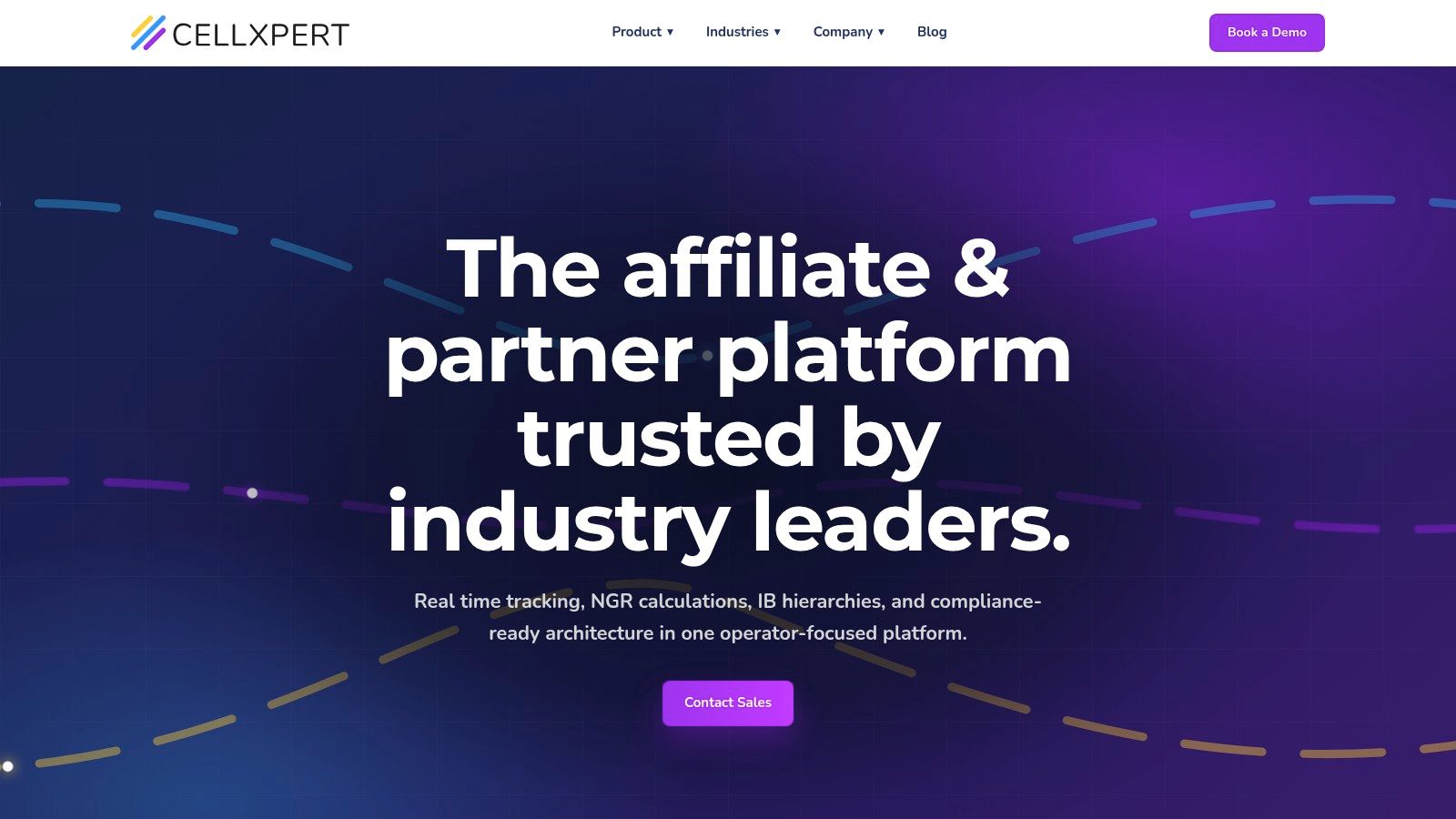
6. Cellxpert
Cellxpert is designed for regulated iGaming and financial operators, with a strong emphasis on affiliate KYC, consent management, marketing compliance, and audit trails. That makes it a serious option for organizations where partner approval and marketing evidence are as important as attribution volume.
A regulated operator shouldn't treat affiliate onboarding as a simple account-creation workflow. The business may need to verify identity, capture consent, review promotional materials, restrict activity by market, and preserve a record of decisions. Cellxpert's compliance orientation can help centralize those controls, although the operator must still configure policies and assign responsibility between compliance, affiliate management, legal, and finance.
Compliance controls need operating discipline
Multi-brand and real-time reporting can help management compare performance without losing visibility into brand-level activity. Cellxpert's relevance also extends to groups operating across gaming and finance, where different regulatory expectations may apply to similar partner processes. That broader vertical fit can be useful, but it may introduce configuration work if the operator wants highly specific gaming event logic.
- Compliance: Affiliate KYC and consent management are central strengths.
- Auditability: Marketing controls and audit trails support retrospective review.
- Reporting: Multi-brand, real-time reporting can reduce fragmented oversight.
- Cross-vertical fit: Useful for groups with gaming and financial operations.
- Trade-off: Pricing is not publicly listed, and the platform's benefits depend on disciplined process setup.
A compliant workflow isn't created by an audit log alone. The operator must decide which events require review, who can approve them, and how exceptions reach finance and compliance.
Cellxpert is best evaluated with a process map, not a feature checklist. Walk through a new affiliate application, a restricted-market campaign, a suspected breach, a commission dispute, and a final payout approval. If the system records each decision without forcing teams back into spreadsheets and email, it is closer to the operating model a regulated brand needs.
7. MyAffiliates
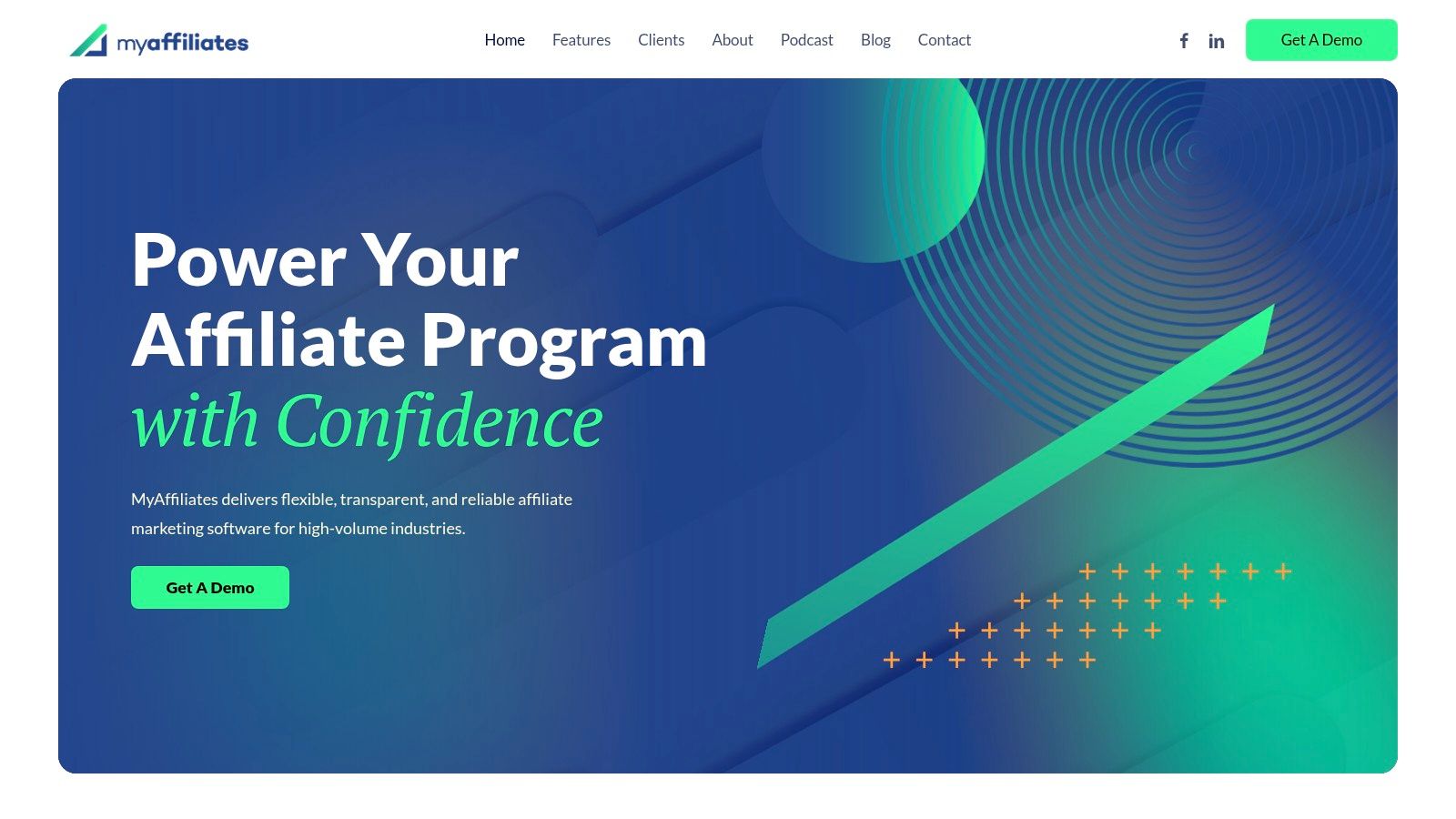
MyAffiliates focuses on the problem many established gaming groups eventually face, multiple brands, products, and providers operating under one affiliate structure. Its consolidation model can give affiliate managers one program environment rather than separate portals for each casino or sportsbook brand.
That arrangement can reduce administrative duplication, but only if the reporting and permissions are granular enough. Partners may need a single login with access to selected brands, while finance may need consolidated liabilities and compliance may need a brand-by-brand view. The operator should test both perspectives before assuming consolidation will simplify governance.
A consolidation-first option
MyAffiliates supports flexible commission plans across casino and sportsbook products, along with migration assistance and integrations. That makes it relevant to operators replacing legacy affiliate stacks, particularly where historical partner data and commercial agreements need to be carried into a new environment.
- Multi-brand strength: Consolidates brand activity under one affiliate program.
- Product logic: Supports different commission arrangements for casino and sportsbook operations.
- Migration: Dedicated migration support can reduce the risk of losing partner or commission history.
- Commercial clarity: Setup and monthly fees provide a straightforward structure, although the full commercial proposal still needs review.
- Trade-off: The platform is focused on iGaming and may be more than a very small program requires.
The main implementation risk is not moving affiliate names and links. It's preserving the meaning of historical data. Before migration, document how the old system defined registrations, deposits, active players, revenue, reversals, negative balances, and unpaid commissions. Then reconcile a sample of legacy records against the new model before the first payment cycle.
8. impact.com
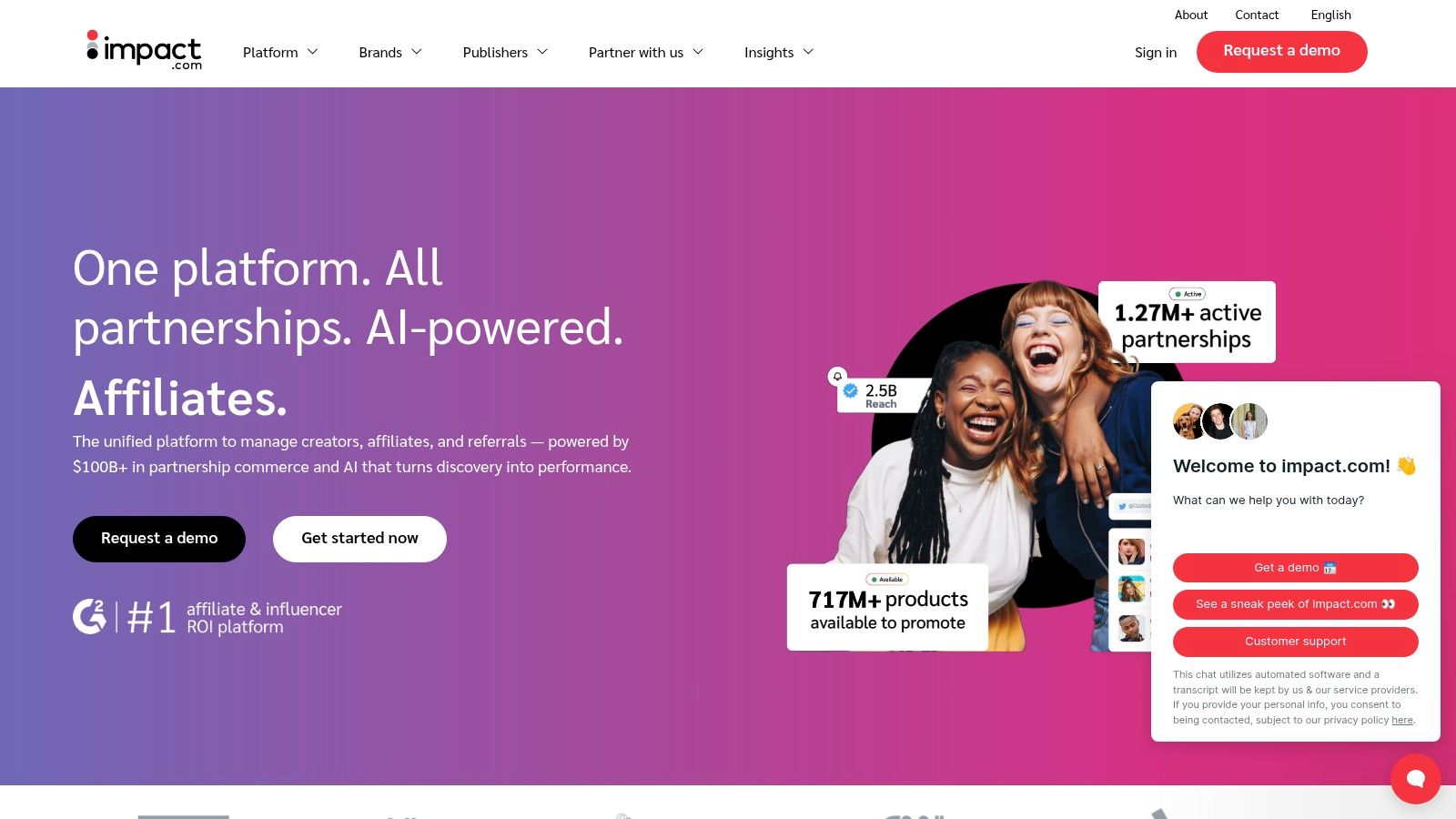
impact.com serves a broader partnership market, including affiliates, influencers, and B2B partners. Its contracting, payout automation, partner marketplace, cross-channel deduplication, attribution controls, APIs, and integrations make it more flexible than a tool designed only for casino affiliate programs.
That breadth can help an iGaming group with partnership activity beyond standard affiliates. A brand might manage media partners, content creators, strategic partnerships, and business development relationships in one environment. The risk is that general flexibility doesn't automatically translate into gaming-ready commission accounting. Operators must confirm how the platform handles player qualification, revenue-share calculations, regulatory restrictions, negative adjustments, and evidence for disputed payouts.
General partnership breadth versus gaming depth
impact.com scales from starter programs to complex enterprise partnerships, with advanced capabilities available at higher tiers. That tiering matters because a basic deployment may cover contracting and partner tracking while leaving the most important controls behind a more expensive configuration.
Use impact.com when the partnership program extends beyond traditional iGaming affiliates and the organization values a broad marketplace and workflow automation. Don't choose it solely because it can track multiple partner types. Compare its data model with the gaming platform's player and transaction model first.
- Broader use case: Affiliates, influencers, and B2B partnerships can share one management layer.
- Automation: Contracting and payout workflows may reduce administrative handling.
- Attribution: Cross-channel controls are relevant when paid, organic, influencer, and affiliate activity overlap.
- Integration: APIs and connectors can support custom data flows, but implementation ownership remains important.
- Trade-off: Costs and feature access can increase as the program becomes more complex.
For operators designing retention and advocacy journeys alongside affiliate acquisition, this overview of gaming loyalty programs provides useful context. Referral incentives should not be evaluated separately from bonuses, loyalty tiers, and player lifecycle rules, because overlapping rewards can create duplicate credit or unintended liability.
9. Everflow
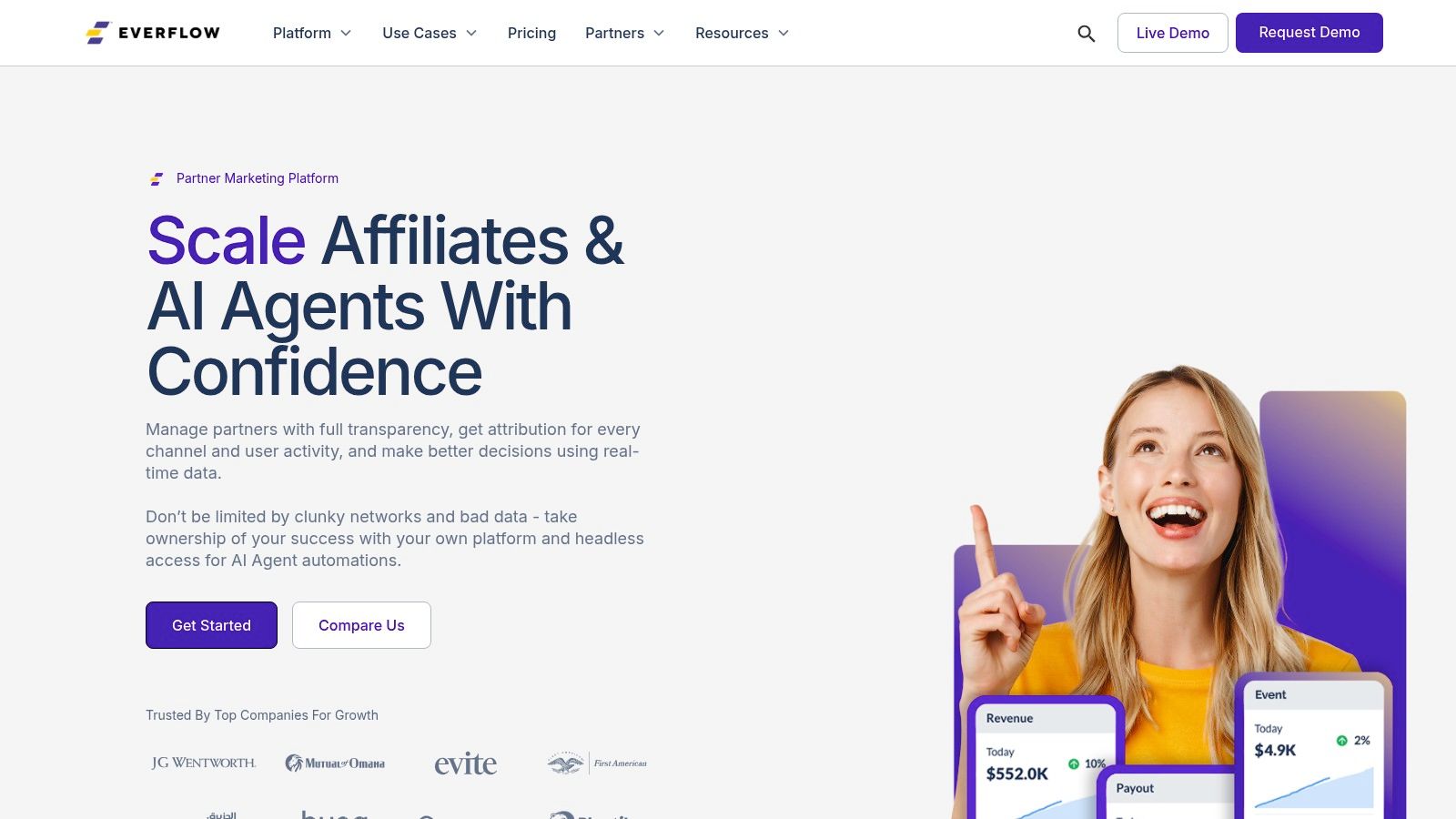
Everflow is an API-first partner and affiliate tracking platform covering affiliates, referrals, influencers, media buying, and offline channels. Its direct-link attribution, ad-platform and CRM integrations, analytics, partner marketplace, and Everflow Pay create a flexible foundation for advertisers that want to connect referral data with a wider acquisition stack.
The API-first design is the most relevant feature for iGaming teams with capable technical resources. An operator can potentially build reporting and automation around its own data model rather than accepting a fixed dashboard. That flexibility has a cost. The team must define event schemas, identity matching, attribution precedence, commission approval, and reconciliation with the gaming platform.
Strong for custom data flows
Everflow's real-time analytics and placement-level reporting can help teams investigate which partner placements generate valuable activity. In a sportsbook context, that may mean separating campaigns by sport, market, or acquisition source. In casino, teams may need to compare registration and deposit activity with longer-term revenue and fraud outcomes.
Everflow Pay supports domestic and international partner payouts, but payout functionality should be evaluated against the operator's own fiat and crypto requirements. A general payout feature may not replace the controls needed for gaming-specific approval, source-of-funds review, tax handling, or payment reconciliation.
- Integration strength: API-first architecture supports custom reporting and automation.
- Attribution scope: Direct links and cross-channel tracking suit complex acquisition paths.
- Partner discovery: A marketplace can support recruitment, although relevance to regulated iGaming must be verified.
- Payment operations: Built-in partner payouts may reduce manual administration.
- Trade-off: Pricing is not publicly published, and advanced capabilities require configuration and operational maturity.
Everflow is a better fit for an operator that wants to own the integration architecture than for a brand seeking a mostly pre-integrated gaming stack. Treat technical staffing as part of the purchase decision, not as an implementation detail to resolve later.
10. TUNE
TUNE is a configurable partner and affiliate marketing platform known for control over tracking, onboarding, APIs, and white-label workflows. It supports advertiser and network deployments, which makes it relevant to operators or groups that want to build a bespoke partner environment rather than adopt a narrowly defined gaming product.
TUNE's flexibility can accommodate unusual approval flows, partner structures, and attribution requirements. It may also support a group that operates multiple advertiser-style programs under a broader network model. The operator has to supply more of the domain design, however. Casino and sportsbook events, revenue calculations, compliance restrictions, fraud holds, and payout approvals won't become iGaming-specific because the platform is configurable.
The technical ownership trade-off
APIs and white-label options create room for integration with a gaming platform, CRM, payments environment, and internal reporting stack. They also place more responsibility on the implementation team. Developers and data owners must maintain the event pipeline, resolve identity conflicts, monitor postbacks, and validate that partner commissions match the financial ledger.
- Best fit: Brands or networks requiring bespoke partner workflows and strong technical control.
- Onboarding: Customizable signup and approval flows can reflect internal compliance policies.
- Deployment: Advertiser and network models support different organizational structures.
- Integration: APIs and white-label options support extensive customization.
- Trade-off: The strongest results require technical resources, and some features vary by plan or sit behind higher tiers.
TUNE belongs on a shortlist when the operator's differentiation depends on its own partner logic. It's less attractive when the business wants a ready-made iGaming operating model with minimal development. Teams comparing that build-versus-buy decision should also review the broader capabilities expected from iGaming software providers.

Top 10 Referral Tracking Platforms, Feature Comparison
| Product | Core features | UX / Quality | Price & value | Target audience | Unique selling points |
|---|---|---|---|---|---|
| NexGrate, Turnkey Casino & Sportsbook Platform 🏆 | Casino + sportsbook, single wallet, payments (fiat & crypto), backoffice, compliance, hosting | ★★★★★, operator-grade, audit-ready | 💰 Custom enterprise, fast time‑to‑market & lower vendor overhead | 👥 B2B operators & brand owners (regulated markets) | ✨ Unified stack, MGA‑aligned compliance, live‑dealer + RNG aggregation |
| Income Access (Paysafe) | Affiliate tracking, commission models, payments, granular reporting | ★★★★☆, enterprise‑grade | 💰 Custom (enterprise), integrated payouts | 👥 Large iGaming operators, multi‑brand teams | ✨ Deep iGaming affiliate experience, Paysafe ecosystem |
| NetRefer | End‑to‑end affiliate lifecycle, reports, compliance workflows | ★★★★☆, configurable | 💰 Subscription model, predictable costs | 👥 Regulated operators needing affiliate lifecycle | ✨ iGaming‑focused, customizable data models & reports |
| PartnerMatrix (EveryMatrix) | Affiliate + Agent system, BI, anti‑fraud, real‑time data | ★★★★☆, robust | 💰 Custom pricing | 👥 Operators managing affiliates & offline agents | ✨ Agent system + real‑time BI, strong anti‑fraud |
| Affilka (SOFTSWISS) | Multi‑brand, commissions, reporting, modular crypto support | ★★★★☆, modern UI | 💰 Quote‑based, modular | 👥 Crypto casinos & multi‑currency programs | ✨ Crypto‑friendly, modular for multi‑brand setups |
| Cellxpert | Affiliate KYC, consent, audit trails, real‑time reporting | ★★★★☆, compliance‑heavy | 💰 Custom (enterprise) | 👥 Regulated gaming & finance operators | ✨ Strong KYC/GDPR controls & marketing auditability |
| MyAffiliates | Multi‑brand consolidation, commission flexibility, migration | ★★★★☆, operator‑focused | 💰 Setup + monthly, transparent | 👥 Operators consolidating legacy affiliate stacks | ✨ Clear commercial model, migration support |
| impact.com | Contracting, payouts, partner marketplace, attribution | ★★★★☆, scalable | 💰 Starter → enterprise tiers (transparent SMB option) | 👥 Brands scaling affiliate/influencer programs | ✨ Large partner marketplace & automation |
| Everflow | Multi‑channel tracking, integrations, Everflow Pay, marketplace | ★★★★☆, API‑first | 💰 Contact sales (tiered) | 👥 Advertisers needing flexible API integrations | ✨ Real‑time analytics, built‑in payouts (Everflow Pay) |
| TUNE (HasOffers) | Custom tracking, white‑label, robust APIs, partner onboarding | ★★★★☆, highly configurable | 💰 Plan‑based, varies by scale | 👥 Networks & advertisers needing bespoke setups | ✨ Deep tracking control, white‑label & network support |
Turn the Shortlist Into a Tracking Decision
Start with the operating model, not the vendor demo. Define whether the program covers casino, sportsbook, or both. Record the brands, jurisdictions, currencies, partner types, hierarchy rules, and payment methods involved. A single-brand fiat casino with a flat affiliate structure has a very different requirement from a multi-brand group combining sportsbook, crypto payments, offline agents, and regulated-market reporting.
Then define the attribution contract. Specify the exact events that create a commissionable outcome, such as registration, approved deposit, qualified player, settled bet, gaming revenue, or another internally approved event. Decide which system owns each event and how the tracking tool receives it. In a post-cookie environment, privacy-first server-to-server attribution and direct billing or transaction integration deserve particular scrutiny. Track360's technology timeline describes the industry's shift toward server-to-server postback, server-side tagging, and adaptation to browser privacy and regulatory changes.
Commission rules should be written before the shortlist is narrowed. Include CPA, revenue share, hybrid, tiered, sub-affiliate, and agent scenarios where relevant. Document negative adjustments, chargebacks, fraud holds, duplicate credit, player exclusions, brand switching, currency conversion, and the point at which a reward becomes payable. If a vendor can track clicks but can't prove how the final commission connects to an audited transaction, it isn't solving the finance problem.
Test the workflow, not just the dashboard
Map KYC, consent, partner approval, marketing review, fraud investigation, reporting access, and payout authorization. Fraud needs its own acceptance criteria. The broader market evidence indicates that invalid traffic is material and that manual detection can be slower than automated approaches, as documented in Track360's referral fraud analysis. An iGaming operator should therefore ask how rules are tuned, how legitimate high-volume partners are protected from false positives, and how a held commission moves through review.
Integration ownership is the next decision. A native referral module inside a white-label platform may reduce vendor count and keep player, wallet, gaming, payment, and compliance records close together. A specialist system may be justified when the operator needs multi-brand administration, independent partner hierarchies, advanced reporting, or controls that the native module doesn't provide. A general platform may be right when the program includes influencers, B2B partnerships, and other channels, but the operator must prove that gaming-specific data and compliance requirements can be represented accurately.
Model the total cost beyond the subscription or setup fee. Include implementation, custom development, data migration, partner support, compliance review, payout operations, monitoring, reconciliation, and future changes to the gaming platform. Cloud delivery is becoming a significant part of referral software adoption, with cloud-based deployment holding 62.7% share in 2025 in one market estimate from Grand View Research. That supports SaaS consideration, but it doesn't remove the need to assess data residency, access controls, uptime responsibilities, and exit procedures.
Use this implementation checklist before launch:
- Tracking links: Confirm link formats, campaign parameters, direct-link behavior, and brand or market restrictions.
- Postback and API data: Test delivery, retries, authentication, event ordering, and failure alerts.
- Player events: Define registration, deposit, qualification, gaming, exclusion, and account-status events.
- Revenue events: Document the approved revenue formula, reversals, adjustments, currency treatment, and settlement timing.
- Approval workflows: Set ownership for affiliate KYC, consent, creative review, fraud holds, and payout approval.
- Commission validation: Reconcile test partners and test players against the gaming and financial ledgers.
- Audit logs: Verify that configuration changes, approvals, overrides, and payout decisions are retained and exportable.
- Launch monitoring: Watch event loss, duplicate attribution, unexplained commission changes, traffic quality, and payment exceptions from the first live cycle.
For a white-label operator, the first question is whether native referral tracking already covers the required commission models, reporting, compliance evidence, and reconciliation. Move to a specialist platform when multi-brand complexity, partner hierarchies, regulated-market auditability, or independent reporting justify the additional integration boundary. The best choice is the one your teams can operate and defend, not the one with the most impressive feature catalogue.
NexGrate combines casino and sportsbook operations, a unified player wallet, fiat and crypto payments, compliance tooling, and native referral tracking with flexible commission models. If you're assessing whether an integrated white-label stack can replace a separate tracking layer, visit NexGrate to review the platform for your launch and operating requirements.