
A bankroll is a dedicated pool of money set aside exclusively for betting, separated from living expenses and used as the base for unit sizing and staking limits. A conservative framework commonly keeps each wager around 1% to 2% of the bankroll, helping the capital withstand losing streaks.
That definition matters whether you're a new bettor checking a sportsbook balance or an operator reconciling casino deposits, sportsbook exposure, bonuses, and withdrawals. In both cases, the word describes money that needs a boundary, a purpose, and a risk policy. The difference is scale. A player protects personal finances from wagering decisions, while an iGaming business protects liquidity and settlement obligations across many products and accounts.
Table of Contents
- What a Bankroll Really Means in Gambling
- Player Bankroll vs Operator Reserves
- Staking Sizes and Risk Metrics
- Practical Rules and Common Mistakes
- Bankroll Management for iGaming Operators
- How Bankroll Rules Change Across Products
- Why Bankroll Discipline Is a Competitive Edge
What a Bankroll Really Means in Gambling
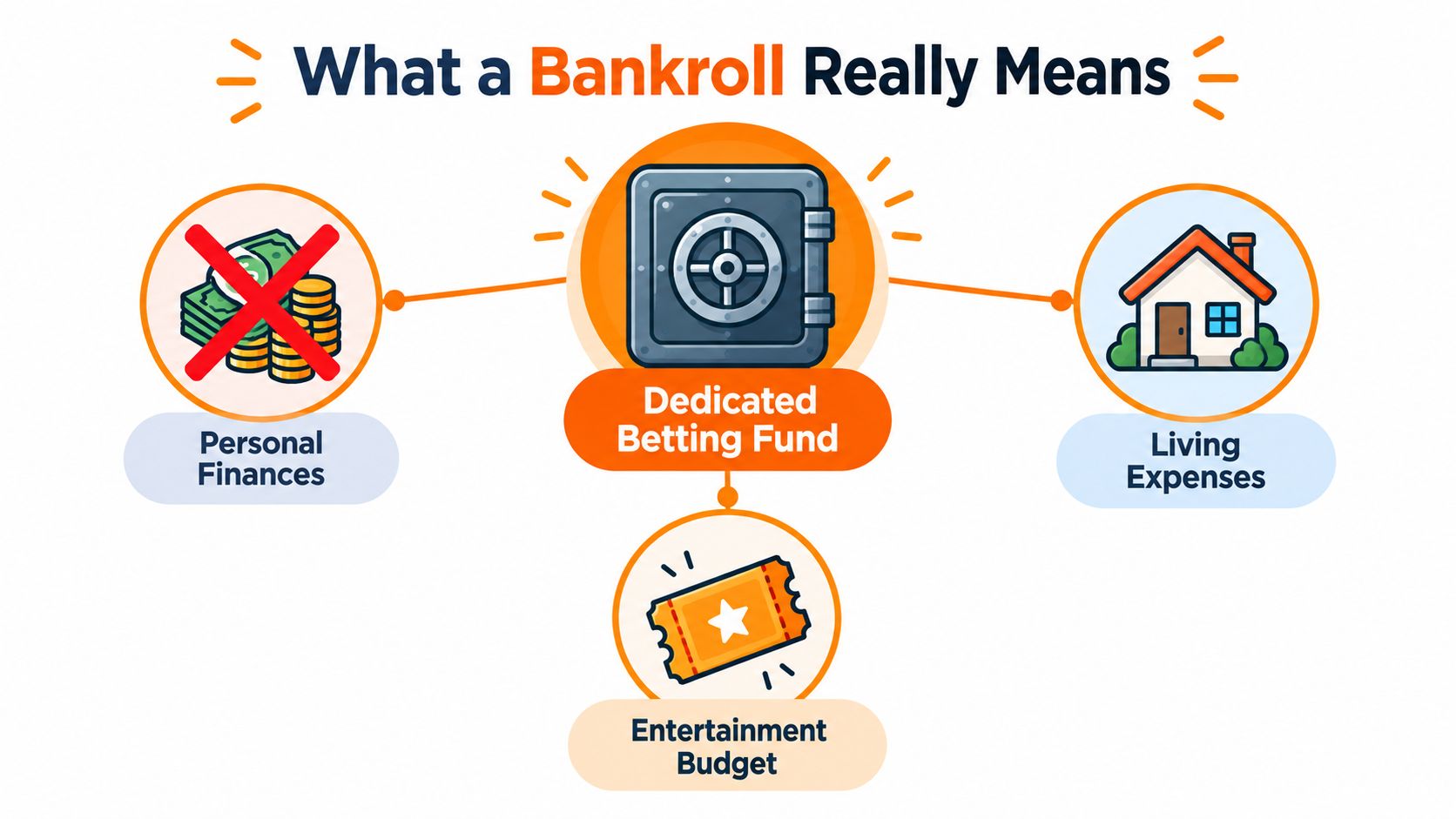
A bankroll isn't just the cash available in your bank account or the balance visible in a gaming wallet. It's the amount deliberately allocated to betting, with the understanding that it can be lost without affecting rent, food, bills, emergency savings, or other essential commitments. That separation gives the player a practical operating limit before emotion enters the decision.
The word has a longer history than modern sportsbook interfaces suggest. Dictionary.com records “bankroll” as first recorded in 1885–90, while etymological accounts trace the noun to 1887, based on the idea of a roll of bank notes. The gambling sense of money held by a player or proprietor is documented as early as 1720, showing how the term developed along two paths: broad financial resources in everyday language, and dedicated gambling capital in betting contexts.
Why the distinction affects decisions
A useful bankroll has three properties:
- It's ring-fenced: The money doesn't come from funds needed for daily life.
- It's measurable: The player can calculate a unit size from the total rather than choosing stakes by mood.
- It's governed: Session budgets, loss limits, and replenishment rules determine how the money is used.
This makes bankroll management a risk-control method, not a promise of profit. A larger pool doesn't automatically make betting safe. A player can still overexpose the account by placing oversized wagers, switching products without adjusting risk, or adding funds after losses without a defined rule.
For operators, the same principle appears in a more complex form. Player balances, unsettled bets, promotional funds, payment flows, and withdrawal demands must be tracked separately enough to reveal the company's actual obligations. The player asks, “How much can I risk?” The operator asks, “How much liquidity must remain available while bets settle and withdrawals are processed?” Both questions require clean classifications rather than a single undifferentiated cash figure.
Player Bankroll vs Operator Reserves
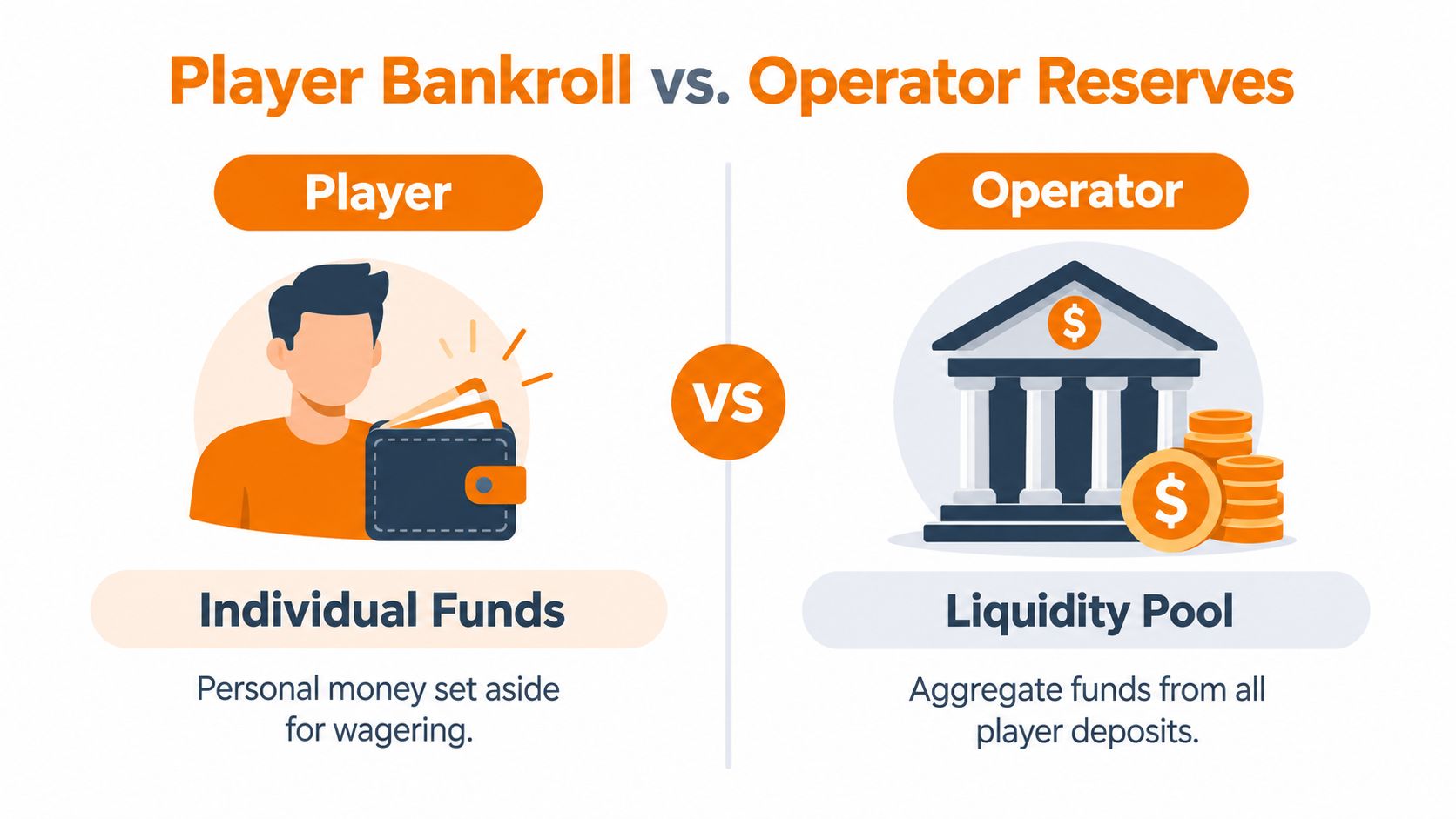
A player bankroll belongs to one person and exists for that person's wagering decisions. Operator reserves belong to the business and support obligations created by a whole player base. Treating them as interchangeable creates confusion in product design, finance, and risk reporting.
| Area | Player bankroll | Operator reserves |
|---|---|---|
| Primary purpose | Funds set aside for personal wagering | Liquidity and capital supporting platform obligations |
| Risk unit | Individual stake or session budget | Aggregate exposure across casino, sportsbook, payments, and settlements |
| Main control | Unit sizing, stop-loss rules, and deposit limits | Treasury policies, settlement controls, withdrawal liquidity, and exposure monitoring |
| Source of complexity | Emotional decisions and mixed product use | Many accounts, currencies, products, providers, and unsettled outcomes |
A player's balance may include cash and promotional value, but those categories shouldn't be treated as identical. An operator needs to distinguish real balance, bonus escrow, pending settlements, locked funds, and withdrawable amounts in its ledger. The accounting model must show who owns the funds, what restrictions apply, and which obligations remain outstanding.
One wallet, different risk pools
A unified wallet can make the customer experience smoother, especially when a player moves between casino and sportsbook. It also creates a control challenge. If the same available balance funds a live wager, a slot session, and a pending withdrawal, the backend must maintain a reliable view of reserved and available funds.
That's where multi-currency wallet architecture becomes operationally important. Currency conversion, account balances, transaction history, and product settlement need consistent treatment. The wallet shouldn't encourage the business to think of every balance as immediately usable treasury cash.
Operational rule: Separate the customer-facing balance from the operator's view of reserved funds, unsettled exposure, promotional obligations, and available liquidity.
The distinction also affects reporting. A player bankroll is a personal risk budget. An operator reserve is a business control layer that supports payment obligations, game and sportsbook settlement, fraud response, and regulatory expectations. One is sized by an individual's disposable wagering capacity. The other is managed through treasury, accounting, and risk processes.
Staking Sizes and Risk Metrics
A player can have a defined bankroll and still take excessive risk if each wager is too large. A common starting point is 1% to 2% per wager, which gives the bankroll more room to absorb a losing streak. Gambling education guidance commonly presents the 1% to 2% framework. Other bankroll staking guidance describes flat staking around 1% to 3%, with 1% to 2% as the more conservative range.
The calculation is straightforward:
Stake = total bankroll × selected percentage
| Bankroll Size | 1% Stake | 2% Stake |
|---|---|---|
| $1,000 | $10 | $20 |
| $5,000 | $50 | $100 |
The main control decision is whether to calculate the percentage from the current bankroll or the original starting amount. Recalculating from the current balance reduces stakes after losses and increases them only after genuine growth. Using the original amount keeps the unit stable, but leaves more exposure in place during a prolonged decline.
Flat staking and changing volatility
Flat staking applies the same percentage rule instead of increasing the amount because a wager feels especially attractive. Confidence does not reliably measure outcome probability. A sportsbook bet, live dealer round, and high-volatility slot session can produce different win and loss patterns, even when they use the same wallet.
For players, the percentage is a ceiling, not a target that must be used on every wager. A player may choose a smaller unit when the session is longer, the product is more volatile, or several positions are already open.
Operators need a more detailed view than one customer-facing percentage. Product-level controls may set separate exposure limits for markets, event types, game categories, payment methods, and account behavior. The same wallet can connect casino and sportsbook activity, so risk teams must assess combined exposure rather than review each product in isolation.
The Kelly criterion offers a more specific method by linking stake size to estimated advantage and available odds. Its reliability depends on the probability estimate and edge assessment behind it. An overestimated advantage can produce an overly aggressive stake and greater volatility. A conservative fraction of the recommendation may reduce that exposure, but the underlying model still requires testing and validation.
Risk metric: Stake sizing controls the speed of loss. It does not remove house edge, uncertainty, or the possibility of a losing sequence.
Operators should monitor exposure beyond the individual stake. Useful signals include unsettled liability, correlated selections, rapid bet escalation, unusual product switching, and repeated replenishment after losses. A rule that appears safe per wager can become unsafe across simultaneous bets, shared balances, and linked casino and sportsbook activity.
Practical Rules and Common Mistakes
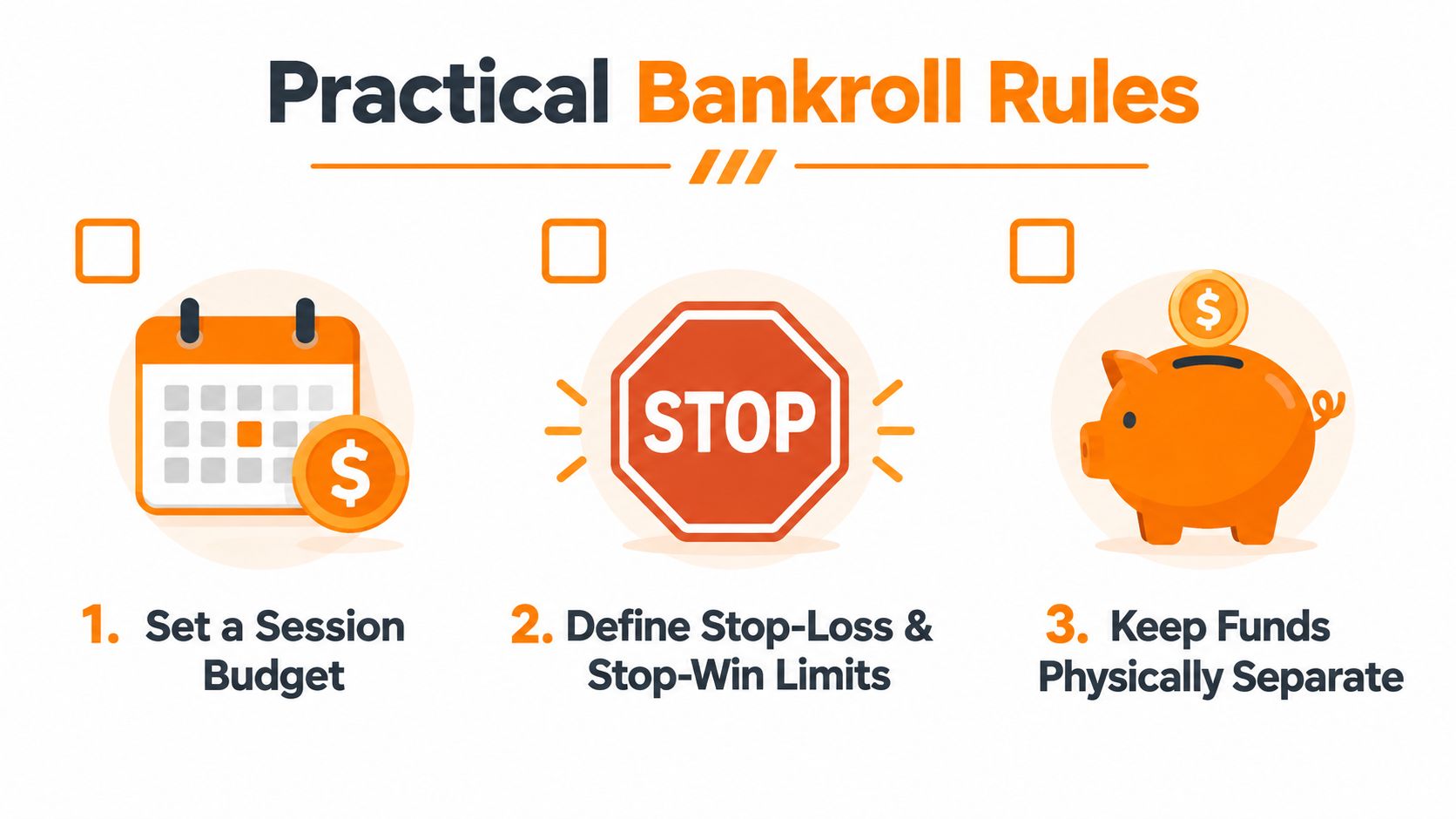
A workable bankroll policy gives the player clear actions before, during, and after play. “Bet only what you can afford to lose” is a necessary starting point, but it does not set an operating boundary. A bankroll can instead be defined as a session, weekly, or monthly budget with explicit stop-loss and stop-win limits. The linked bankroll guidance addressing disposable income and financial thresholds also shows why affordability rules need concrete caps and a replenishment policy.
Build the rules before play
Set the budget while calm, before emotion or a losing run changes the decision. A practical routine is:
- Choose the dedicated pool. Transfer only money that will not affect essential commitments.
- Set the session boundary. Decide how much of that pool is available for the current session.
- Define the stop-loss. Stop when the loss limit is reached. A new deposit must not be treated as a continuation of the same budget.
- Define the stop-win. A profit limit can prevent a winning session from becoming extended, impulsive play.
- Record the result. Track deposits, withdrawals, stakes, outcomes, and product type so the stated bankroll matches actual activity.
Separate funds make the boundary easier to follow. A dedicated betting wallet or account distinguishes gambling money from household money, but the control fails if the player repeatedly tops it up after losses.
Mistakes that damage the boundary
- Chasing losses: Raising stakes to recover a previous loss increases risk when judgment may already be impaired.
- Confusing availability with affordability: Money that can be deposited is not automatically safe to wager.
- Mixing product budgets: Casino and sportsbook activity can draw on the same capital while total exposure rises unnoticed.
- Ignoring household pressure: A previously discretionary bankroll can become unsafe when bills, income, debt, or other commitments change.
- Resetting after every loss: Replenishing without a written rule turns a limited reserve into an open-ended spending channel.
Cost-of-living pressure may require a smaller bankroll, a pause in play, or no replenishment. The rule should change with the player's financial position, not remain fixed because funds are technically available.
For operators, the same boundary becomes a product-control problem. Deposit limits, reality checks, cooling-off tools, product restrictions, and clear balance messaging should make the limit visible. A platform should not expect customers to infer risk from a generic available-balance field. The player's pool and the operator's reserves serve different purposes, but both require defined limits, separation, and controlled replenishment.
Bankroll Management for iGaming Operators
An operator doesn't manage one bankroll in the player sense. It manages a network of financial obligations, exposures, and reserves that change as customers deposit, wager, win, lose, withdraw, receive bonuses, and move between products.
The first requirement is a ledger that can distinguish each state of money. Real balance, bonus escrow, pending withdrawals, unsettled sportsbook bets, and casino settlements shouldn't collapse into one number. Double-entry accounting provides the foundation, while wallet controls preserve the connection between customer transactions and the operator's financial records.

Controls that scale across products
A unified casino and sportsbook operation needs visibility at several levels:
- Player level: Deposits, withdrawals, balances, limits, KYC status, and behavior indicators.
- Product level: Casino game exposure, sportsbook liabilities, live betting activity, and settlement status.
- Treasury level: Payment balances, provider obligations, currencies, reserves, and liquidity availability.
- Compliance level: Geofencing, audit logs, responsible-gaming interventions, and regulatory reporting.
A shared wallet reduces fragmentation, but it can also hide product risk if reporting doesn't preserve the source and purpose of each transaction. Finance teams need to know whether a balance is available, reserved, promotional, disputed, or waiting for settlement.
Risk teams should also connect limits to account behavior. A customer who moves from moderate pre-match betting to rapid in-play activity may need a different review path from a customer who maintains stable activity. The control doesn't have to block legitimate use automatically, but it should give the operator a timely view of exposure.
For teams evaluating platform architecture, risk-management practices for iGaming operations should be considered alongside wallet and settlement design. NexGrate provides a white-label environment with casino and sportsbook modules, player wallets, bonus escrow, betting settlement, payments, compliance workflows, and operational controls. Those capabilities address infrastructure and accounting needs. They don't turn a player balance into a personal bankroll-management policy by themselves.
How Bankroll Rules Change Across Products
A single wallet creates convenience, but it also creates a false sense that every wager carries the same risk. The bankroll principle remains consistent, yet the product context changes how a sensible limit should work.
Consider a player who starts with a sportsbook bet, moves to slots, and then opens a live dealer table after an unsettled event. If the platform shows one headline balance, the player may treat the remaining figure as fully available even though part of the capital is exposed to a pending result. The safer design uses product-aware availability and clear reserved-funds messaging.
Four operating scenarios
High-volatility casino play: A player may experience uneven outcomes over a short session. The appropriate control is a firm session budget and a product limit, not a larger stake because the previous spins didn't produce a win. The player's overall bankroll should remain separate from the amount made available for that session.
Live dealer tables: The pace and social presentation can encourage continuous wagering. A table-specific stake cap, session timer, and stop-loss prompt can interrupt automatic escalation. The operator should also monitor rapid increases rather than relying only on the customer's initial deposit limit.
Pre-match sportsbook betting: The player has time to compare odds and decide whether the wager fits the unit rule. Account-level staking guidance can work well here, provided unsettled bets remain visible and the available balance excludes funds already committed.
In-play markets: Live betting compresses decision time and can produce repeated wagers from the same wallet. Operators need product and market exposure controls, while players need a stricter personal ceiling than their maximum theoretical bankroll might suggest. The sportsbook risk-management framework should account for settlement timing, correlated selections, and rapid activity.
Crypto play adds another layer because payment movement, currency denomination, and wagering activity may appear in the same operational flow. A product rule should never replace transaction monitoring, clear conversion records, or responsible-gaming controls.
The practical answer isn't to create a separate wallet for every game. It's to maintain one overall bankroll policy with product-specific sublimits, transparent reserved balances, and controls that recognize different volatility and pace.
Why Bankroll Discipline Is a Competitive Edge
Bankroll discipline protects more than a player's money. For an iGaming brand, it supports clearer balances, cleaner accounting, faster risk decisions, and more credible responsible-gaming controls. Those capabilities matter because casino and sportsbook customers judge the platform through practical moments, such as a deposit, a settlement, a withdrawal, or a limit request.
Operators that blur real balance, bonus funds, unsettled exposure, and available liquidity create avoidable confusion. Operators that separate those categories can give finance, compliance, customer support, and risk teams the same underlying view of the account.
The strongest mental model is straightforward:
- Player bankroll: Dedicated wagering money separated from essential finances.
- Stake size: A controlled portion of that bankroll, commonly guided by the conservative 1% to 2% rule.
- Operator reserve: Business liquidity and obligations managed across accounts, products, currencies, settlements, and payments.
- Platform control: Wallet, ledger, limits, monitoring, and compliance functions that keep those pools distinguishable.
This approach won't eliminate gambling risk or guarantee profitable play. It does make decisions more deliberate. For a brand owner, that discipline becomes part of the product experience and the operating model, not merely a responsible-gaming message placed in the footer.
NexGrate provides a turnkey white-label platform combining casino, sportsbook, payments, unified wallets, settlement, bonus escrow, compliance workflows, and operational controls for iGaming brands. Visit NexGrate to review how its platform can support clearer bankroll boundaries and risk management across a multi-product operation.