Most advice on how to open a casino gets the order of risk wrong. It treats licensing as the finish line, when in practice licensing is only one gate in a chain of dependencies that has to hold together under real operating conditions.
A licensed casino that can't process deposits, clear withdrawals, satisfy KYC checks, pass operational readiness, and support live player traffic isn't a business. It's an expensive file folder.
That gap is where many launches fail. More than 60% of new online casino launches stall because payment processors reject them, not because regulators deny the license, according to SOFTSWISS on starting an online casino. That's the operational reality generic checklists miss. A founder secures a jurisdiction, pays legal fees, starts platform talks, then discovers the bank, acquirer, or PSP won't support the model they planned to run.
The practical question isn't just how to open a casino. It's how to open a bankable, launch-ready, regulator-safe casino that can accept money, reconcile transactions, and survive day one.
That's where operator planning has to get sharper. Jurisdiction choice affects banking. Platform choice affects compliance readiness. Payment setup affects your launch sequence. Marketing plans affect your staffing model and fraud exposure. If those decisions are made in isolation, the launch drags, costs rise, and partners start blocking each other.
Table of Contents
- Beyond the Basics of Launching an Online Casino
- Finalizing Your Business Blueprint and Financial Plan
- Navigating the Global iGaming Licensing Maze
- Assembling Your Platform and Technology Stack
- Building Your Operations and Go-to-Market Engine
- Your Casino Launch and Migration Checklist
Beyond the Basics of Launching an Online Casino
Founders often assume the hard part is getting approved. In reality, the hard part is getting all counterparties aligned at the same time. Regulators want documented controls. Payment providers want comfort with your license, risk profile, and transaction flow. Game providers want a compliant operating setup. None of them care that another party already said yes.
That creates the central trap in online casino launches. A jurisdiction may approve your structure, but your payment stack still might not open. Or your platform may support your target market, but your chosen license may limit the providers and processors willing to work with you. The launch then stalls in the handoff points, not in the obvious checklist items.
Practical rule: Don't treat licensing as a standalone workstream. Treat it as one part of a connected system that includes corporate structuring, platform readiness, payments, responsible gaming, fraud control, and support operations.
Teams that launch cleanly usually make one disciplined move early. They define the operating model before they start buying components. That means deciding who the target player is, which markets matter, whether fiat, crypto, or mixed payment rails are required, what the support model looks like, and how much compliance burden the business can handle without choking the budget.
Generic guides also oversimplify sequencing. They tell founders to choose a jurisdiction, buy a platform, and start marketing. Operators know it doesn't work like that. Banking questionnaires, provider due diligence, internal controls, and readiness testing all feed back into each other. If one element changes late, the rest often need rework.
A workable blueprint starts with a blunt standard. Every pre-launch decision should answer one question: Will this make the business easier or harder to license, fund, integrate, and process payments for? If the answer is harder, it needs stronger justification than most first-time operators give it.
Finalizing Your Business Blueprint and Financial Plan
A casino launch fails on paper before it fails in market. The problem usually isn't ambition. It's that the business plan doesn't reflect how an iGaming operation spends money after go-live.
Start with market scope, not software
Before comparing platforms, define the operating perimeter. Which markets are you targeting first. What product mix will carry the brand. Will casino lead with sportsbook added later, or does the wallet need both from day one. Those choices drive licensing, payments, content needs, and support coverage.
Brand positioning matters too, but not in the usual vague way. "Premium," "crypto-first," and "mass-market" each create different pressure on payment methods, fraud controls, bonus design, and provider selection. A broad promise with no clear player profile usually leads to a bloated setup and a weak acquisition message.
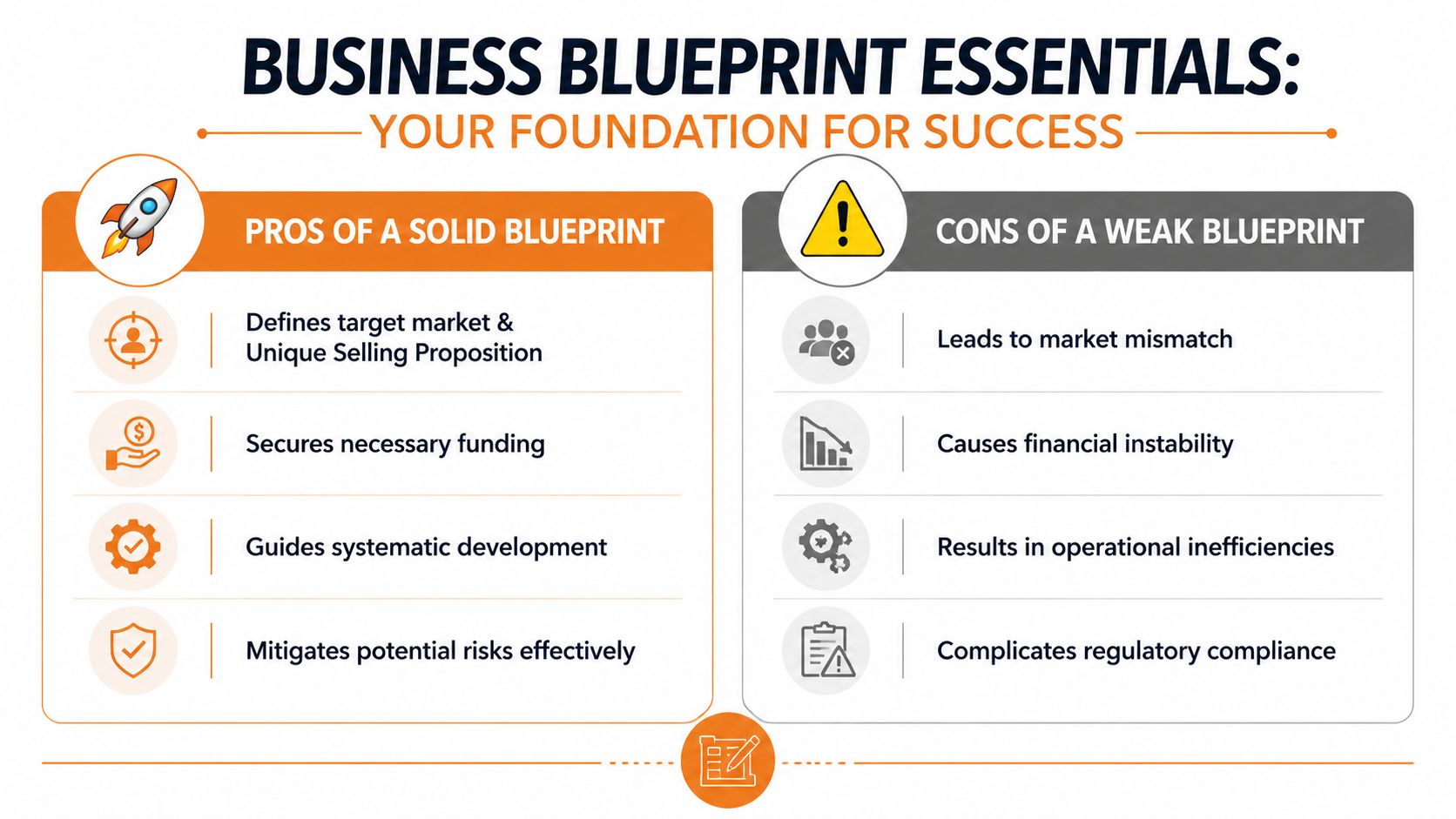
A practical business blueprint should pin down:
- Target geography: Where you can legally operate, market, and process payments.
- Product focus: Casino only, sportsbook only, or a unified wallet model.
- Player profile: Recreational traffic, VIP-heavy segments, crypto-native audiences, or mixed.
- Risk posture: How much compliance complexity and underwriting scrutiny the business can realistically absorb.
- Launch method: White-label, turnkey SaaS, or custom development.
Build the budget around recurring pressure
The headline startup budget is only the opening layer. Initial capital for a licensed online casino in 2026 typically ranges from $85,000 to $350,000, while a white-label platform alone is approximately $20,000 to $80,000, plus annual licensing fees, based on Legarithm's 2026 online casino launch cost breakdown.
That same cost picture shows why operators get surprised after signing. Platform license fees can continue annually. Game providers commonly take revenue share. Payment processing adds a transaction cost layer. Staffing and marketing don't wait for profitability.
A cleaner way to model the business is to split costs into three buckets:
| Cost bucket | What belongs here | Why it matters |
|---|---|---|
| Entry costs | Company formation, licensing work, platform onboarding, certifications | These determine whether the project can reach launch |
| Operating costs | Platform fees, payment processing, staffing, support, compliance | These shape margin after go-live |
| Growth costs | Affiliate deals, paid acquisition, CRM, content expansion | These determine how fast you can scale without breaking operations |
A budget that only covers launch is not a launch budget. It's a delay budget.
Choose the model that matches your risk tolerance
The financial trade-off between custom and white-label is straightforward. Custom gives more ownership and flexibility, but it raises execution risk sharply. Legarithm notes that custom platform development ranges from $250,000 to over $1 million, excluding mandatory licensing and operational reserves in its analysis of online casino startup costs. That route makes sense only when the operator has strong technical leadership, patient capital, and a reason to own the stack.
For most new entrants, a turnkey or white-label model is more rational because it compresses vendor management and reduces integration risk. It also gives founders something many underestimate: a known operational baseline. That matters more than feature wish lists.
Use this test before committing:
- If speed matters most, don't build custom first.
- If multiple providers must work together on day one, avoid a fragmented stack.
- If the team is lean, choose a setup with mature back-office tooling and compliance controls already in place.
- If banking is still uncertain, don't add technical uncertainty on top of payment uncertainty.
A strong business plan isn't glamorous. It just prevents operators from buying complexity they can't yet afford to run.
Navigating the Global iGaming Licensing Maze
Licensing decisions shape much more than legality. They affect banking appetite, game provider access, audit workload, reporting requirements, and how credible the brand looks to partners. Operators who pick a jurisdiction mainly because it looks fast or cheap often end up paying for that choice later.
What the license really changes
At a minimum, the license determines where you can operate and what controls must be in place before launch. It also influences which PSPs, banks, and content partners will even consider the application. That's why jurisdiction choice should sit inside the commercial plan, not beside it.
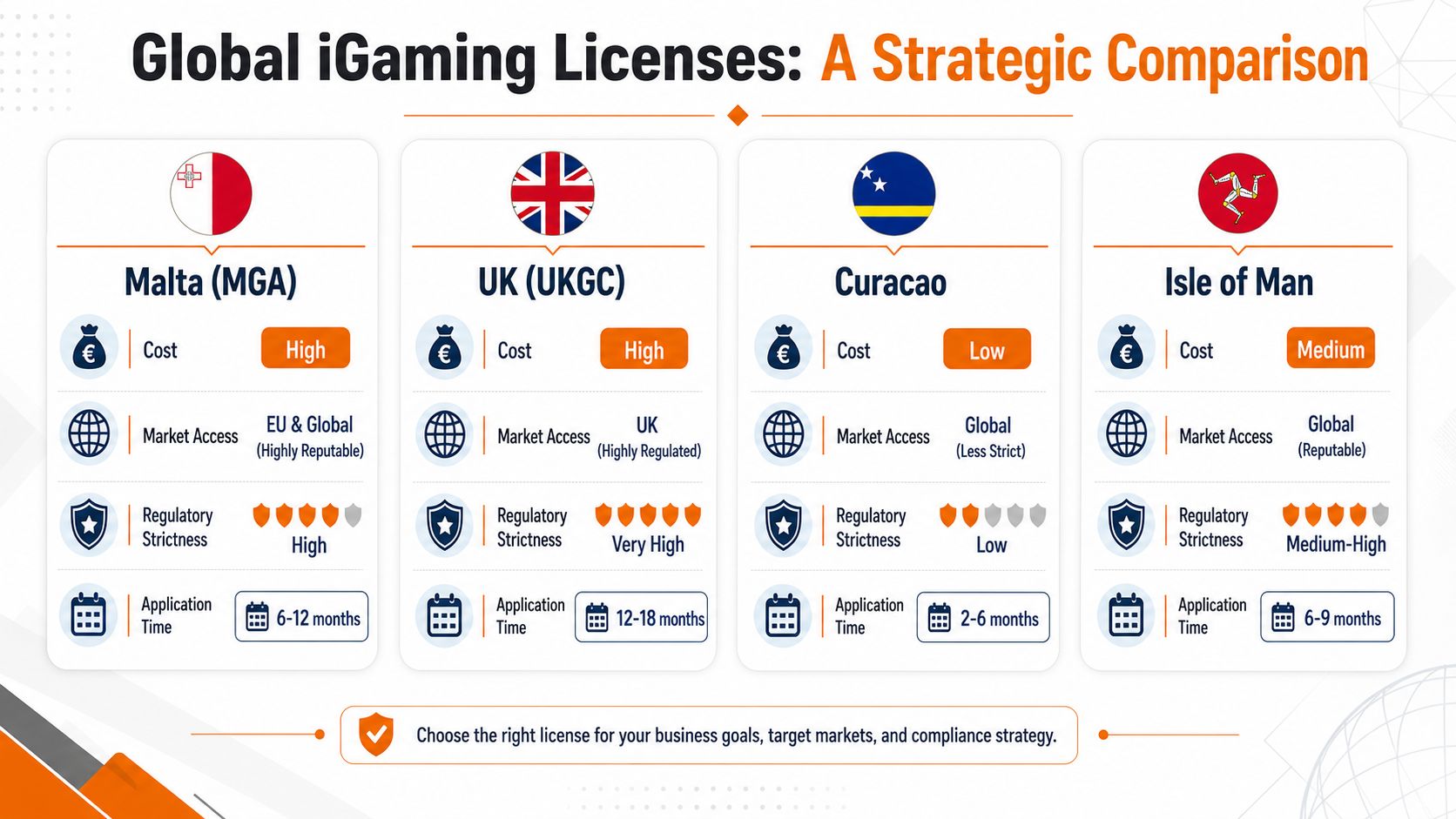
The hard cost range is wide. Annual gambling license fees range from €15,000 to €47,940 in 2026, and Tier-1 markets such as Malta can push first-year costs from $150,000 to over $500,000, according to Gofaizen & Sherle on gambling license costs. The same source notes that offshore options can offer a lower first-year entry point, while U.S. launches often become more expensive once legal counsel, audits, and certification are added.
That difference isn't just about fees. It's about the total operating burden the jurisdiction creates.
For a closer look at the compliance layer operators need to map against license choice, review multi-jurisdictional iGaming compliance requirements.
How the main jurisdiction choices differ
No single jurisdiction is best. The right answer depends on your target market, banking plan, player mix, and risk tolerance.
| Jurisdiction type | Typical advantage | Typical trade-off |
|---|---|---|
| Tier-1 regulated markets | Strong reputation, broader partner confidence, better fit for regulated expansion | Higher cost, heavier controls, longer preparation |
| Offshore jurisdictions | Faster entry path, lower initial barrier, useful for some startup models | More banking friction, lower partner comfort in some cases |
| Market-specific licensing | Access to a valuable local market under clear rules | Narrower territorial use and more local operating complexity |
This video gives a practical overview of the licensing environment many operators evaluate first.
Operators usually compare Malta, Curaçao, the UK, and similar regimes in simple reputational terms. That's too shallow. A better comparison uses four filters:
- Banking compatibility: Will your planned PSPs and acquiring partners support this structure.
- Provider access: Will your preferred game and odds suppliers contract under this license.
- Operational burden: Can your team maintain the reporting, controls, and audits.
- Expansion fit: Will this jurisdiction help or hinder later market entry.
A cheap license can become expensive if it limits your payment options or forces a future migration.
What regulators test before launch
A serious launch plan has to respect sequence. The legal entity must exist before downstream approvals can progress cleanly. Beneficial ownership disclosure, source-of-funds documentation, governance checks, and technical controls all tie into the application process.
The process is not only documentary. It also reaches into live readiness. Best White Label Casinos on launching an online casino states that the sequence matters: legal entity formation comes before platform selection, and KYC/AML frameworks must be operational before the first player deposit. The same source also highlights fit-and-proper checks, background reviews, and operational readiness inspections that test responsible gaming tools, RNG certification, support flows, and payment integrity.
That has two immediate implications for founders:
- You can't bolt compliance on later. If KYC, AML, fraud controls, and responsible gaming are still "phase two" items, the launch plan is already weak.
- You can't outsource judgment. Lawyers, platform vendors, and PSPs each solve part of the problem. Someone on the operator side must own the dependency map across all of them.
A good licensing decision doesn't just get approved. It supports the rest of the business without trapping it.
Assembling Your Platform and Technology Stack
Most launch delays blamed on "development" are really integration failures. The front end may look finished while the cashier isn't stable, the game catalog isn't fully certified, the fraud rules aren't tuned, and the reporting logic doesn't match what compliance and finance need.
The stack is only as strong as its integrations
A modern casino platform isn't one product. It's a connected operating environment that includes the player interface, wallet logic, game aggregation, bonus engine, payment routing, account controls, reporting, and security layers. Add sportsbook if the brand needs a unified wallet, and complexity rises again.
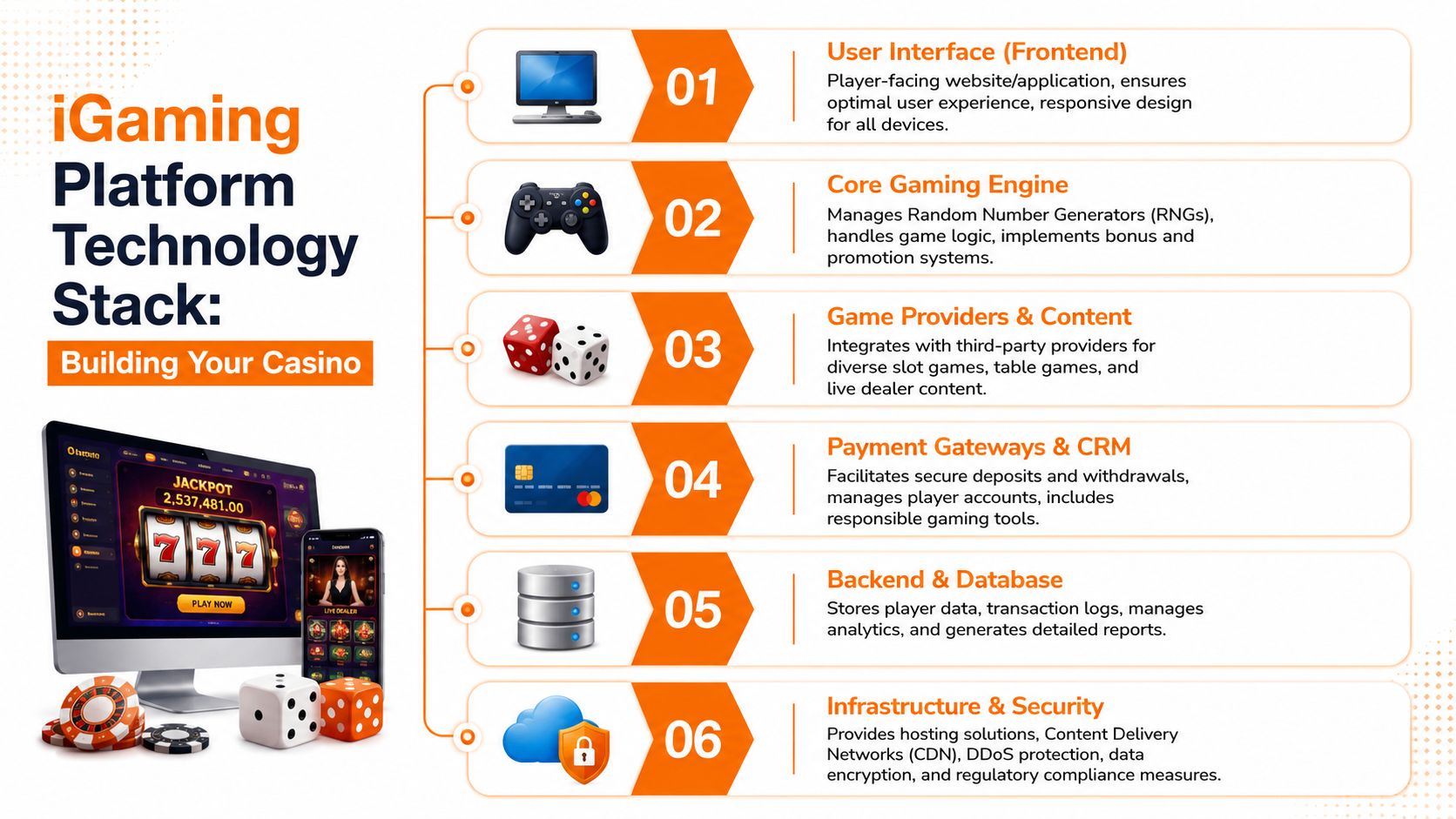
Operators reviewing turnkey casino and sportsbook platform architecture should evaluate the stack less by feature volume and more by dependency control. The primary question is whether games, payments, KYC, fraud rules, and back office already work together in one operational flow.
Core components to verify before signing any platform deal:
- Back office depth: User permissions, player profile history, transaction views, and manual review tools.
- Cashier flexibility: Fiat and crypto support where relevant, clear deposit and withdrawal states, and reconciliation visibility.
- Content aggregation: Stable access to RNG, live dealer, and if needed sportsbook markets through maintained integrations.
- Compliance tooling: KYC workflows, AML flags, audit trails, responsible gaming controls, and reporting.
- CRM functions: Bonuses, segmentation, retention triggers, and affiliate tracking support.
Why piecemeal builds keep slipping
Founders often think assembling best-of-breed vendors will produce a superior outcome. Sometimes it does, but only when the operator has the internal product, compliance, and technical management to coordinate those vendors tightly.
In most early-stage launches, piecemeal procurement creates three recurring problems.
First, no one owns the interface boundaries. The payment provider blames the platform. The game aggregator blames the wallet logic. Compliance blames missing event logs. Everyone has a contract. No one fixes the launch fast.
Second, certification and readiness work expands unexpectedly. Every integration creates more testing paths, more exception handling, and more support training.
Third, the operator spends early momentum on plumbing instead of commercial setup. That usually hurts more than people expect.
The fastest path isn't the one with the most features. It's the one with the fewest unresolved dependencies.
What should be live before first deposit
In the launch sequence, operators cut corners and regulators don't. The launch sequence requires operational controls to be active before money moves. As noted earlier in the licensing discussion, the launch methodology described by Best White Label Casinos makes clear that KYC/AML must be operational before the first player deposit and that legal formation precedes platform selection.
Translate that into execution terms. Before opening the cashier, the operator should already have:
- Identity workflows: Account verification paths, document review logic, and escalation procedures.
- Responsible gaming controls: Deposit limits, self-exclusion handling, and player protection settings.
- Fraud prevention: Rules for suspicious deposit behavior, bonus abuse signals, and withdrawal review.
- Support processes: Staff who know how to handle failed payments, verification requests, and account restrictions.
- Live reporting: Enough operational visibility to investigate player issues and satisfy audit expectations.
A platform should reduce these moving parts, not multiply them. If the setup requires the operator to stitch together every critical control manually, time-to-market won't be the only thing that suffers. Day-two operations will be harder than day-one buildout.
Building Your Operations and Go-to-Market Engine
A launch is not complete when the site works. It's complete when the business can handle player behavior, payment exceptions, fraud pressure, support load, and acquisition traffic without breaking trust or compliance.
The teams you need before traffic arrives
Operators often under-hire in the wrong places. They focus on media buying and affiliate deals, then scramble when withdrawals queue up, document reviews pile up, and support tickets expose gaps in the cashier flow.
The minimum launch operation usually needs clear ownership across these functions:
- Customer support: Staff who can resolve account access, payment issues, bonus questions, and verification requests quickly.
- Payments operations: People watching deposits, withdrawals, rejects, chargeback patterns, and provider escalations.
- Risk and fraud review: Analysts or trained operations staff who can investigate suspicious patterns and apply controls consistently.
- CRM and retention: Someone managing offers, segmentation, player communications, and lifecycle logic.
- VIP or high-value account handling: Even modest brands need a defined approach to high-touch player management.
The backend has to support those teams with clean permissions and searchable data. If support can't see wallet events, or payments staff can't inspect account history, routine issues become expensive.
Retention beats noisy acquisition
New operators talk about traffic. Experienced operators talk about conversion quality and retention mechanics. A campaign that sends mismatched traffic into a weak onboarding flow burns budget and floods support.
The strongest launch plans use acquisition channels that the operations team can support. Market-by-market considerations also matter, especially where payment preferences, language, and product expectations differ. That's why operators planning regional growth should study iGaming market coverage and launch considerations by region before locking in offers and payment routing.
A practical go-to-market engine usually includes:
- Affiliate setup with clear commercial terms and compliance review of promotional materials.
- Search and paid acquisition aligned with the allowed markets and the product available at launch.
- On-site conversion tools such as registration flow tuning, wallet clarity, and bonus presentation.
- Retention mechanics including free spins, loyalty logic, segmented campaigns, and reactivation messaging.
- Feedback loops from support, fraud, and payments teams into marketing decisions.
Launch marketing should follow operational truth. Don't promise payment speed, product breadth, or bonus logic your backend can't support consistently.
What a launch backend must let operators control
A usable back office isn't just a dashboard. It is the control surface for the whole business.
Operators should expect to manage:
| Backend area | What the team needs to do |
|---|---|
| Player management | Review account status, KYC state, notes, restrictions, and activity history |
| Wallet and payments | Trace deposits and withdrawals, inspect statuses, and escalate exceptions |
| Bonus controls | Create campaigns, apply terms, segment players, and stop abuse |
| Risk handling | Flag suspicious patterns, trigger reviews, and coordinate with support |
| Reporting | Produce operational, financial, and compliance-ready records |
What doesn't work is a stack where every team lives in a different tool with different data. Operations become slow, training gets harder, and disputes take longer to resolve. A launch brand can survive imperfect design. It usually can't survive fragmented control.
Your Casino Launch and Migration Checklist
By the time a project reaches launch planning, most major failures are already baked in. They come from choosing a jurisdiction without a banking path, choosing a platform without operational controls, or promising a go-to-market plan the backend can't support.
New launch checklist
Use this as a working operator checklist, not a branding exercise.
- Define the business model: Lock target markets, product scope, payment mix, and player profile before vendor selection.
- Form the legal entity: Make sure ownership disclosure and source-of-funds documentation are ready for licensing and partner due diligence.
- Choose the jurisdiction strategically: Pick for market fit, partner acceptance, and operating burden, not just headline cost.
- Pressure-test the payment path: Speak to PSPs and acquiring partners early enough to know whether the model is bankable.
- Select the platform model: Decide whether a white-label, turnkey, or custom route fits your budget, team, and launch timing.
- Activate compliance controls early: KYC, AML, responsible gaming, fraud handling, and audit logging need to be live before deposits.
- Prepare operations before marketing: Support, payments, and risk teams should be trained before acquisition starts.
- Launch with a focused offer: A narrower but stable launch beats a broad but brittle one.
Migration checklist for existing operators
Established brands face a different problem. They aren't starting from zero. They're trying to move without breaking revenue continuity, player trust, or compliance records.
A migration plan should cover:
- Data mapping: Player accounts, balances, bonus states, exclusions, and historical records need a clear transfer method.
- Wallet continuity: Make sure deposits, withdrawals, and pending payment events won't disappear between systems.
- Provider overlap: Confirm which game, payment, and sportsbook integrations stay, change, or need replacement.
- Reporting continuity: Preserve the records compliance, finance, and support teams rely on.
- Staff retraining: A new backend only helps if operations teams can use it cleanly on day one.
- Phased cutover logic: Decide whether the move is full, staged, or market-specific.
The operators that execute well don't chase perfect architecture. They remove friction in the order that matters most. Legal readiness, payment viability, platform stability, operational control, then growth.
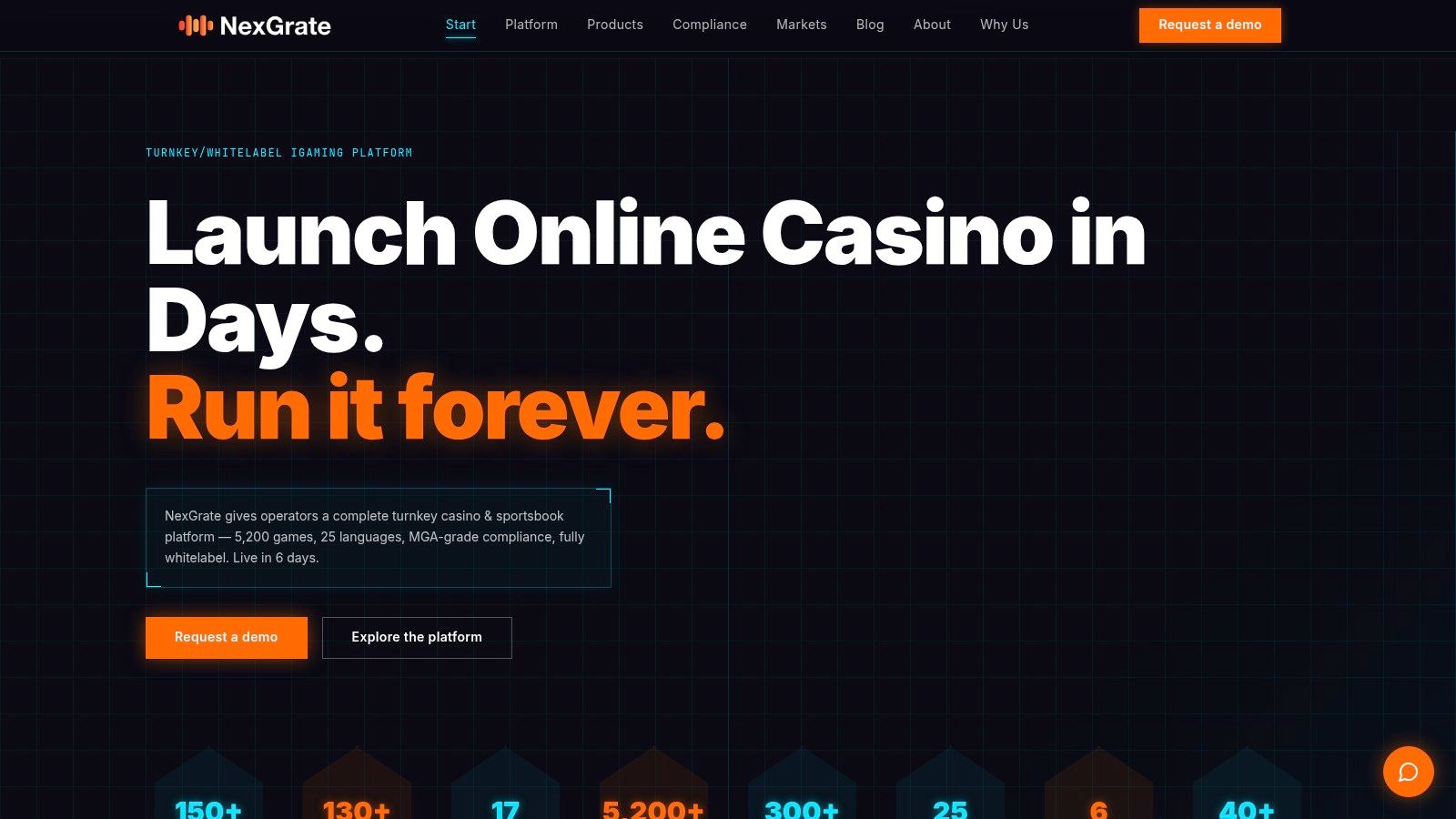
If you're planning how to open a casino and want a faster route than stitching together separate vendors, NexGrate offers a turnkey white-label platform for online casino and sportsbook operations, with payments, compliance controls, back office, and content integrations in one stack. It's a practical fit for new operators launching quickly and for established brands migrating off fragmented legacy systems.