
Most advice on how to start an online betting business gets the sequence wrong. It treats the license as the finish line for setup and the platform as a procurement detail. In practice, a license only proves you're allowed to operate. It doesn't guarantee you can take deposits, settle bets cleanly during peak traffic, or survive your first compliance review.
The harder reality starts after approval. New operators usually hit problems in three places: platform architecture, payment processing, and compliance operations. If any one of those breaks, the business doesn't launch properly, even if the brand, website, and legal entity are ready.
That's why licensed startups still stall. The biggest operational bottleneck isn't paperwork. It's getting the whole stack to work together under real money conditions, with risk controls, wallet sync, KYC, reporting, and payment acceptance all behaving like one system. If you're serious about how to start an online betting business in 2026, start there.
Table of Contents
- Beyond the License Your Real Starting Point
- The Foundational Decision Platform and Licensing Strategy
- Assembling Your Tech and Content Stack
- Building Your Compliance and Payments Engine
- Executing Your Go-to-Market and Retention Strategy
- Achieving Day One Operational Readiness
Beyond the License Your Real Starting Point
The common assumption is that getting licensed is the hardest part. It isn't. A license is only one gate in a chain of dependencies, and some of the ugliest failures happen after that gate opens.
A good example is payments. The biggest operational bottleneck for new operators is payment processing, and 60-70% of new gambling startups fail post-license because major gateways such as Visa and Mastercard reject them due to high-risk merchant policies according to Bettoblock's breakdown of gambling launch barriers. That single fact should change how you think about launch planning.
Practical rule: If your payment path is still theoretical, you are not close to launch, no matter what your legal status says.
Most startup founders build their plan as a neat checklist. Register entity. Apply for license. Buy platform. Start ads. That's not how betting operations behave in practice. They behave like a pressure system, where one weak connection affects everything else.
Platform choice decides what you can control
Your platform dictates far more than front-end design. It determines how quickly you can integrate payments, how well you can enforce KYC and AML rules, whether sportsbook and casino share one wallet, and whether your reporting supports audits without manual patchwork.
Operational readiness beats launch theater
The brands that make it through early launch don't always have the prettiest sites. They usually have the tighter plumbing.
That means:
- Payments lined up early: Merchant acceptance and settlement flow must be tested before any public launch date is announced.
- Compliance built into workflows: Verification, safer gambling controls, audit logs, and reporting can't sit in a spreadsheet outside the platform.
- Risk controls configured before traffic arrives: Bonus abuse, duplicate accounts, suspicious betting, and wallet inconsistencies appear immediately, not later.
If you want a cleaner way to think about how to start an online betting business, stop asking what order the paperwork goes in. Ask what has to work together on day one without manual intervention.
The Foundational Decision Platform and Licensing Strategy
The single most important choice isn't your logo, your domain, or even your market list. It's whether you'll operate on a white-label platform or try to build a custom stack. That decision shapes cost, launch speed, staffing requirements, compliance overhead, and your ability to fix issues when the product is live.
Platform choice decides your operating model
A custom build gives you maximum architectural control. It also hands you the burden of every integration, every release cycle, every bug in payments, every wallet reconciliation issue, every reporting edge case, and every regulator-driven product change. Founders often underestimate that operational load because they think in terms of features rather than continuous maintenance.
A white-label setup trades some flexibility for speed and operational structure. In betting, that trade often makes sense. The business isn't won by who writes the most code. It's won by who gets a stable product, compliant workflows, and functioning payments into market without burning cash on avoidable engineering work.
There's also a cost reality that generic startup guides blur. Some guidance still frames launch capital in broad ranges, but newer market conditions are harsher. Recent 2024 to 2025 data indicates that the average cost of a full-stack white-label launch in the US has surged by 35%, pushing the realistic entry point to $1.2M+ because of state-specific compliance fees and required third-party audits, according to Serif.ai's 2025 online gambling business guide.
Licensing strategy and platform strategy are linked
Operators often treat licensing as a separate legal project. That's a mistake. Your licensing path and platform path are tied together from the start.
If you choose a platform already aligned with a regulatory framework, much of your operational setup gets easier. Reporting formats, KYC flows, responsible gaming controls, geofencing support, and audit logs are more likely to map cleanly to what the regulator or service provider expects. If you choose a custom path, your legal approval may arrive before your internal systems are fit for regulated use.
A betting brand doesn't launch because the legal work is done. It launches because legal, technical, financial, and operational controls are all ready at the same time.
There's also a practical market-entry trade-off. Some entrepreneurs want a soft launch in lower-fee jurisdictions to validate acquisition, payments, retention, and support operations before they face the heavier cost structure of a US-regulated rollout. That can be a sensible sequencing decision if the long-term expansion plan is clear and the platform can support migration or multi-market growth without a rebuild.
White-Label vs. Custom Build A Strategic Comparison
| Factor | White-Label Platform (e.g., NexGrate) | Custom Build |
|---|---|---|
| Time to market | Faster, because sportsbook, casino, wallet, back office, and core integrations are already assembled | Slower, because each module has to be built or integrated and tested separately |
| Initial build complexity | Lower. The operator focuses on configuration, market selection, payments, compliance setup, and brand layer | Higher. The operator manages architecture, vendor coordination, QA, release management, and infrastructure design |
| Compliance setup | Often easier if the platform already supports reporting, KYC, audit logs, geofencing, and responsible gaming controls | Harder. Teams usually bolt compliance tooling onto the product over time |
| Payment integration burden | Reduced if the platform already supports cashier, wallet logic, and processor connections | Significant. Payment routing, reconciliation, and failure handling become internal responsibilities |
| Product control | Moderate. You configure a lot, but not every core behavior is yours to rewrite | High. You can shape the stack deeply, if you have the team and budget |
| Maintenance load | Shared with the platform provider | Carried internally or spread across multiple vendors |
| Operational risk early on | Lower if the stack is unified and already tested in production conditions | Higher, especially around settlement, wallet sync, and release stability |
| Best fit | New entrants, micro-brands, fast-launch operators, or companies prioritizing execution over custom engineering | Large operators with capital, internal product teams, and a real reason to own the stack |
Custom builds do work. They just don't work for everyone. If the need is market entry, not deep proprietary engineering, a modular white-label setup is usually the more disciplined decision.
Assembling Your Tech and Content Stack
A betting business lives or dies on system behavior under pressure. Nice front ends don't matter if the odds lag, the wallet desynchronizes, or live bet settlement fails when traffic spikes.
A modern stack needs core transaction logic before it needs decorative UX layers.
The modules you cannot fake with plug-ins
The sportsbook side requires three specific components. According to Omisoft's sportsbook architecture guide, a modern setup needs a dedicated Odds Engine to aggregate feeds and manage odds congestion, a Bet Validation System that handles concurrent bet requests and real-time wallet synchronization, and an AI-driven Risk & Fraud Engine to catch sharp patterns and abuse before they hit margin.
Without those modules working as one unit, operators usually end up with fragmented APIs and timing problems. That shows up as latency, rejected bets, settlement failures, and support tickets that your team can't resolve cleanly because the issue sits between vendors.
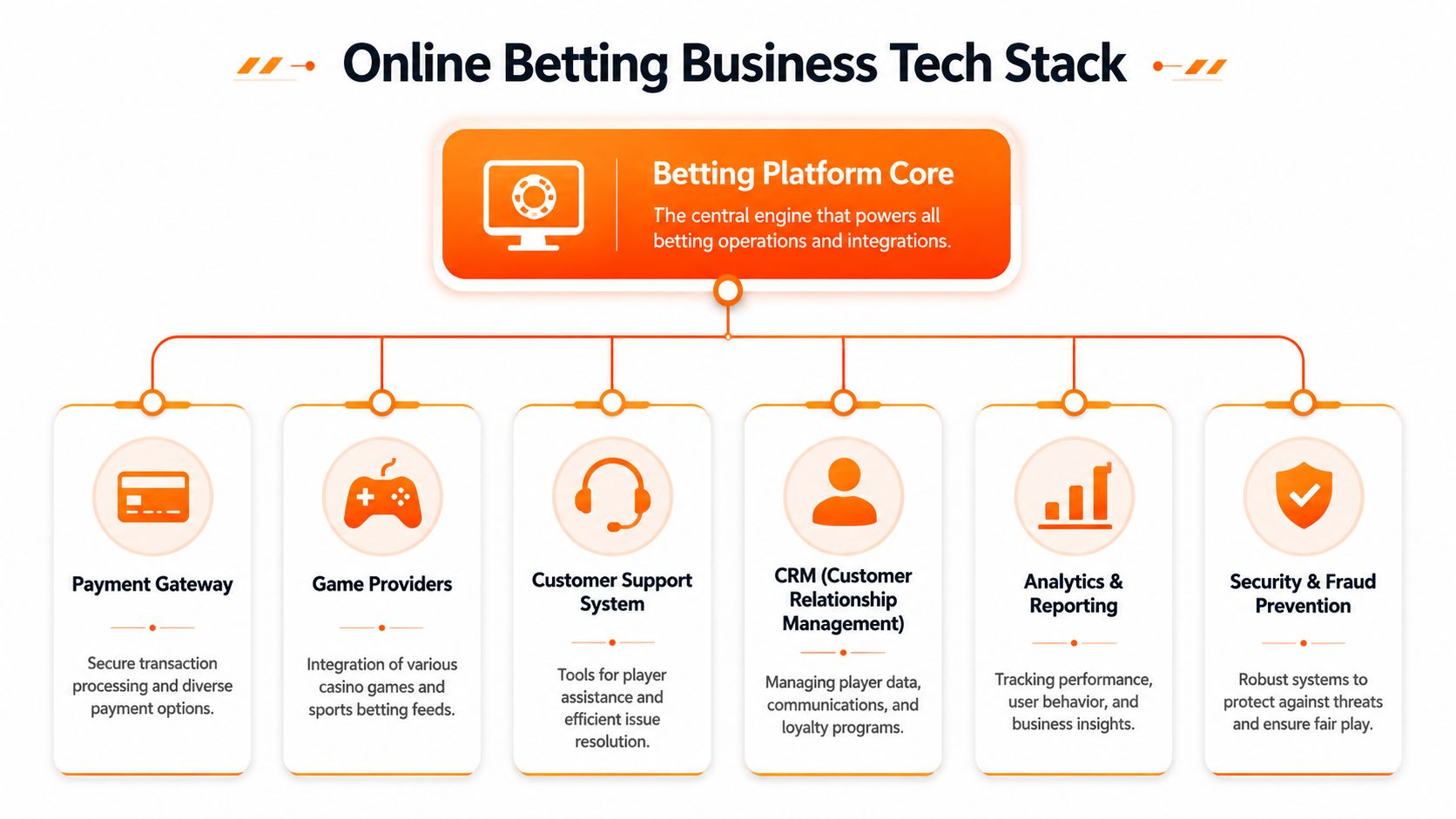
What a practical stack needs:
- Odds management: Feed aggregation, margin control, suspension logic, market creation, and event handling.
- Wallet integrity: One balance layer for deposits, withdrawals, sportsbook stake locking, casino play, and bonus restrictions.
- Fraud controls: Rules for duplicate accounts, irregular betting, bonus abuse, and payment mismatch signals.
- Back office visibility: Support agents and risk analysts need the same source of truth, not separate dashboards with partial data.
A unified stack such as NexGrate's betting platform is one way operators avoid stitching together separate sportsbook, casino, cashier, and back-office products. The important point isn't the vendor name. It's that the wallet, game content, sports engine, and operator controls need to share logic.
Content aggregation matters more than lobby design
New operators waste time debating game count before they solve content operations. Individual deals with multiple studios look attractive on paper because they promise choice. In practice, they create contract sprawl, more certification work, more technical dependencies, and slower release handling.
If you're combining sportsbook and casino, the cleaner route is usually content aggregation through a single API layer. That allows you to manage one player account, one cashier, one bonus framework, and one support process across products.
If the sportsbook and casino feel like two separate businesses inside one site, support cost rises fast and retention gets harder.
The best player experience is usually the least dramatic one. Deposit once. Move between sports and casino without friction. See one balance. Redeem one promotion logic. Contact one support team that can trace the account across all activity.
That's the stack to aim for.
Building Your Compliance and Payments Engine
A betting brand does not become operational when the license arrives. It becomes operational when players can register, pass checks, deposit, withdraw, and get paid without manual rescue from your team.

Payments fail where business plans stay theoretical
This is the point where a lot of new operators discover that licensing and payment acceptance run on different logic. Regulators assess suitability and control frameworks. Acquirers and payment providers assess merchant risk, chargeback exposure, fraud patterns, target markets, and whether they want your category on their books at all.
That gap kills launch timelines.
A weak cashier setup affects far more than deposit acceptance. It changes your geography plan, your acquisition pacing, your bonus economics, your fraud thresholds, your withdrawal SLA, and your support load. If one provider goes down and you have no routing alternative, the problem is not temporary inconvenience. It is a revenue stop.
A workable payment setup usually needs four things in place before launch:
- Underwriting readiness: Providers will ask for licensing documents, ownership structure, source of funds, processing forecasts, AML controls, fraud rules, and chargeback procedures.
- Redundancy: One PSP or acquirer is rarely enough. You need fallback options so a disruption does not shut the cashier.
- Clean reconciliation: Deposits, withdrawals, reversals, chargebacks, pending settlements, and provider fees need to map correctly into the wallet and finance records.
- Local payment fit: Cards, bank transfer methods, e-wallets, prepaid options, or crypto should match the habits of the market you are entering.
Operators often underestimate withdrawal operations. Deposits drive acquisition. Withdrawals shape trust. Slow or inconsistent payout handling creates support tickets, AML escalations, affiliate complaints, and player churn fast.
Compliance has to run inside daily operations
KYC and AML are not side functions owned by legal. They sit inside registration, payments, support, fraud, and retention. If verification triggers too early, conversion drops. If it triggers too late, fraud and abuse get through the front door. Good operators tune this constantly by market, payment method, and player risk profile.
The same applies to responsible gaming controls. Deposit limits, time-outs, self-exclusion, affordability checks where required, and account monitoring need system enforcement, not spreadsheet follow-up. Once a player sets a restriction, the platform has to apply it automatically across wallet activity, promotions, and product access.
For teams assessing tooling, compliance workflows that connect KYC, AML, geofencing, reporting, and responsible gaming controls inside the same operating environment as the wallet and back office reduce handoffs and audit gaps.
Operator habit that works: Put payments, compliance, fraud, finance, and support in the same launch room. The failures usually happen in the handoff between those teams.
A lot of first-time founders buy verification tools and assume the job is done. It is not. The operating question is whether your team can review alerts, resolve edge cases, approve withdrawals, document decisions, and produce an audit trail without bouncing between disconnected systems.
A closer look at the operational side helps:
Why fiat and crypto planning must happen together
Crypto can widen payment access and reduce dependence on some traditional rails. It also introduces new treasury, reporting, support, and compliance requirements. That trade-off needs to be designed upfront.
If your target market still expects cards, bank methods, or local e-wallets, a crypto-first cashier will suppress first-time deposit conversion. If you offer both fiat and crypto, the wallet has to support both cleanly, and your reporting, fraud rules, source-of-funds reviews, and customer support scripts need to reflect both paths from day one.
Payment planning belongs near the start of the build, alongside platform and licensing decisions. Leave it until the end, and the rest of the operation starts bending around a cashier that cannot carry the business.
Executing Your Go-to-Market and Retention Strategy
New betting brands rarely fail because media buyers cannot buy traffic. They fail because acquisition starts before the operating flow is ready to carry paid users. If registration drags, KYC stalls, deposits fail, or first bet placement feels clumsy on mobile, CAC rises fast and affiliate traffic turns unprofitable.
The revenue upside is obvious. Sports betting apps generated $13.7 billion in revenue in 2024, up 25.6% year over year, according to Business of Apps market data on sports betting apps. Growth like that attracts more operators, more aggressive affiliate buying, and less tolerance for weak conversion funnels.
Acquisition works or breaks at the first deposit journey
By the time a user reaches your brand, marketing has already spent money and reputation to get them there. The test starts after the click. On sportsbook launches, I watch four points before I scale spend: account creation, verification completion, deposit success, and time to first bet. If one of those lags, every channel suffers.
Mobile sets the standard here. Players expect registration, wallet funding, and bet placement to feel like one connected flow with very little friction. A desktop-era funnel with extra fields, awkward redirects, or payment dead ends will waste traffic no matter how strong the campaign looks in the dashboard.
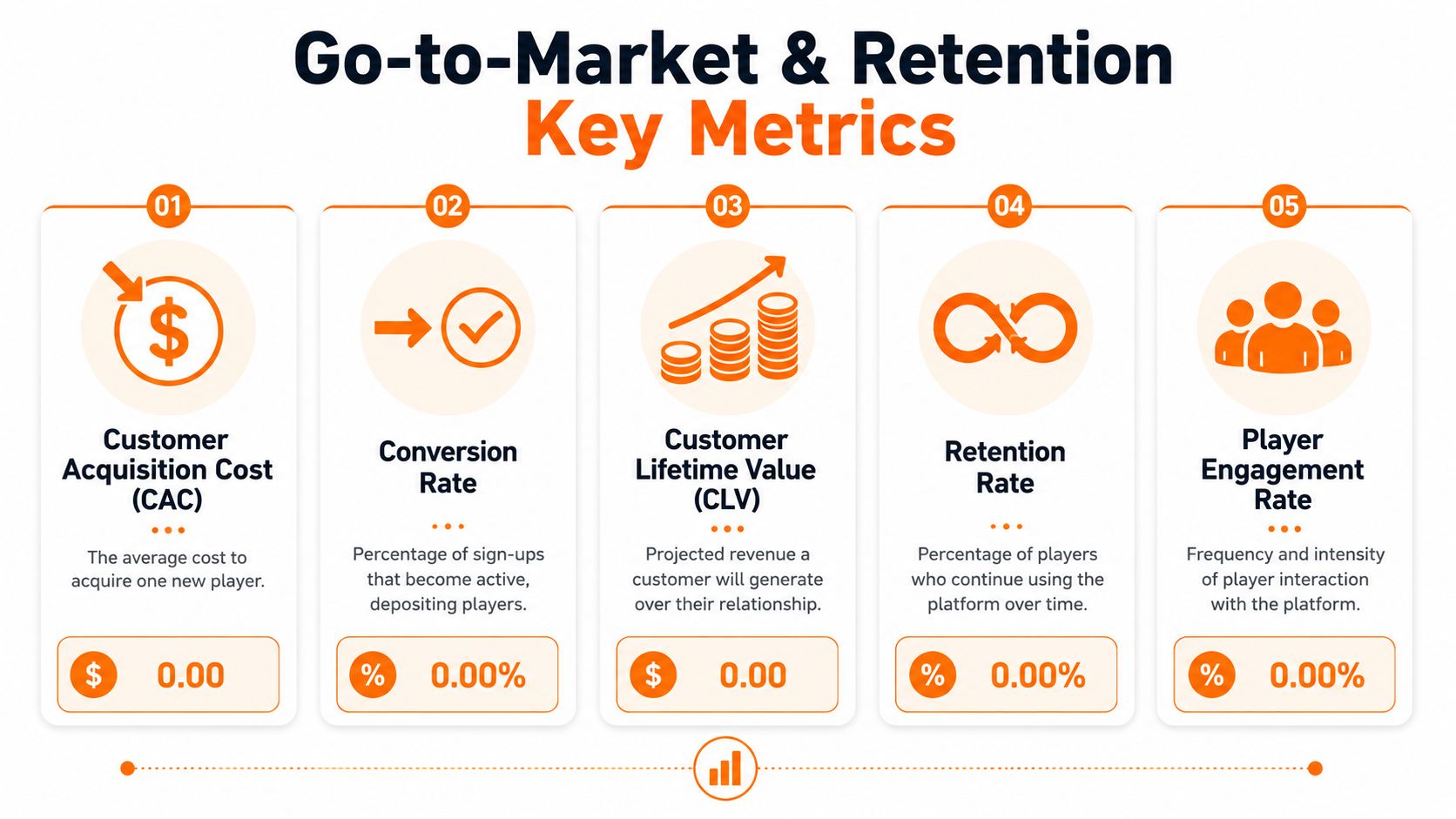
Acquisition planning should stay close to operational reality:
- Mobile-first conversion paths: Registration, verification, deposit, and first wager need to work as one short sequence, especially on lower-spec devices and weaker connections.
- Affiliate controls: Good affiliates can scale efficiently. Bad ones bring bonus abuse, misleading claims, regulatory exposure, and poor retention cohorts.
- Bonus economics: Welcome offers should improve first-time deposit conversion without attracting a user base that disappears as soon as rollover friction appears.
- Local campaign configuration: Creative, payment messaging, event calendars, and product emphasis need to reflect the target jurisdiction.
That last point gets underestimated. Expanding into multiple regions with one generic setup usually produces weak conversion and support strain. Operators entering new markets need country-level decisions on cashier mix, content priorities, compliance rules, and CRM timing. Tools such as market expansion support for betting operators can help map those dependencies, but the operating lesson is broader. Local configuration usually beats broad standardization.
Retention starts before the second session
Retention is built into the product loop. CRM only amplifies what the product already supports.
Players come back when the account is easy to use, balances are clear, withdrawals are predictable, and the offer logic makes sense. They leave when they hit small recurring annoyances. Split wallets, unclear wagering terms, delayed settlements, and repetitive KYC requests do more damage to retention than a weak email calendar.
A few patterns tend to hold up across launches:
- One wallet across sportsbook and casino: Cross-sell works better when funds move cleanly and the user does not have to relearn the account structure.
- Clear bonus status: Players should be able to see what is active, what is pending, and what conditions still apply.
- Controlled segmentation: Targeted offers work when they reflect actual staking behavior, product preference, and value tier. Blanket promo pressure trains users to wait for discounts.
- Support that resolves money issues fast: Withdrawal tickets, settlement queries, and account restrictions need first-contact ownership, not endless queue transfers.
Retention usually drops for operational reasons long before it drops for creative reasons.
The brands that hold margin over time tend to run acquisition and retention from the same core assumptions. The cashier has to convert. The mobile journey has to stay light. The wallet has to stay clear. Support has to solve account and payment issues without sending users in circles. If those pieces are unstable, marketing does not create growth. It only pays to expose the weaknesses faster.
Achieving Day One Operational Readiness
Go live is an exposure event, not an achievement. The market starts testing your operation the moment the first deposits hit, the first withdrawals queue up, and the first pricing dispute lands in support. Day one readiness comes down to whether payments clear, balances reconcile, risk rules fire correctly, and your team can handle exceptions without freezing the customer journey.
A lot of founders treat licensing as the hard part and operations as a post-launch tidy-up job. That is backwards. The brands that fail early usually do not fail because the site was unavailable. They fail because cashier friction, weak reconciliation, slow fraud review, and poor incident handling start burning trust in the first week.
Capital discipline decides whether launch day matters
The cost stack is heavier than the launch deck suggests. Fortis Media's sportsbook business cost breakdown puts entry-level startup capital at at least $100,000, with licensing ranging from $10,000 to more than $500,000, marketing budgets often landing between $20,000 and $100,000, reserve bankroll needs of $100,000 to $500,000, compliance overhead that can add 20 to 30 percent to the initial budget, gambling tax exposure that can consume 10 to 30 percent of revenue depending on jurisdiction, and contingency planning for regulatory changes or disputes.
The headline budget is only the visible layer. Cash timing is what hurts new operators. Processor settlements can lag, chargebacks can cluster, affiliate invoices arrive before cohorts have paid back, and bonus liabilities sit on the balance sheet long before net gaming revenue stabilizes.
That is why treasury discipline matters as much as acquisition planning.
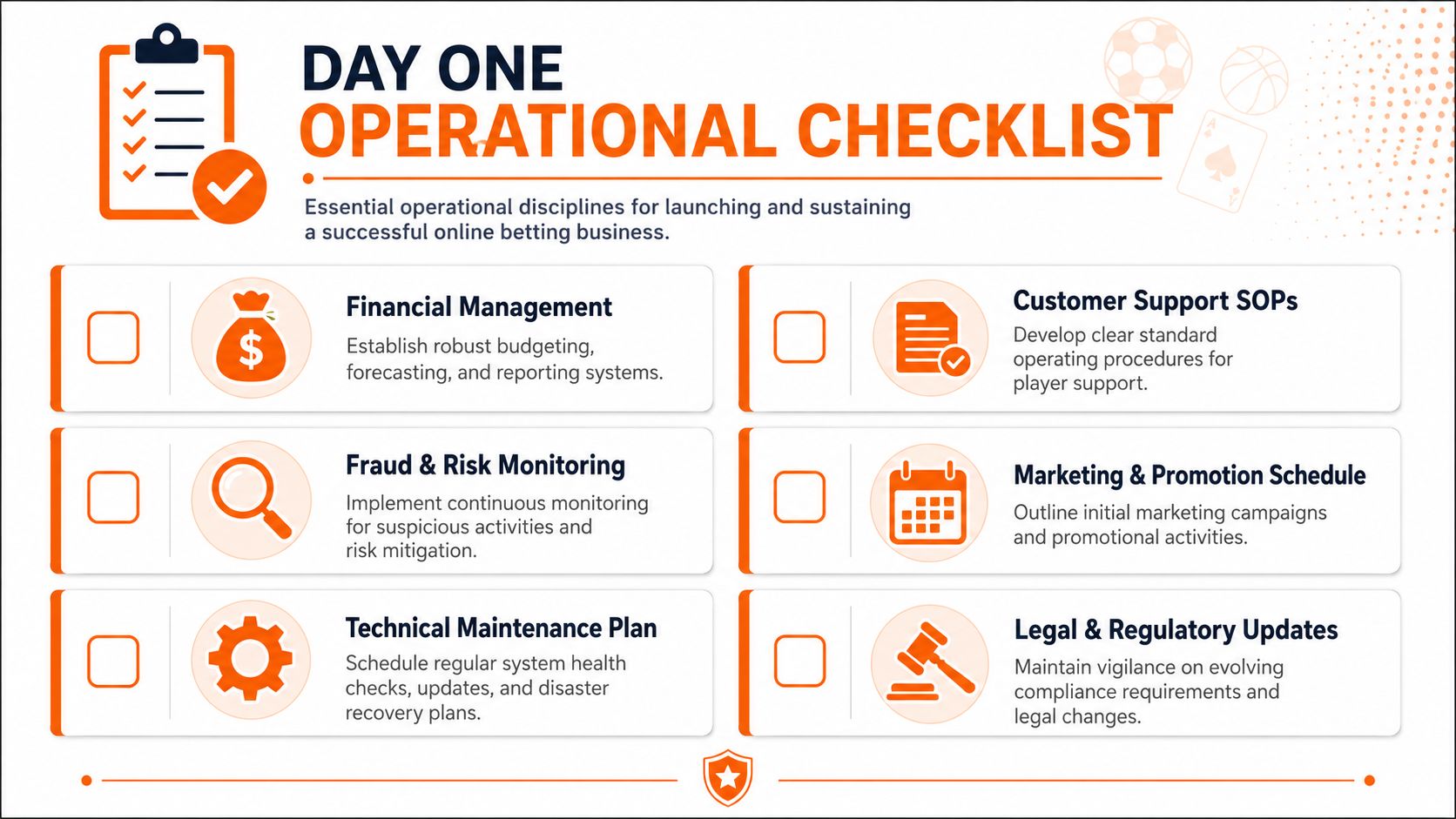
A workable launch position usually means four things:
- Protected liquidity: Withdrawal reliability sets the tone for the brand faster than any campaign. If payouts wobble, player trust drops fast and support volume spikes.
- A real operating budget: Platform fees are only one line item. KYC vendors, AML screening, geolocation, fraud tools, monitoring, and external audits keep billing after launch.
- Promo controls tied to cash exposure: Bonus policy cannot sit in a different universe from treasury planning. If marketing can issue value faster than finance can fund withdrawals, the problem shows up immediately.
- Tax and reporting discipline from day one: Gross gaming revenue, processor balances, bonus cost, and cash in bank are different numbers. Teams that blur them make bad decisions early.
Your first operating routines need precision, not heroics
Early-stage betting operations break on ordinary tasks done inconsistently. A missed settlement escalation, a processor mismatch left overnight, or a KYC queue with no ownership creates the kind of repeat friction that players interpret as a failing brand.
The first routines to lock down are usually these:
Customer support SOPs
Agents need fixed workflows for deposit failures, withdrawal reviews, source-of-funds requests, bonus disputes, restricted accounts, and bet settlement questions. Support should know when to resolve, when to escalate, and who owns the case.Fraud and risk monitoring
Rules should catch duplicate identities, device clustering, bonus abuse patterns, payment anomalies, and unusual wagering behavior before the withdrawal queue becomes the control point. Manual review still matters, but it should focus on edge cases, not obvious abuse.Technical operations
Uptime monitoring, release windows, rollback procedures, DDoS protection, and incident response need named owners and clear thresholds. Peak event traffic exposes weak environments fast.Finance and reconciliation
Wallet balances, processor reports, unsettled bets, chargebacks, manual adjustments, and promo liabilities need a fixed reconciliation cadence. If finance is reconstructing the truth from three dashboards and two spreadsheets, controls are already too loose.
Teams do not need launch-week heroics. They need stable routines, clear ownership, and a back office that shows the same truth to support, finance, risk, and compliance.
That is also where the platform decision keeps showing up. If the wallet logic is fragmented, reporting is delayed, or payments and risk tools are stitched together badly, day one operations become manual exception management. A license gets you into the market. A working payments and controls stack keeps you there.
If you're working out how to start an online betting business, judge readiness by what happens on an average weekday with real payment traffic and real customer complaints. That operating baseline matters more than the launch announcement.
If you need a practical route to launch without assembling the entire stack from scratch, NexGrate provides a turnkey white-label sportsbook and casino platform with payments, compliance tooling, back office, and content integrations in one operating environment. It's built for operators who want to shorten time to market while keeping the core operational systems aligned from day one.